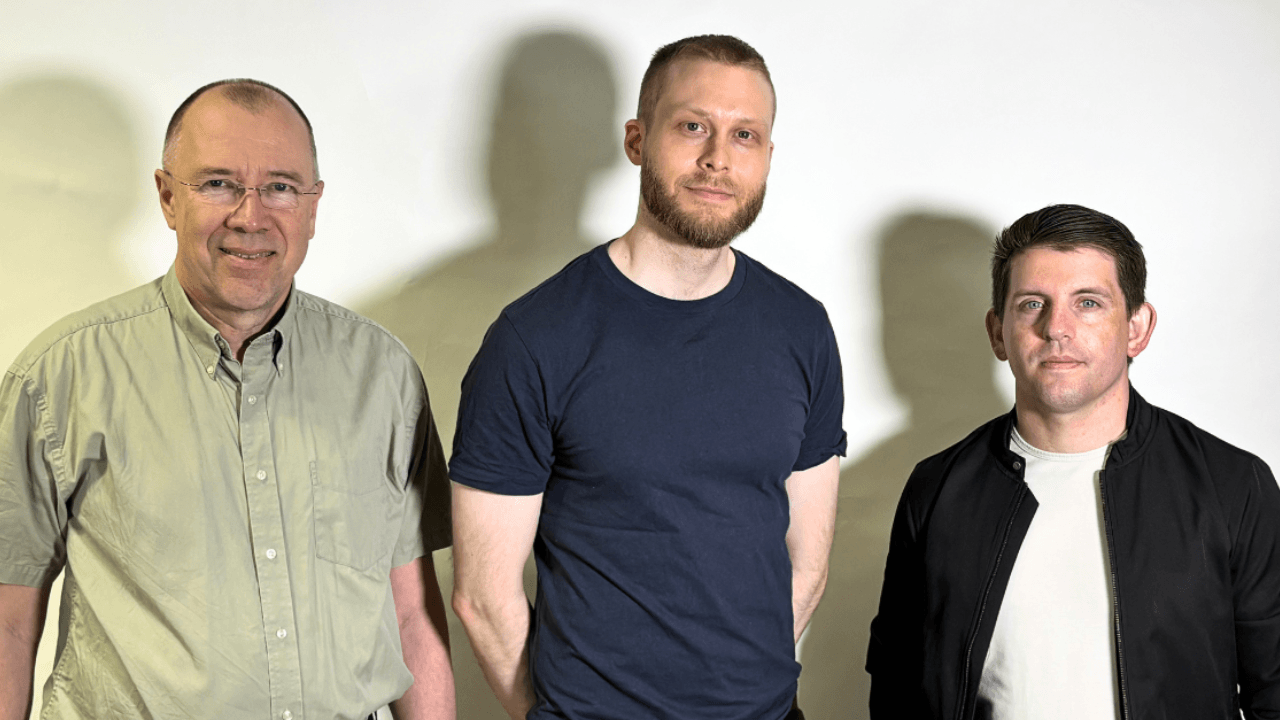
Aavuus and the Orbital Safety Challenge
Finnish startup Aavuus recently announced it has secured Pre-Seed funding from Maki.vc, aiming to strengthen its infrastructure for orbital safety. The company intends to address one of the most pressing challenges of the modern space era: the proliferation of debris in Low Earth Orbit (LEO), which makes the safe use of space increasingly complex.
According to estimates from the European Space Agency (ESA), over 1.2 million debris objects larger than 1 centimeter are already in orbit, but only a fraction of these are regularly tracked. In particular, the population of debris between 1 and 10 centimeters represents a critical blind spot for operators: they are too small and numerous to be routinely monitored by existing systems, yet large enough to disable or destroy a satellite upon impact. In the busiest LEOs, collision avoidance is already a common practice, and the gap between operators' needs and the capabilities of current systems continues to widen. Aavuus was founded precisely to close this gap.
An Innovative Approach to Space Tracking
The solution proposed by Aavuus is based on building a global network of ground-based laser stations. This infrastructure is designed to push object tracking in LEO well beyond the limits of today's commercial systems, unlocking a level of precision and detection capability previously unavailable to the market. The expected result is the availability of significantly faster and more precise orbital data, providing operators with a stronger basis for space situational awareness and collision avoidance.
Aavuus is a spin-out from the Finnish Geospatial Research Institute, bringing rare institutional expertise in satellite laser ranging and space geodesy. This expertise is crucial for tackling a problem that has so far outpaced commercial tracking capabilities. The team has been further strengthened with the appointment of Brian Dunne, a former US Army Aerospace Defence Officer, as Chief Commercial Officer. His hands-on experience combating aerospace threats strategically positions the company to address growing demand from the defence sector.
Implications for Infrastructure and Data Sovereignty
The space economy is adding satellites faster than existing tracking systems can keep up, and the gap between current capabilities and operators' actual needs is widening. This scenario highlights the importance of investing in dedicated, high-precision infrastructure capable of managing increasing volumes of critical data with stringent reliability and latency requirements. For those evaluating on-premise deployment of AI/LLM workloads, Aavuus's situation offers an interesting parallel: the need for granular control over infrastructure, data sovereignty, and the ability to customize hardware and software solutions for specific needs are decisive factors, both for orbital safety and for enterprise artificial intelligence applications.
The demand from the defence sector, in particular, underscores the need for robust and secure systems, potentially operating in air-gapped environments or with stringent compliance requirements. The construction of a network of ground stations, by its nature, implies the deployment of physical infrastructure and direct control over operations. These aspects resonate with the priorities of CTOs and infrastructure architects who favor self-hosted solutions to ensure maximum security, control, and ultimately, an optimized TCO in the long term for critical workloads.
Future Prospects and Development
Joonas Jokela, CEO of Aavuus, stated that this funding will allow the company to move from the development phase into execution. The immediate focus is on building the Minimum Viable Product (MVP), proving performance, and starting to work with customers who need more reliable debris tracking data in their daily operations. Wilson Tukiainen of Maki.vc reiterated that the space economy is adding satellites faster than existing systems can keep up, and that the Aavuus team's expertise in satellite laser ranging and space geodesy is fundamental to addressing a problem that can no longer be ignored.
The investor expressed confidence that Aavuus is building infrastructure that orbital safety will increasingly depend on. The company's immediate goal remains the creation of its first MVP and making it available to early customers, marking a crucial step towards realizing its vision of a safer and more manageable Earth orbit.





💬 Comments (0)
🔒 Log in or register to comment on articles.
No comments yet. Be the first to comment!