"Platypus" PCIe Adapter: Space Optimization for GPUs and M.2 SSDs in On-Premise Environments
In the landscape of IT infrastructure, space optimization and hardware flexibility represent constant challenges, especially for intensive workloads related to Large Language Models (LLMs). A new PCIe adapter, dubbed "platypus," emerges as an ingenious solution to address these needs, allowing half-height graphics cards to be converted into a full-height format while integrating additional storage capabilities. This innovation proves particularly interesting for system architects and DevOps leads looking to maximize compute density and storage capacity in compact servers or space-constrained chassis.
The ability to adapt existing hardware and add essential functionalities in a single component can significantly simplify deployment processes. For example, the possibility of using low-profile GPUs, often more economical or readily available for certain scenarios, in configurations that would normally require full-height cards, opens new opportunities. This approach not only extends the useful life of hardware but also offers greater freedom in component selection, a critical factor for managing the Total Cost of Ownership (TCO) in self-hosted environments.
Technical Details and the Power of PCIe Bifurcation
The core of this adapter lies in its ability to leverage PCIe bifurcation. This technology allows a single PCIe x16 slot to be divided into multiple logical slots of smaller width (e.g., two x8 or four x4), enabling multiple devices to be connected to a single physical interface. In the case of the "platypus," this functionality is employed to support both a GPU and two M.2 SSD units, all connected via a single PCIe slot. An enthusiast has already demonstrated the effectiveness of this solution, configuring a low-profile RTX 4060 GPU along with two SSDs, all managed by the adapter.
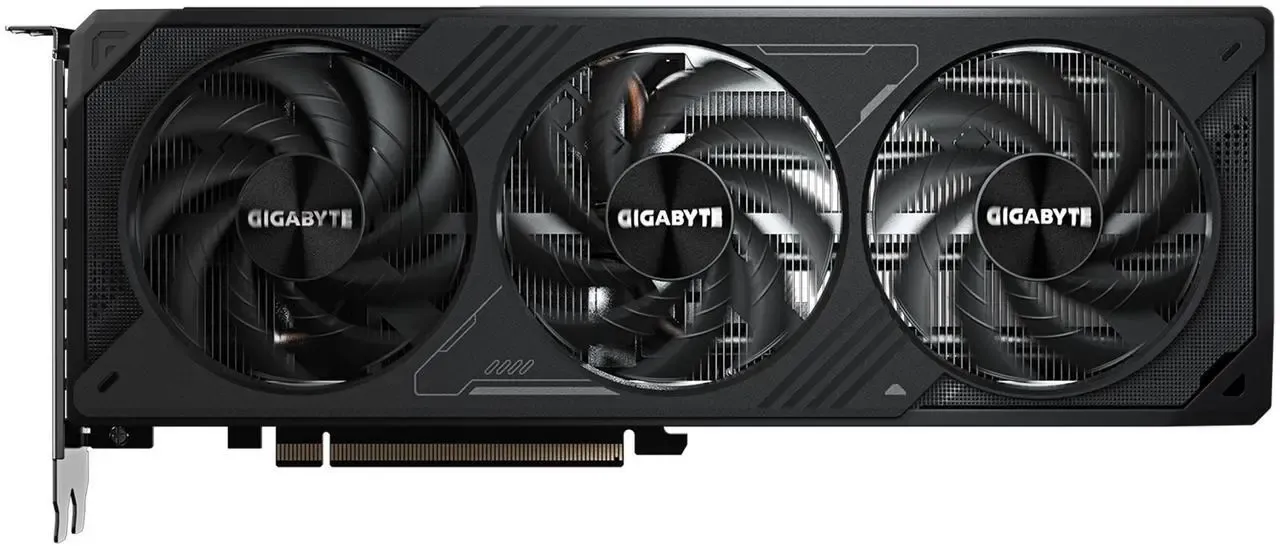
This integration of GPU and storage on a single board is a clear example of how hardware engineering can solve density problems. GPUs, such as the mentioned Gigabyte WindForce GeForce RTX 5070 12GB, require significant PCIe bandwidth and often occupy valuable slots. Adding M.2 storage directly on the adapter reduces the need for additional PCIe slots for SSDs, freeing up resources for other expansion cards or allowing the use of smaller chassis. For LLM workloads, where fast data access and VRAM capacity are crucial, this combination can significantly improve system throughput and reduce overall latency.
Implications for On-Premise Deployments and Data Sovereignty
For organizations prioritizing on-premise or air-gapped deployments for their AI workloads, hardware solutions like the "platypus" adapter become fundamental. The ability to customize physical infrastructure to meet specific space, power, and cooling requirements is a distinct advantage over cloud-based options. Integrating GPUs and storage into a single component not only optimizes PCIe slot utilization but also contributes to higher compute density per rack unit, a key factor in reducing long-term TCO.
Furthermore, local hardware management strengthens data sovereignty and regulatory compliance. Keeping data and LLM models within one's physical boundaries ensures complete control over access and security, crucial aspects for sectors such as finance or healthcare. While cloud solutions offer immediate scalability, self-hosted deployments, supported by flexible hardware, allow for stricter governance and greater operational resilience. For those evaluating on-premise deployments, AI-RADAR offers analytical frameworks on /llm-onpremise to assess the trade-offs between initial, operational costs, and benefits in terms of control and security.
Future Prospects and Trade-offs in Hardware Architecture
The emergence of adapters like the "platypus" highlights a growing trend towards modular and flexible hardware solutions, designed to maximize efficiency in resource-constrained environments. While these innovations offer significant advantages in terms of density and customization, they also introduce considerations regarding trade-offs. PCIe bifurcation, while powerful, requires support from the motherboard and BIOS, which might limit compatibility with older hardware. Additionally, thermal management in high-density configurations remains a challenge, especially when GPUs and SSDs share the same physical space.
The choice between adopting custom hardware solutions or adhering to more consolidated standards depends on the specific project requirements and the internal team's expertise. However, the ability to innovate at the component level, as demonstrated by this adapter, is a positive sign for the future of on-premise AI deployments. It offers architects the freedom to build highly optimized systems, balancing performance, costs, and space requirements—a fundamental equilibrium for the evolution of infrastructures dedicated to Large Language Models.




💬 Comments (0)
🔒 Log in or register to comment on articles.
No comments yet. Be the first to comment!