
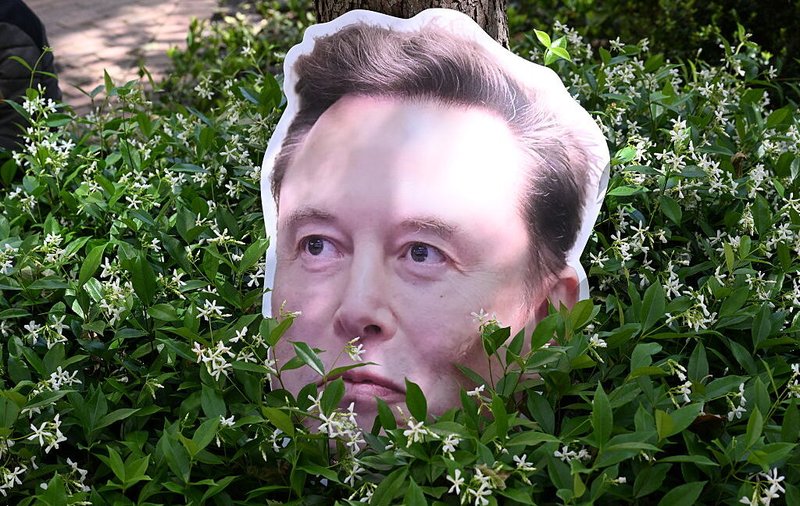
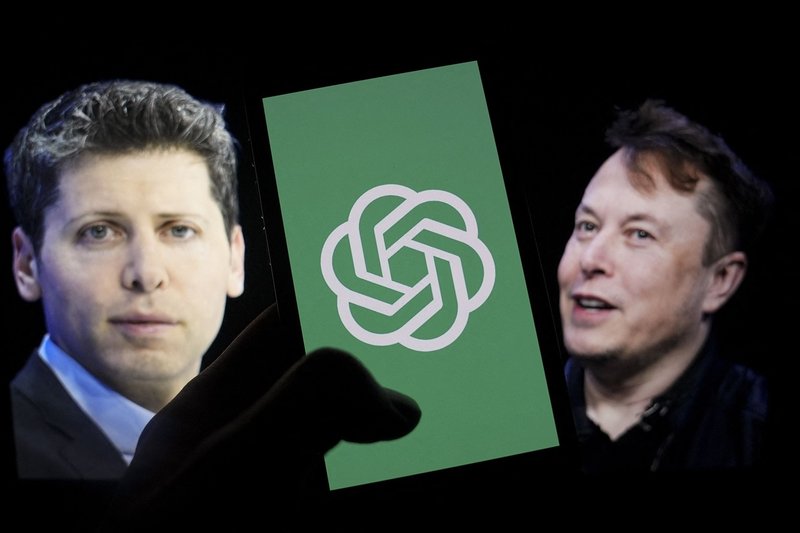
OpenAI's Chief Futurist is out. Joshua Achiam has left after nearly nine years, and while the company hasn't announced the reasons, the timing tells its own story. Achiam was the face of AI safety research during the most explosive moments of OpenAI’s recent history, especially during his deposition in the lawsuit Elon Musk brought against Sam Altman and the company. Read between the lines, his departure is not just a routine role change: it is a structural indicator of how commercial acceleration is eroding the precautionary architecture built around Large Language Models.
The title “Chief Futurist” is not a vanity tag. At OpenAI it signified a long-term safety guardrail, a systemic thinking meant to prevent models from causing unforeseen disasters. Achiam had dedicated his career to that mission, helping define alignment benchmarks and policy papers that influenced the entire industry. His appearance in the Musk-Altman trial was no cameo: according to what emerged, he had to recount what happened behind the scenes as the company oscillated between its original mission—“AI that benefits all of humanity”—and the need to monetize GPT-4 and subsequent products. Those in the courtroom describe Achiam as measured but candid, a professional who never hid the risks of uncontrolled proliferation.
The point is not that one person is leaving, but what that exit reveals. Over the past two years, OpenAI has lost several senior figures tied to safety and ethics, often replaced by engineers and product managers with growth mandates. Achiam’s departure is the latest piece of a trajectory in which the cautious faction is losing ground to the builder faction. This is not a moral judgment; it’s a fact that reshapes the incentives for those who use these models. A company that today entrusts sensitive data to the ChatGPT Enterprise API can no longer count on the same level of critical scrutiny that once existed inside the provider. And if the futurist exits the stage, who is left to ask whether the next model iteration is truly aligned with users’ long-term interests?
This question is particularly sharp for regulated sectors — banking, healthcare, public administration — where data sovereignty and behavioral verifiability are non-negotiable. There, the erosion of a vendor’s internal safety governance can become an argument for self-hosting. Bringing models on-premise is not only about latency or TCO; it is also a way to impose your own control over alignment, without depending on the mood of an increasingly product-oriented management. The downside is that building a robust safety layer around a locally quantized LLM is all the more burdensome when the frontier model is a black box governed by external logics.
The second-order effect concerns the talent market. Achiam is not an isolated case. Several OpenAI safety researchers have landed at Anthropic, which makes constitutional AI and safety its brand. Others have founded startups with a strong transparent governance component. This migration of expertise deepens the divide between those racing ahead and those hitting the brakes, fragmenting the ecosystem’s ability to maintain shared standards. In the near future, enterprises evaluating a hybrid deployment—cloud for experimentation, on-prem for production with critical data—will find themselves choosing between models from providers with increasingly opaque governance and local stacks where safety must be built in-house. It is a difficult trade-off, but one that cannot be ignored.
Achiam’s legacy, paradoxically, lies in the contradiction his departure exposes. In the Musk-Altman trial, he defended a vision of AI governed by demonstrable safety protocols, but the very fact that he testified as a witness says a great deal about the fractured nature of that vision inside OpenAI. Today, his exit removes another internal counterweight, and forces those downstream — developers, CISOs, deployment decision-makers — to confront an uncomfortable question: if even the world’s most advanced lab cannot hold together speed and caution, how can a model accessible only via API be trusted over the long term?






💬 Comments (0)
🔒 Log in or register to comment on articles.
No comments yet. Be the first to comment!