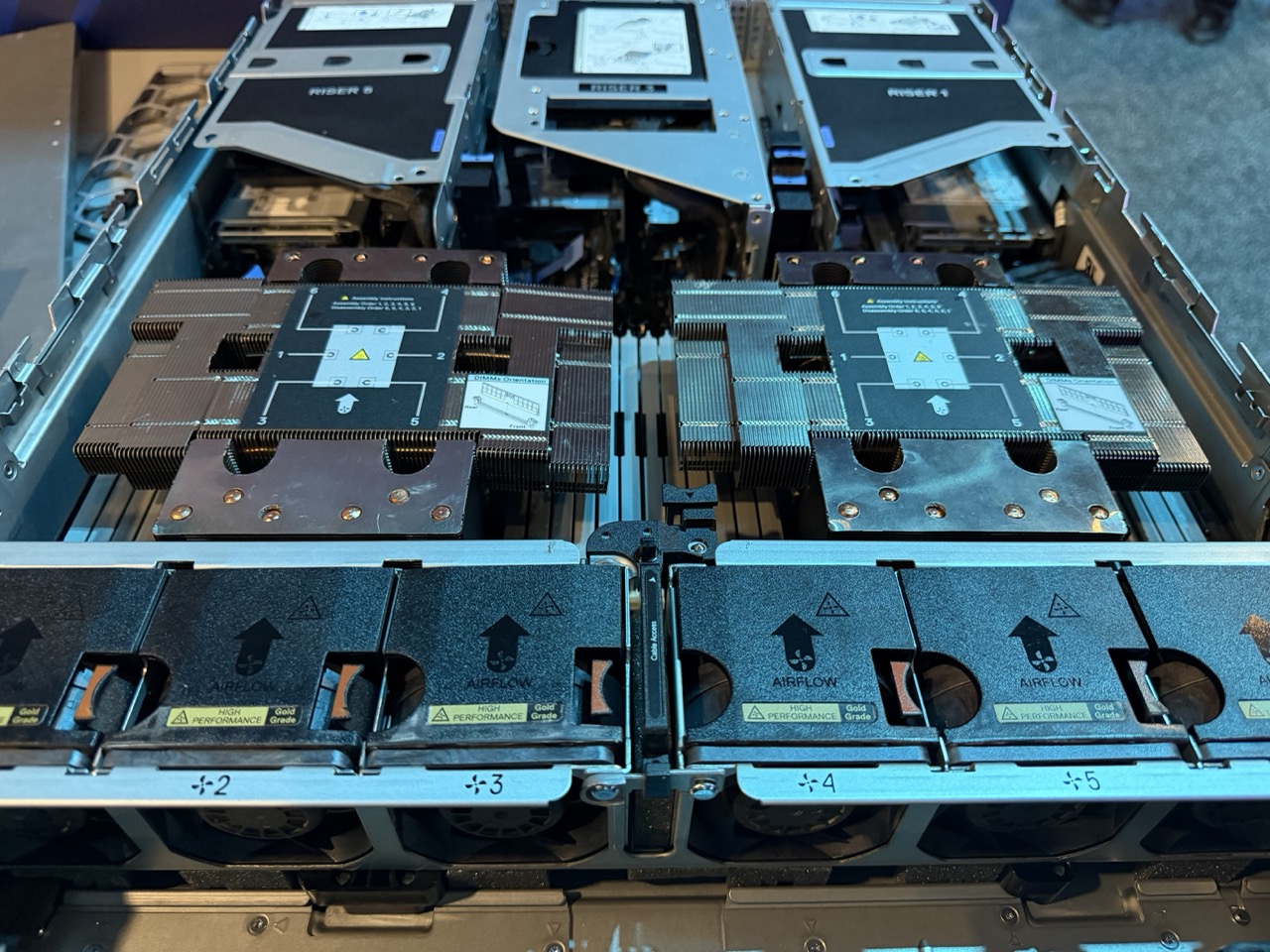
The tech world's gaze is often monopolized by GPUs, the engines behind training and inference of large language models. Yet another trend is quietly taking hold in datacenters: the construction of ultra-high-density CPU racks purpose-built for agentic AI. This isn't just about handling legacy traffic, but about delivering the sequential compute power, low latency, and native integration with tools and APIs that AI agents need to act autonomously. A recent deep dive by ServeTheHome explores what's driving this demand, revealing a subtle but profound paradigm shift.
The agent workload profile: beyond just models
A modern AI agent isn't a single model spitting out text. It's a system that plans, calls smaller models, queries corporate databases, executes code, and triggers APIs. This workflow—made up of hundreds of micro-invocations, often in parallel—requires single‑millisecond latencies and efficient thread management. Servers built on high‑core‑count x86 CPUs, like the latest AMD EPYC or Intel Xeon, with generous DDR5 memory and PCIe 5.0 interconnects, fit this pattern naturally. They can run multiple instances of quantized models (e.g., 7B‑13B LLMs in INT8) directly on the CPU, without continuously shuttling data to external accelerators, reducing architectural complexity. Moreover, the predictable latency of classic CPU architectures simplifies the orchestration of agent frameworks, which often must coordinate dozens of cascading steps.
Dense racks: the core of on‑prem self‑hosting
The key word is "dense." Building a rack means packing dozens of nodes into a few inches, optimizing power and cooling. For organizations choosing on‑premises deployment—driven by data sovereignty needs, GDPR compliance, or simply a desire for full control over infrastructure—this approach can offer a lower TCO than the cloud, eliminating recurring API and data transfer costs. Additionally, agents often need access to internal legacy systems: a local rack slashes network latency and security risks, enabling deep integration with ERP, CRM, and databases that sit behind the corporate firewall. The ability to run toolkits like LangChain or LlamaIndex directly on dedicated CPU nodes, without dependency on external services, makes self‑hosting not just a technical choice but an enabler of privacy and operational continuity.
The AI‑RADAR perspective: a signal of ecosystem maturation
The growing attention on CPU racks for agentic AI signals a market that is becoming more sophisticated, distinguishing between "heavy inference" workloads (where GPUs remain irreplaceable) and "ubiquitous orchestration" (where appropriately sized CPUs shine). For those designing an on‑prem setup, the challenge is no longer just which accelerator to buy, but how to balance a heterogeneous fleet. It also means rethinking orchestration frameworks—think Kubernetes with CPU‑aware scheduling—to maximize core utilization. As the boundary between legacy workloads and new AI blurs, the ability to handle both on a single hardware substrate represents a strategic advantage that is both technical and organizational. For those evaluating this path, analytical tools like those offered by AI‑RADAR at /llm‑onpremise can help model the trade‑offs between density, energy cost, and future flexibility.





💬 Comments (0)
🔒 Log in or register to comment on articles.
No comments yet. Be the first to comment!