Europe’s Infrastructure Put to the AI Test
The real story isn't just that AI is eating software; it's that it's now claiming the guts of networks and chips. The latest wave, flagged by analysts like Digitimes, revolves around Neural Processing Units (NPUs) and AI RAN—two technologies that together are rewriting the rules of digital infrastructure across Europe. This isn't a mere upgrade. It's a fundamental shift, where AI processing moves from distant data centers to street cabinets, 5G cells, and factory floors.
What Are NPUs and AI RAN?
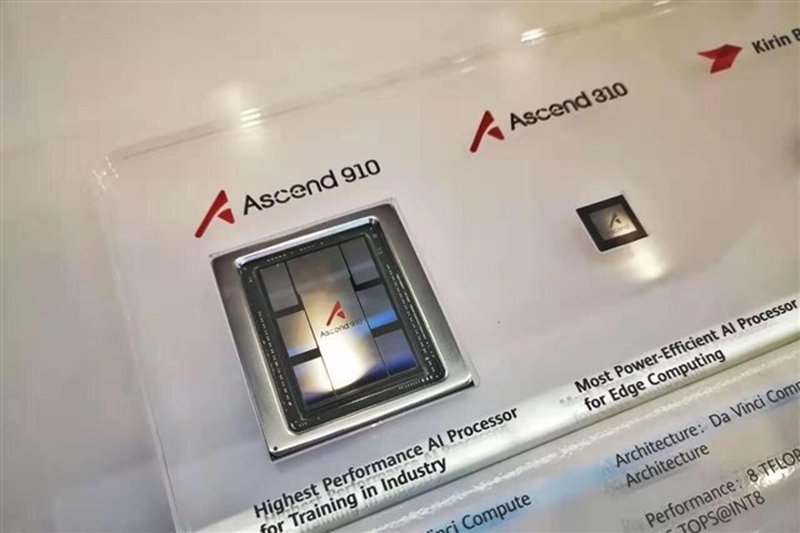
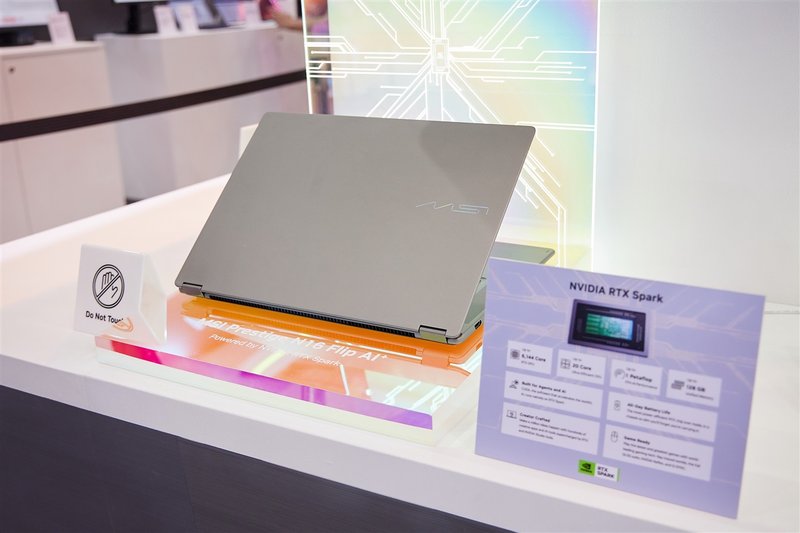
NPUs are processors purpose-built for neural network inference, engineered to handle matrix multiplications with an efficiency unattainable by CPUs and often surpassing general-purpose GPUs. Compared to the latter, they consume less power and can be embedded directly into edge devices or compact servers. AI RAN applies the same logic to network infrastructure: radio access points become smart nodes capable of running machine learning models to optimize spectrum management, reduce latency, and—down the line—deliver real-time AI services.
For those exploring on-premise deployment of LLMs or industrial models, this landscape is a game changer. It means inference hardware can move closer to the data source, cutting reliance on cloud connections and slashing response times.
Why On-Premise Is Back in the Spotlight
In Europe, the push for digital sovereignty—fueled by regulations like GDPR and geopolitical tensions—has revived interest in local processing. NPUs offer a concrete path: chips from companies like Hailo, Graphcore, or Qualcomm’s embedded designs can run inference on quantized LLMs (INT8 or FP16) with power consumption in the tens of watts. This makes it feasible to handle NLP or computer vision tasks without sending sensitive data outside, a clear win for banking, healthcare, and public administration.
AI RAN, meanwhile, enables private 5G networks with distributed computing capabilities. Picture a connected factory: sensor data gets processed locally by NPUs tied to the RAN, with sub-5ms latency, while a central orchestrator oversees the whole system. It’s the perfect architecture for edge machine learning, where the model isn’t remote but an integral part of the physical infrastructure.
Trade-Offs and Unresolved Challenges
Self-hosting AI with NPUs isn't without hurdles. Today’s NPUs, while efficient, are limited in VRAM and compute capability, making them suitable for smaller models or heavily quantized inference. Running a 70-billion-parameter LLM on-premise means accepting trade-offs: aggressive quantization, a reduced context window, or spreading the load across multiple chips. Total Cost of Ownership (TCO) also requires careful calculation: while savings on data transmission and cloud fees are real, the upfront investment in specialized hardware and the expertise needed to manage it shouldn’t be underestimated.
On the AI RAN side, interoperability with legacy infrastructure remains an open issue. Traditional mobile networks weren’t designed to host variable, compute-intensive workloads, and adoption will depend on maturing standards like O-RAN.
A Signal for Tomorrow’s Infrastructure
The convergence of NPUs and AI RAN paints a future where AI isn’t a service you call via an API but a distributed infrastructure capability—close to the data and under direct control. For organizations evaluating on-premise model deployment today, the message is clear: hardware is evolving in lockstep with data sovereignty. Those designing their infrastructure now must view accelerator chips and intelligent networks not as add-ons but as foundational components of the IT architecture for years to come.








💬 Comments (0)
🔒 Log in or register to comment on articles.
No comments yet. Be the first to comment!