
Allbirds Transforms into NewBird AI: From Footwear to GPU Cloud
Allbirds, once known for its sustainable footwear, has announced a radical strategic pivot, selling its core business for $39 million to the American Exchange Group. Concurrently, the company revealed its rebranding to NewBird AI, marking a decisive entry into the cloud computing sector, with a specific focus on "GPU-as-a-service." This move reflects a significant shift in corporate strategy, transitioning from a model based on the production and sale of physical goods to one centered on offering high-demand computational infrastructure.
The transition was accompanied by $50 million in convertible financing, a signal of investor confidence in the new path taken. The announcement generated volatile stock market reactions, with an initial 600% surge in share value, followed by a pullback of approximately one-third. This trend highlights both the enthusiasm for the potential of the AI sector and the inherent caution associated with such a drastic change in direction.
The "GPU-as-a-Service" Model and AI Compute Demand
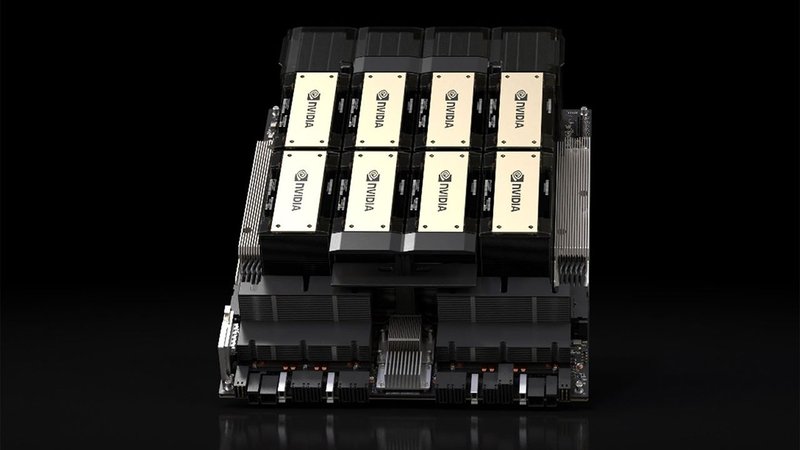
NewBird AI's new core business will focus on leasing Graphics Processing Units (GPUs) to support Artificial Intelligence workloads. The "GPU-as-a-service" model addresses a growing need in today's technological landscape: the availability of specialized computing power for training and Inference of Large Language Models (LLM) and other machine learning algorithms. GPUs are fundamental for these operations due to their parallel architecture, which allows for efficient processing of large volumes of data.
The demand for high-performance GPUs, particularly those with high VRAM and throughput, often outstrips supply, making access to these resources a challenge for many companies. Providers like NewBird AI aim to bridge this gap by offering on-demand access to infrastructure that is expensive and complex to manage in-house. This approach allows companies to rapidly scale their AI operations without incurring the substantial upfront costs of purchasing and maintaining dedicated hardware.
Market Context and Deployment Implications
NewBird AI's entry into the GPU cloud computing market occurs within a context of strong expansion, where competition is high but demand is also constantly growing. Companies developing AI solutions often face the choice between using cloud services offered by hyperscalers or investing in self-hosted infrastructure. The decision depends on critical factors such as Total Cost of Ownership (TCO), data sovereignty, compliance requirements, and the need for air-gapped environments.
For those evaluating on-premise deployments, significant trade-offs exist. While local hosting offers greater control over data and hardware, reducing latencies and ensuring regulatory compliance, it also requires high CapEx and specialized management expertise. Services like those proposed by NewBird AI offer a middle ground, providing access to dedicated resources without the burden of ownership, while maintaining a flexible consumption model. AI-RADAR offers analytical frameworks on /llm-onpremise to evaluate these complex trade-offs.
Future Prospects and Competitive Challenges
The transition of Allbirds to NewBird AI represents an emblematic example of how companies are seeking new opportunities in the rapidly growing artificial intelligence sectors. However, the GPU cloud computing market is highly competitive, dominated by established players with massive infrastructures and well-oiled supply chains. NewBird AI will need to distinguish itself not only by hardware availability but also by service quality, offering flexibility, and the ability to support specific customer needs.
Challenges will include the continuous acquisition of next-generation GPUs, efficient data center management, and building a solid customer base in the AI sector. Success will depend on NewBird AI's ability to navigate this complex landscape, providing distinctive value that justifies its audacious transformation from a shoe manufacturer to an AI computing power provider.








💬 Comments (0)
🔒 Log in or register to comment on articles.
No comments yet. Be the first to comment!