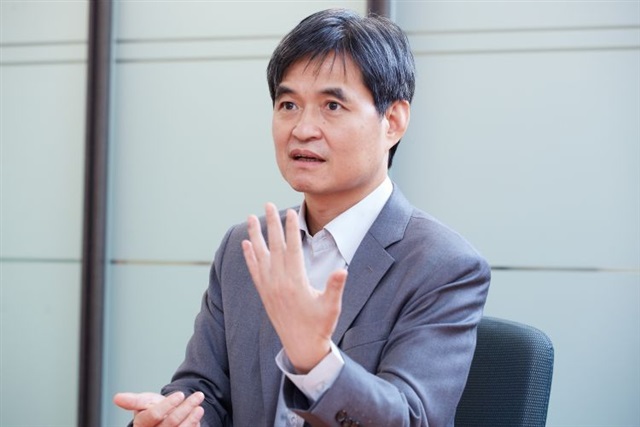
Strategic Alliance in the Tech Sector: WT Microelectronics Representative Leads Nichidenbo
Nichidenbo has announced the appointment of a WT Microelectronics representative to its board of directors as chairman. This decision aims to solidify a previously established share-swap agreement between the two companies, marking a significant step in their strategic relationship. The move, reported by DIGITIMES, highlights the increasing importance of alliances and synergies in the global technology landscape.
Such partnerships are fundamental for strengthening market positions and optimizing supply chains in a constantly evolving sector. Integration at the executive and shareholder level can lead to greater operational stability and improved coordination between the entities involved, crucial aspects for addressing market challenges and seizing opportunities.
The Context of Strategic Alliances in the Technology Supply Chain
In the dynamic technology sector, strategic alliances play an increasingly critical role. Companies like Nichidenbo and WT Microelectronics operate within a complex ecosystem where component availability, logistics management, and market access are decisive factors for success. Share-swap agreements and cross-appointments to boards of directors are common tools to cement these relationships, ensuring a shared vision and direction.
These collaborations can not only improve operational efficiency but also mitigate risks related to supply chain disruptions or market fluctuations. For companies that depend on a wide range of electronic components and semiconductors, the stability of suppliers and distribution partners is essential. The ability to guarantee a constant flow of materials and products is a significant competitive advantage.
Implications for On-Premise AI Infrastructure
While the announcement concerns a specific corporate move, its implications indirectly extend to the broader technology ecosystem, including artificial intelligence infrastructure. On-premise deployments of Large Language Models (LLM), for example, require reliable access to specific hardware, such as high-performance GPUs with ample VRAM and high-speed storage solutions. The stability of the supply chain, influenced by alliances like that between Nichidenbo and WT Microelectronics, can have a direct impact on the availability and TCO of these components.
For CTOs, DevOps leads, and infrastructure architects evaluating self-hosted solutions, supply chain resilience is a key factor. The ability to procure hardware in a timely manner and at predictable costs is fundamental for planning and implementing dedicated AI data centers. Data sovereignty and compliance often drive organizations towards on-premise or air-gapped architectures, making the dependence on a robust supply chain even more pronounced.
Future Outlook and Decision-Making Trade-offs
The consolidation of strategic partnerships like that between Nichidenbo and WT Microelectronics reflects a broader trend in the technology sector: the pursuit of greater integration and resilience. For organizations investing in AI infrastructure, understanding these market dynamics is crucial. Deployment decisions, whether for on-premise, cloud, or hybrid solutions, are intrinsically linked to the availability and cost of the underlying hardware.
Trade-offs between CapEx and OpEx, latency, throughput, and scalability are constantly under scrutiny. The stability of supply chains, strengthened by strategic alliances, contributes to creating a more predictable environment for long-term AI investments. For those evaluating on-premise deployments, AI-RADAR offers analytical frameworks on /llm-onpremise to assess these trade-offs, providing tools to make informed decisions based on specific constraints and business objectives.







💬 Comments (0)
🔒 Log in or register to comment on articles.
No comments yet. Be the first to comment!