Altilium Secures £18.5M for UK's First EV Battery Refinery
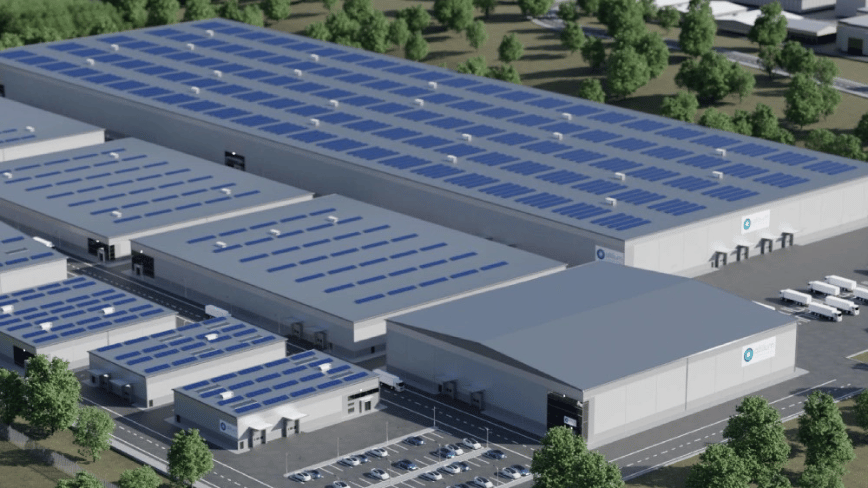
Altilium, a UK-based clean technology company, has announced it has secured £18.5 million in funding. These funds, provided by the UK government's DRIVE35 Scale-Up Fund, are earmarked for the construction of ACT3, the country's first commercial refinery dedicated to recovering critical minerals from end-of-life electric vehicle (EV) batteries. This initiative marks a significant step towards enhancing the independence and sustainability of the strategic materials supply chain within the nation.
The facility, which will be located in Plymouth, Devon, is designed to process a substantial volume of batteries: it is estimated to handle up to 24,000 EV battery units annually. To achieve this, Altilium will employ its proprietary EcoCathode™ process, a technology developed in-house to maximize efficiency in the recovery of valuable materials. This approach not only reduces reliance on new mining operations but also helps mitigate the environmental impact associated with battery production and disposal.
The Strategic Context of EV Battery Recycling
The expansion of the electric vehicle market has brought with it the growing challenge of managing end-of-life batteries. These batteries contain critical minerals such as lithium, cobalt, and nickel, whose extraction is often complex, costly, and carries a significant environmental footprint. The establishment of dedicated recycling infrastructures, like Altilium's ACT3 refinery, therefore becomes a key element for the sustainability of the entire sector. Such facilities not only ensure a more stable supply of raw materials but also reduce pressure on natural resources and minimize waste.
In a global context where resource sovereignty and supply chain resilience are strategic priorities, investments like the ACT3 project are of crucial importance. The ability to recover and reuse materials within national borders can decrease vulnerability to international market fluctuations and geopolitical tensions related to mineral extraction and supply. This circular approach is fundamental to building a more robust economy less dependent on external sources.
Implications for the Supply Chain and Innovation
The introduction of a commercial refinery of this scale in the UK will have significant implications for the entire electric vehicle supply chain. It will enable battery and vehicle manufacturers to access high-quality recycled materials, reducing costs and improving their ecological footprint. Furthermore, Altilium's EcoCathode™ technology, being a proprietary process, highlights the importance of local innovation in developing advanced solutions for the circular economy.
These developments are particularly relevant for technology decision-makers and infrastructure architects who evaluate the long-term impact of their choices. While not directly related to Large Language Models or on-premise deployments, the logic of resource optimization and supply chain control resonates with the principles of TCO and data sovereignty that guide infrastructure decisions in the AI domain. The ability to manage critical processes internally, whether data or materials, offers strategic advantages in terms of security and control.
Future Prospects for the Circular Economy
The realization of ACT3 represents a model for future initiatives in the field of the circular economy and resource recovery. As the world moves towards greater electrification and digitalization, the efficient management of end-of-life materials will become increasingly critical. Projects like Altilium's demonstrate how innovation and strategic investments can transform waste into valuable resources, contributing to a more sustainable and resilient future.
The UK government's commitment through the DRIVE35 Scale-Up Fund underscores a clear policy direction towards supporting technologies that strengthen industrial autonomy and sustainability. This type of support is essential for accelerating the transition to more circular economic models, where the value of materials is retained for as long as possible, reducing the need for new extractions and the accumulation of waste.








💬 Comments (0)
🔒 Log in or register to comment on articles.
No comments yet. Be the first to comment!