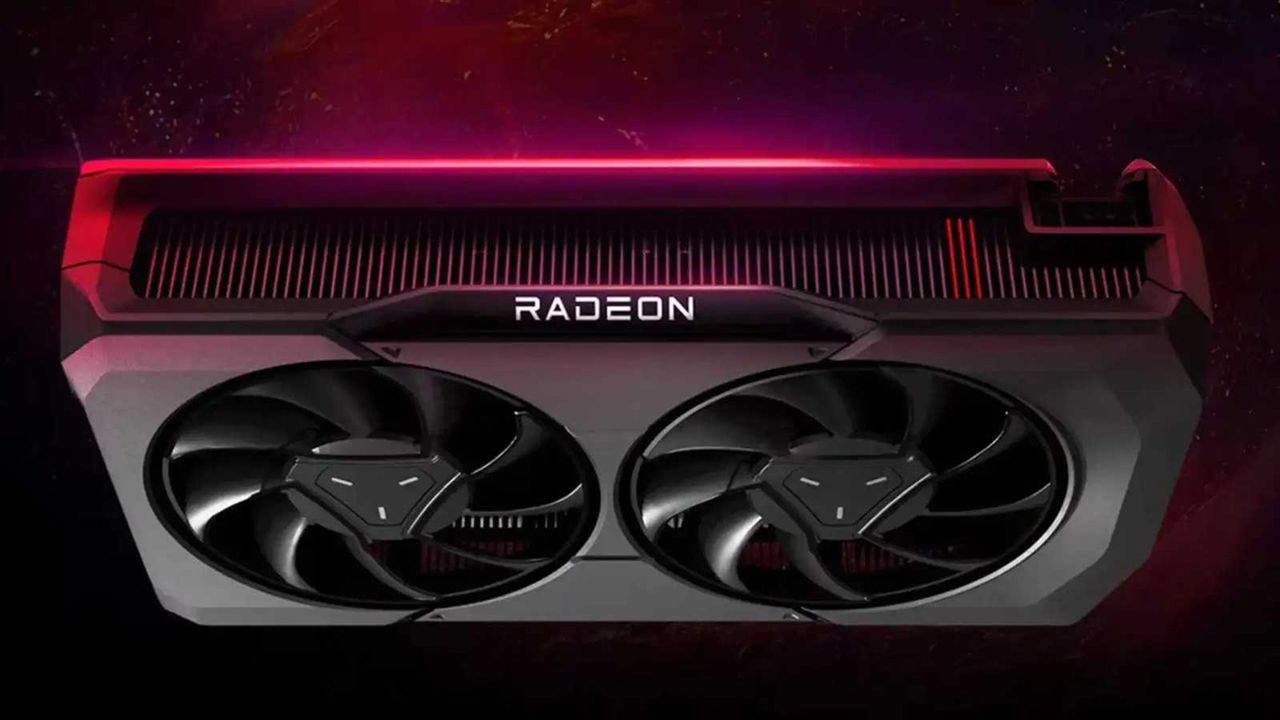
AMD Officially Releases FSR 4 for Radeon GPUs
AMD has officially announced the release of FidelityFX Super Resolution 4 (FSR 4), its latest iteration of upscaling technology. This innovation is designed to enhance the visual experience and performance across a wide range of Radeon graphics cards. The primary goal of FSR 4 is to deliver higher graphical fidelity and increased frame rates, making the most of the local computing power of GPUs.
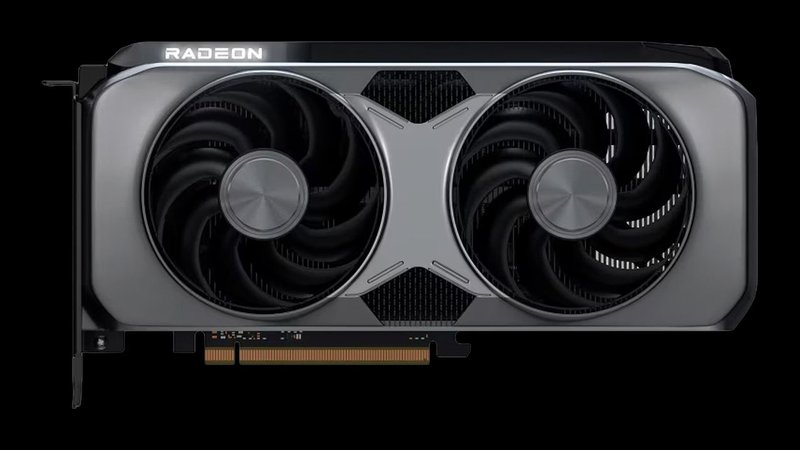
FSR 4 technology will be available for Radeon RX 7000-series and 6000-series graphics cards. This means that owners of hardware based on RDNA 3 and RDNA 2 architectures will be able to benefit from significant visual improvements in supported titles. The introduction of FSR 4 underscores AMD's commitment to providing software solutions that extend the capabilities and longevity of its hardware ecosystem.
Technical and Architectural Details
FidelityFX Super Resolution is a suite of spatial upscaling technologies that allows games to be rendered at a lower resolution and then "upscaled" to a higher resolution, maintaining or improving perceived image quality. This process reduces the workload on the GPU, enabling higher frame rates or the ability to use more demanding graphics settings without sacrificing fluidity.
The RDNA 3 and RDNA 2 architectures, present in the RX 7000 and RX 6000 series respectively, were designed to offer high performance and energy efficiency. The integration of FSR 4 with these architectures leverages their processing capabilities to execute upscaling algorithms efficiently. This local hardware-based approach is crucial to ensure that image optimization occurs directly on the user's machine, without relying on external resources.
Implications for On-Premise Deployments and User Experience
While FSR 4 is primarily gaming-oriented, the principle of optimizing local computing resources also has significant resonance in broader contexts, such as on-premise deployments of intensive workloads. A GPU's ability to efficiently process and enhance visual output, reducing the original rendering load, is a prime example of how local hardware can be maximized.
For companies evaluating self-hosted solutions for AI or graphics processing workloads, the ability to extract more value from their existing hardware resources is crucial for TCO. Technologies like FSR, which improve performance or visual quality without requiring an immediate hardware upgrade, demonstrate the potential of software optimization. This approach aligns with AI-RADAR's philosophy, which focuses on analyzing the trade-offs and constraints of on-premise deployments, where data sovereignty and resource control are priorities.
Future Prospects and Resource Optimization
The evolution of technologies like FSR 4 highlights a continuous trend in the hardware industry: maximizing efficiency and performance through increasingly tight integration between software and silicon. For end-users, this translates into a superior visual experience and extended longevity for their graphics cards.
For IT professionals and technical decision-makers, the focus on optimizing local resources is a key factor. Whether it's enhancing graphics in games or accelerating Large Language Models (LLM) inference on on-premise servers, the ability to get more from available hardware is a fundamental driver for operational efficiency and cost management. AMD, with FSR 4, continues to push the boundaries of what can be achieved with Radeon GPUs, offering tangible added value to its users.






💬 Comments (0)
🔒 Log in or register to comment on articles.
No comments yet. Be the first to comment!