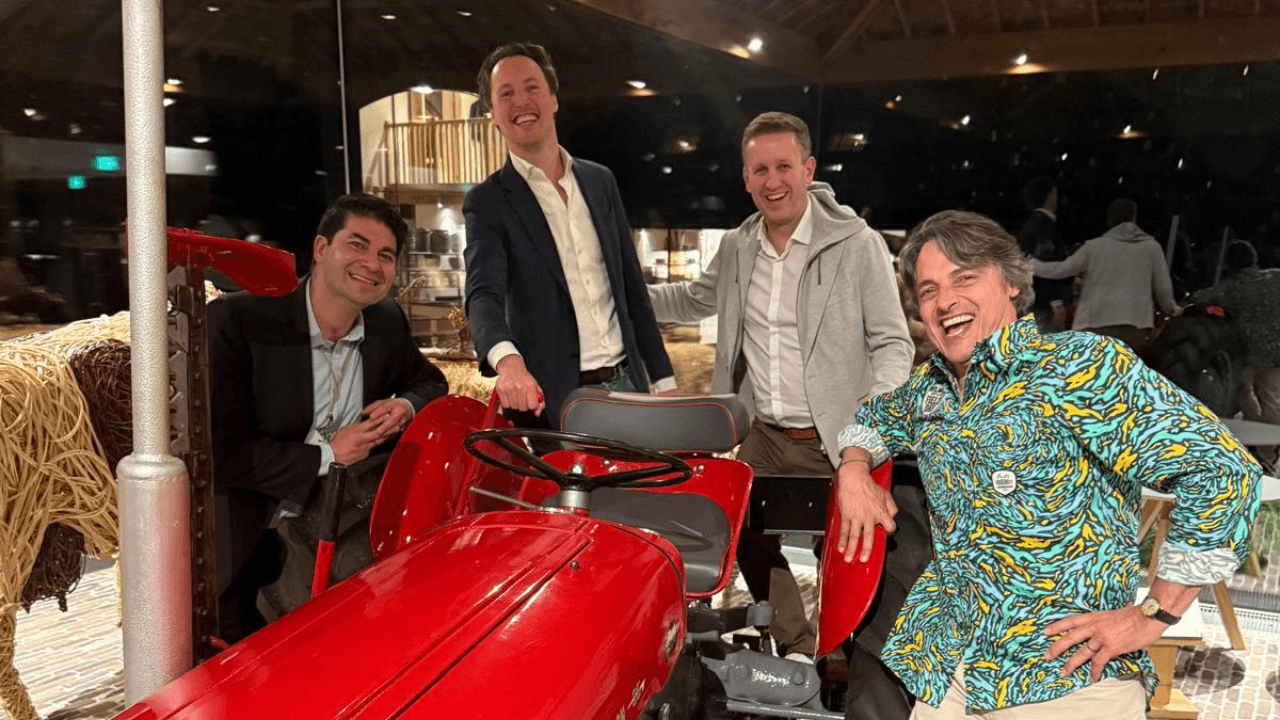
Anterra Capital Secures $100M First Close for Fund III, Targeting Next-Gen Agritech Innovation
Anterra Capital, a specialist venture firm investing in food and agriculture, has announced the $100 million first close of its Fund III. Founded in 2013 with offices in Amsterdam and Boston, the firm now manages over $500 million across its three funds.
Anterra Capital's vision is built on the conviction that the tools which have already transformed other industries – from life science tools that reshaped human health to software that rewired sectors like logistics and financial services – would eventually transition to, and transform, food and agriculture. This milestone for Fund III marks a significant moment for the firm, which continues to invest in and build companies applying life-science and software innovations to these crucial sectors.
The Agritech Market Context and Current Challenges
The food and agriculture sector remains the largest industry on the planet, estimated at roughly $10 trillion in size and employing around 1.3 billion people, nearly 40 percent of the world's workforce. It is an area where a set of structural forces converges, making the old way of operating no longer sustainable. These include margin volatility, growing concerns about food security, climate and water constraints, tightening regulation, and health outcomes increasingly tied to what the system produces.
Global investment in food and agriculture technology surged to a historical peak of nearly $52 billion in 2021 before falling back to roughly $16 billion in 2022, returning to 2016 levels. Much of this capital, often from generalist investors, backed ambitious, capital-intensive bets that failed to scale effectively. Examples include indoor vertical farms, plant-based processed meat alternatives, and 10-minute grocery delivery services.
Anterra's Strategy and the Impact of AI
Anterra Capital has adopted a different approach, backing science-backed companies built on real unit economics and designed to scale through existing industry channels. This retreat of capital from hype back to fundamentals has opened the door for disciplined specialists like Anterra.
Anterra's investment thesis has been consistent across its first two funds. With market valuations reset and artificial intelligence (AI) now changing the economics of building in both software and biology, the moment has finally arrived to deploy this strategy at scale. AI is, in fact, redefining the costs and possibilities of innovation, a crucial aspect for companies evaluating the infrastructure needed to support complex workloads, including Large Language Models (LLM) and other machine learning applications. For those considering on-premise deployments, these changes can significantly impact the Total Cost of Ownership (TCO) and hardware decisions.
Future Outlook and Thesis Consistency
Maarten Goossens, Partner at Anterra Capital, highlighted how the firm has successfully navigated two capital cycles in food and agriculture. “Each one rewarded the same discipline: backing companies that deliver real returns for their customers and to their investors,” Goossens stated. “What's different this time is that the real-world industries we operate in – large, complex, and historically resistant to change – are now ready to be rewired, and the tools to do it have arrived.”
Brett Wong, also a Partner at Anterra Capital, added: “We've spent twelve years and two funds proving you can build category-defining companies in food and agriculture – and generate real returns doing it. What's changed is that the world has finally caught up to that thesis. The technology is here, the valuations make sense, and the founders building in this sector are the best we've ever seen. This is the most exciting moment in our firm's history, and Fund III is how we intend to make the most of it.”







💬 Comments (0)
🔒 Log in or register to comment on articles.
No comments yet. Be the first to comment!