
Anthropic Segments LLM Offering with Two New Claude Versions
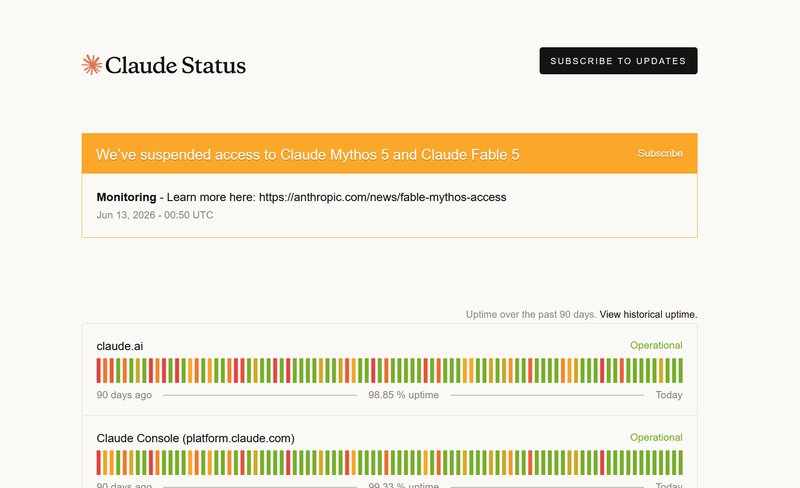
Anthropic, a prominent player in the Large Language Models (LLM) landscape, recently announced a segmented release strategy for the new iterations of its Claude model. The company is introducing two distinct versions: Claude Mythos 5, aimed at "trusted organizations," and Claude Fable 5, made available to the general public. This move underscores a differentiated approach designed to meet specific market needs, balancing access with control.
Anthropic's decision to segment its offering reflects a growing awareness of diverse user needs, ranging from very stringent security and compliance requirements to a desire for accessibility and ease of use for more general applications. This strategy could influence how companies and developers evaluate future LLM deployments.
Technical Details and Strategic Implications of the New Versions
The distinction between the two versions is not merely nominal. Claude Mythos 5 is designed for partners and organizations likely requiring advanced capabilities or more granular control, potentially in contexts where deep customization and integration are crucial. While the source does not specify technical details such as model size, context window, or VRAM requirements, it is plausible that Mythos 5 could offer configurations optimized for specific workloads or environments with stringent data sovereignty requirements.
On the other hand, Claude Fable 5 is presented as the "safe" version for the public, with Anthropic explicitly stating its unsuitability for use in cyberattacks. This assertion highlights the company's commitment to ethics and security in AI, an increasingly relevant topic in public discourse and among corporate decision-makers evaluating LLM adoption. The public availability of Fable 5 suggests optimization for a wide range of standard consumer and enterprise applications, where ease of use and robustness against misuse are priorities.
Considerations for On-Premise Deployment and Data Sovereignty
For companies considering LLM integration, Anthropic's strategy raises important questions regarding deployment. "Trusted organizations" accessing Mythos 5 might have the option to deploy the model in self-hosted or hybrid environments, ensuring greater control over data and compliance. This is a crucial aspect for sectors such as finance or healthcare, where data sovereignty and security are non-negotiable. The choice between an on-premise deployment and a cloud-based solution depends on a careful analysis of TCO, existing infrastructure capabilities, and regulatory requirements.
The public-oriented Fable 5 version is likely suited for a more traditional cloud-based deployment, where Anthropic manages the infrastructure and security guarantees. However, even in this scenario, companies must evaluate the trade-offs in terms of latency, throughput, and customization compared to the more direct control offered by on-premise solutions. For those evaluating on-premise deployments, AI-RADAR offers analytical frameworks on /llm-onpremise to assess these trade-offs in detail.
Future Outlook in the LLM Market
The differentiation of LLM models based on audience and security capabilities reflects a maturing market. Companies are no longer just looking for the most powerful model, but for the one best suited to their specific needs, including security, compliance, and flexible deployment options. This move by Anthropic could prompt other LLM developers to further segment their offerings, providing versions optimized for specific use cases, whether for air-gapped environments, edge computing, or consumer applications with strict ethical requirements.
The ability of an LLM to operate securely and controllably is now a key distinguishing factor. Decisions regarding the adoption of these technologies will increasingly be driven not only by raw performance but also by trust, transparency, and the ability to integrate into complex and regulated IT ecosystems.




💬 Comments (0)
🔒 Log in or register to comment on articles.
No comments yet. Be the first to comment!