
Anthropic and Claude Code Removal: A Controversial Test
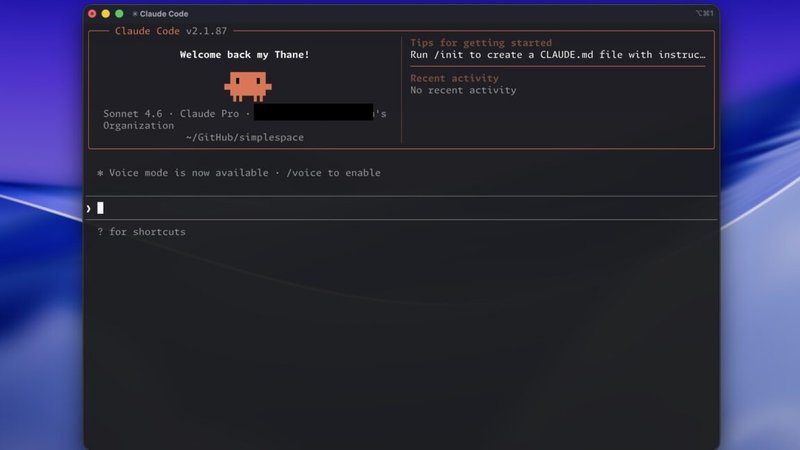
Anthropic, a key player in the Large Language Models (LLM) landscape, has initiated a test that is generating discussion within the developer community. The company has removed the 'Claude Code' feature from its Pro subscription plan, a change reportedly visible on some of its public-facing web pages. This move, although Anthropic describes it as a limited test for a small percentage of users, has had a broader impact, altering documentation accessible to everyone.
This discrepancy between the stated intent of a small-scale test and the visibility of changes in public documentation raises questions about feature management and communication with its user base. For companies and development teams integrating LLMs into their pipelines, the stability and predictability of features are crucial aspects for planning and operations.
Technical Details and Impact on Development Pipelines
'Claude Code' likely refers to code generation, completion, or analysis capabilities offered by the Claude model. For developers, access to such tools can significantly accelerate development processes, from prototyping to bug fixing. Its removal, even if temporary or limited, can disrupt established workflows and necessitate rapid adaptations.
This type of change, especially if unannounced or ambiguously communicated, highlights the challenges associated with reliance on third-party LLM services. Organizations basing their strategies on specific features from a cloud provider must consider the risks linked to sudden modifications, which can directly impact the Total Cost of Ownership (TCO) and the ability to maintain their development roadmap. The need to adapt code or find alternative solutions can lead to additional costs and delays.
Implications for Deployment and Data Sovereignty
Incidents like the one involving Anthropic reinforce the argument for more controlled deployment strategies. For CTOs, DevOps leads, and infrastructure architects, the possibility of unilateral changes to cloud service features can be a decisive factor when evaluating between self-hosted and cloud solutions. An on-premise or hybrid deployment, while requiring an initial investment in hardware (such as GPUs with adequate VRAM) and infrastructure, offers greater control over features, security, and data sovereignty.
Transparency and stability of service offerings are fundamental for companies operating in regulated sectors or handling sensitive data. The unexpected removal of a feature can raise concerns related to compliance and the ability to maintain air-gapped or strictly controlled environments. Choosing a local deployment, with internally managed LLM stacks, can mitigate these risks, ensuring that essential functionalities remain available and under the direct control of the organization.
Future Outlook and Strategic Decisions
The Anthropic episode underscores the importance for companies to adopt a strategic and forward-thinking approach when choosing their AI infrastructure. Evaluation should not be limited to performance or immediate cost alone but extend to service stability, vendor transparency, and flexibility to adapt to future changes. For those evaluating on-premise deployments, analytical frameworks on /llm-onpremise can help define the trade-offs between initial costs, operational control, and long-term risks.
In a rapidly evolving LLM market, an organization's ability to maintain control over its tools and data becomes a strategic asset. This may drive an increasing number of companies to explore bare metal solutions or local stacks, where feature management and long-term planning are entirely in the hands of the IT team, reducing dependence on external decisions and ensuring greater operational resilience.







💬 Comments (0)
🔒 Log in or register to comment on articles.
No comments yet. Be the first to comment!