A new privacy tool is available for those who fear being filmed without their knowledge.
Nearby Glasses: Defense Against Wearable Surveillance
An application developed by a sociologist, Yves Jeanrenaud, warns users if people nearby are wearing smart glasses, such as Meta's Ray-Ban. These devices have repeatedly been at the center of controversy for their potential use in covert video recording.
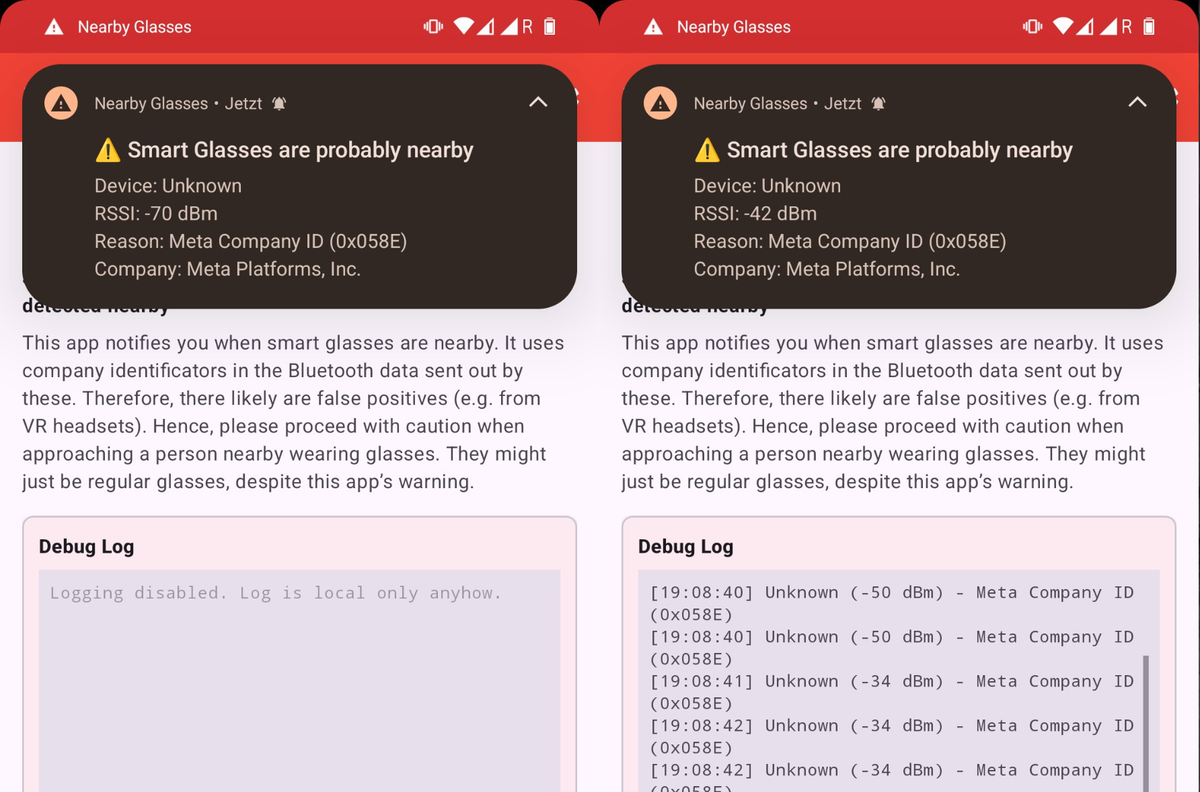
The app, called Nearby Glasses, works by scanning the Bluetooth signals emitted by the glasses. If a potential match is detected, the app sends a notification to the user.
How it works
Nearby Glasses is available on the Google Play Store and GitHub. After installation, the user must start the scan and the app monitors the surrounding area for specific Bluetooth signals. If detected, a warning is displayed.
The app identifies smart glasses by analyzing Bluetooth "advertising frames," small data packets transmitted by devices. The application searches for the identification codes of Meta, Luxottica (Meta's partner for Ray-Ban glasses), and Snap.
Limitations and clarifications
The developer himself admits that the app may generate false positives, for example by detecting VR headsets. During testing, the app identified a Meta Quest 2 as smart glasses. Jeanrenaud emphasizes that this is an imperfect solution to a social problem amplified by technology, and does not want to promote excessive reliance on technological solutions.
The idea for the app came after reading articles documenting the misuse of Meta glasses, such as the non-consensual recording of people. The goal is to provide a small tool of defense against surveillance.
The context: Google Glass and the evolution of privacy
The issue of privacy related to smart glasses is not new. Already with the launch of Google Glass, more than ten years ago, concerns were raised and episodes of protest occurred. Unlike Google Glass, which was easily recognizable, Meta's glasses are designed to resemble normal glasses, making it more difficult to identify who is wearing them. The Nearby Glasses application tries to fill this gap, offering a preventive warning.








💬 Comments (0)
🔒 Log in or register to comment on articles.
No comments yet. Be the first to comment!