Apple's "Performance Tax" Under Scrutiny
For a long time, critics and competitors have complained about the so-called "Apple Tax," referring to the sales commissions developers must pay for App Store transactions and in-app purchases. Now, Microsoft engineers have documented another form of "tax": a performance tax. This refers to the slowdown that iOS users experience due to Apple's policy, which requires all browsers on its mobile operating system to use the WebKit rendering engine, the same one that powers Safari.
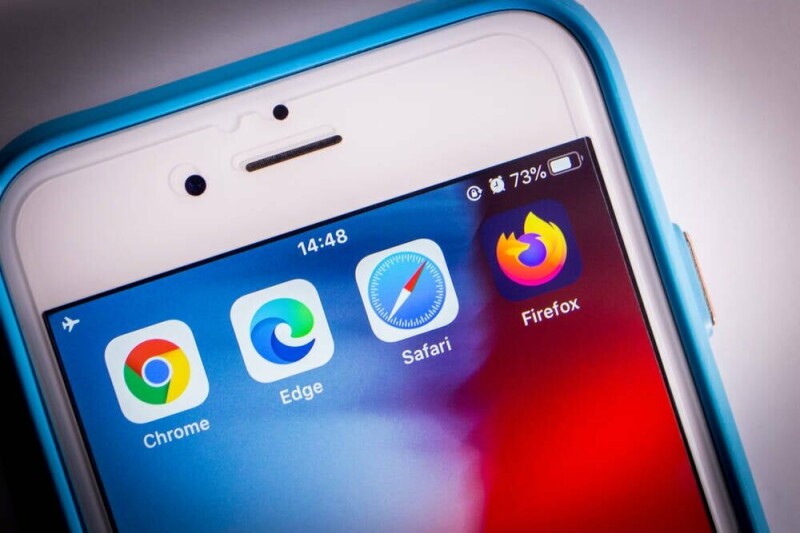
This restriction, with few theoretical exceptions, creates a technological monoculture that, according to Microsoft, penalizes the user experience. Rendering engines are the beating heart of web browsers: they manage the implementation of web standards, enforce security and privacy protections, and ultimately influence the very evolution of the web, as recently explained by Mozilla. Currently, only three major engines dominate the commercial landscape: Blink (the foundation of Chrome and its Chromium-based derivatives like Edge, Vivaldi, and Opera), WebKit (for Safari), and Gecko (for Firefox).
The Numbers of Disparity
Kyle Pflug, group product manager for the Microsoft Edge Web Platform, has published benchmark test results highlighting the performance gap. Using tools like Speedometer 3.1, Pflug compared the performance of a prototype Blink-based Edge browser for iOS with that of Safari. The data is significant: a Blink-based Edge, if implemented for iOS via BrowserEngineKit (a framework introduced by Apple in March 2024 to comply with Europe's Digital Markets Act), would score 28.6% better on Speedometer 3.1 (49.27 vs 38.3) than Safari on iOS 26.5.1.
The differences also extend to other benchmarks. On the JetStream 3 test, which evaluates JavaScript and WebAssembly performance, the Edge prototype would outperform Safari by 13.1% (306.35 vs 270.9). Even on the MotionMark 1.3.1 benchmark, focused on graphics rendering, a 2.1% advantage would be recorded (4,773.52 vs 4,673.68). Pflug clarified that this is a research prototype and preliminary numbers, but emphasized how these results demonstrate the potential to close real capability gaps and introduce new competition in terms of performance. Rick Byers, principal Chrome engineer at Google, commented on the results, highlighting the surprising magnitude of the gap on iOS compared to macOS, where Chromium and WebKit are usually in close competition.
Barriers to Innovation and Regulatory Context
Despite the introduction of the Digital Markets Act (DMA) in Europe, which theoretically should promote competition among browser engines on iOS and led Apple to provide tools like BrowserEngineKit, no browser maker has yet released a WebKit alternative. Microsoft, Google, and Mozilla have developed Blink and Gecko-based prototypes for iOS, respectively, but none have been made publicly available.
The reason lies in the considerable technical and regulatory challenges that Apple has not eased. Creating a new browser with a different engine involves overcoming obstacles such as bugs in BrowserEngineKit and the need to release a completely separate application from the WebKit-based version, forcing manufacturers to re-acquire their entire iOS user base. Alex Moore, executive director of Open Web Advocacy, a group lobbying on behalf of web developers against Apple's and Google's platform rules, cited US court filings and UK regulatory documents highlighting how Apple has deliberately limited investment in web innovation to maintain dependence on native apps and App Store rules.
Implications for the Future of the Mobile Web
The "performance tax" and the barriers to entry for alternative rendering engines have significant implications for the entire mobile ecosystem. The lack of diversity in browser engines, a consequence of the market power of Google and Apple, threatens the very concept of the "open web," as emphasized by Mozilla. With Safari holding 23.4% of mobile traffic on iOS globally and over 51% in North America, the forced choice of WebKit limits competitive differentiation outside of user interface elements.
Regulatory authorities, including the Italian Competition Authority, are intensifying their investigations. However, as highlighted by Open Web Advocacy, even with the DMA in force, the barriers imposed by Apple are such that they effectively prevent the porting of alternative engines to iOS. For those evaluating on-premise deployment, this situation illustrates how platform control can profoundly influence technological choices and performance, a crucial aspect in TCO analysis and data sovereignty. The European Commission is now called upon to intervene with greater precision to ensure these barriers are removed, in order to reshape the mobile ecosystem and foster true competition.









💬 Comments (0)
🔒 Log in or register to comment on articles.
No comments yet. Be the first to comment!