
Apple Watch: A $100 Billion Legacy and the Innovation Challenge
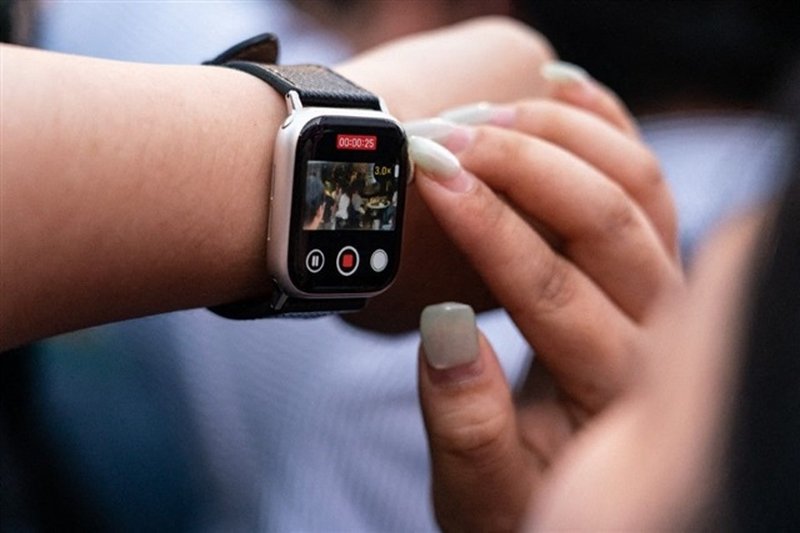
The Apple Watch has defined an era, transforming the smartwatch market and generating an estimated $100 billion in sales over its lifetime. Launched eleven years ago, the device set the standards for a product category that previously struggled to gain traction, integrating health monitoring, connectivity, and quick interaction in a compact form factor.
However, after more than a decade, innovation in the sector appears to have slowed, and the Apple Watch product line is losing momentum. According to Mark Gurman of Bloomberg, Apple risks falling behind in the next phase of evolution for an industry it helped shape and dominate.
The Paradigm Shift: From Displays to "Invisible" Devices
The wearable device market is undergoing a significant transition, driven by a change in consumer preferences. There is a growing trend towards less intrusive solutions that prioritize discrete functionality over constant screen interaction. This shift favors rivals offering "screenless" experiences, where the user interface is minimal or absent, and the focus is on passive data collection and the provision of contextual insights.
This evolution reflects a broader maturation of the technology sector, where the ubiquity of devices leads to a search for more seamless integration into daily life, without the need for an additional display surface. For companies, this implies the need to rethink the user experience, shifting the focus from conspicuous hardware to the intrinsic value of the data and services offered.
Implications for TCO and Deployment Strategy
Although this discussion centers on a consumer product, the market dynamics influencing the Apple Watch offer relevant insights for enterprise technology decisions as well. The need to constantly innovate to maintain relevance, or the risk of being surpassed by more agile and targeted solutions, is a critical factor. For organizations evaluating the adoption of new technologies, including Large Language Models, the choice between proprietary solutions and Open Source alternatives, or between cloud and self-hosted deployments, often relies on a thorough analysis of the Total Cost of Ownership (TCO).
A favorable TCO depends not only on the initial cost of hardware or licenses but also on a system's ability to evolve, integrate, and respond to changing needs without requiring excessive investments in upgrades or reconfigurations. Flexibility and adaptability thus become key parameters, especially in contexts where data sovereignty and regulatory compliance are priorities, pushing towards on-premise or air-gapped architectures.
Future Prospects: Data, Privacy, and User Experience
The next phase of the wearable device market, and more generally of personal technology, will likely be defined by the ability to deliver value through data analysis while maintaining a discreet and privacy-respecting user experience. Screenless devices, such as smart rings or bracelets, promise to collect biometric and activity data continuously and less invasively, providing personalized insights without visual distractions.
This scenario presents new challenges and opportunities for developers and technology providers. Secure data management, efficient processing (including local or edge inference), and ensuring data sovereignty become fundamental aspects. Companies that can balance innovation, discrete functionality, and user trust will be those that lead the next chapter of human-machine interaction.






💬 Comments (0)
🔒 Log in or register to comment on articles.
No comments yet. Be the first to comment!