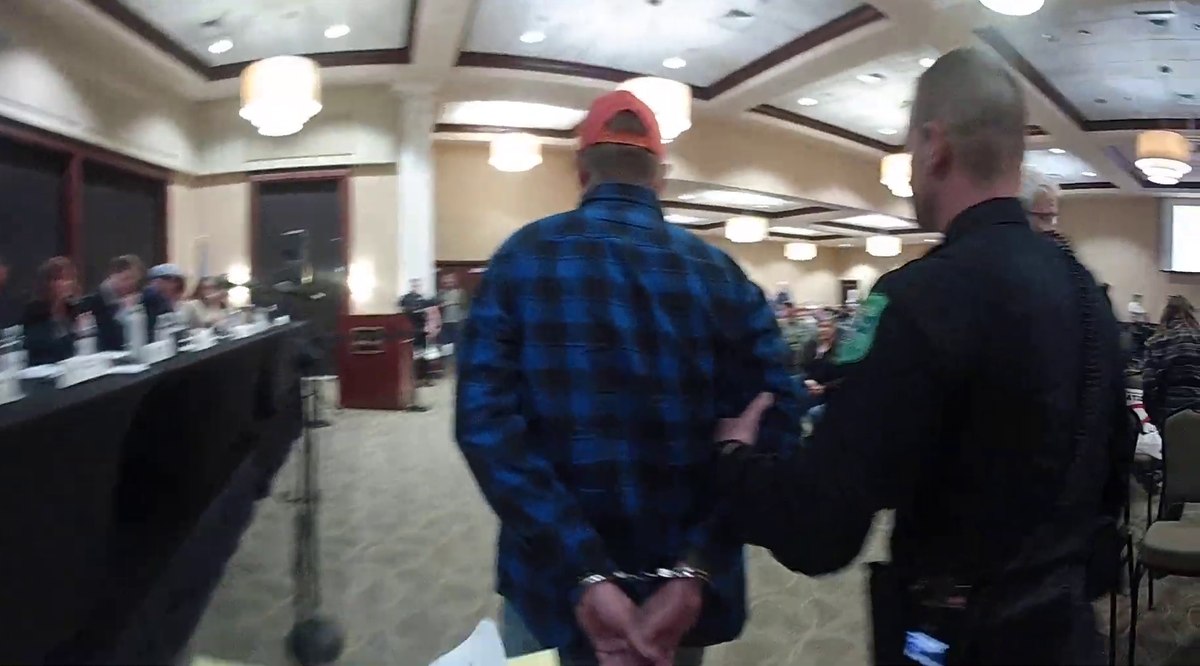
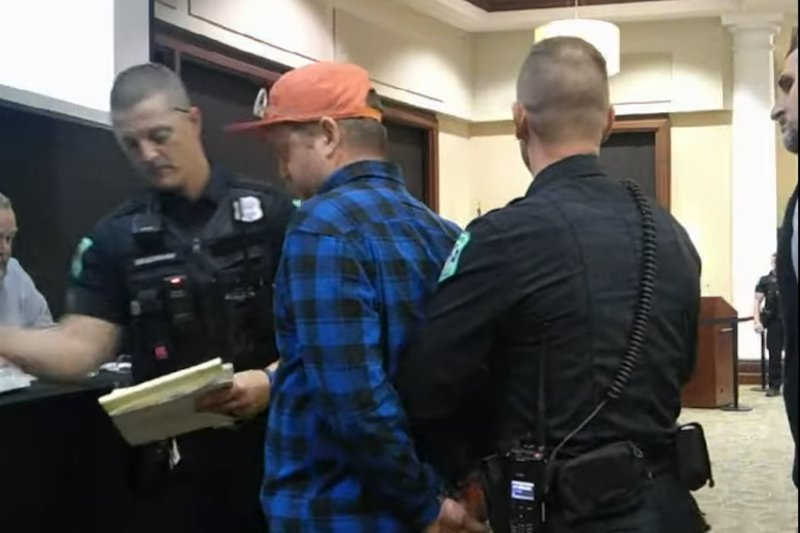
The scene, captured by an officer’s bodycam, unspools in seconds. Darren Blanchard, a farmer from Claremore, Oklahoma, is at the microphone to comment on a planned data center project codenamed Project Mustang. The town council has imposed a harsh three-minute limit for each speaker. As soon as he runs over slightly, two police officers approach. “You need to leave,” one says. He asks if he can hand over the documents he brought. “You can give them to Sarah and then let’s go.” Blanchard asks on what grounds he is being removed. The answer is blunt: “Arrest him.” Instantly his hands are cuffed behind his back, while the packed room erupts in boos and shouts. “That’s a cowardly thing to do,” a woman yells. Another attendee: “So you can break the law but we can’t?”
A project shrouded in silence
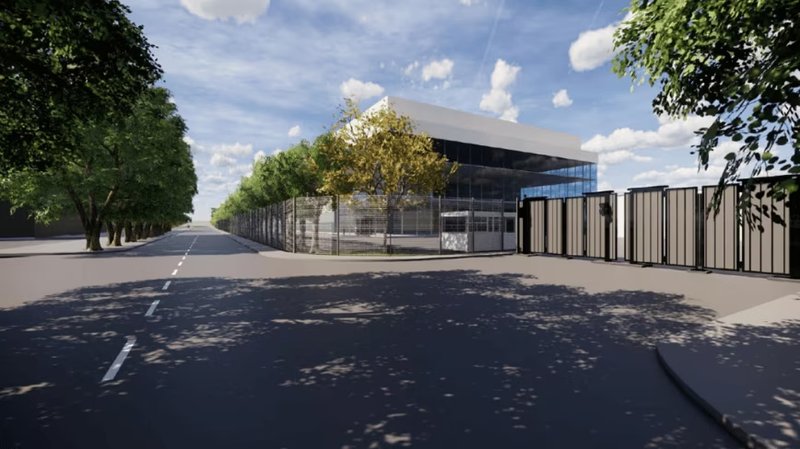
The February 17 meeting was supposed to be the space where citizens could voice concerns about the futuristic data center, but residents believe the project was approved with no real input. City officials signed nondisclosure agreements with developers and have never fully disclosed construction or environmental details. In practice, the community found itself facing a fait accompli, with the public consultation reduced to a formality enforced by a stopwatch.
Blanchard, who has no criminal record, immediately called the arrest retaliation for exercising his right to speak in a public forum. “Even if the charges are dropped and the arrest is found unlawful, the process itself is the penalty,” he told 404 Media. His legal team has filed a motion to dismiss the charge and requested that the city attorney, who witnessed the arrest, recuse himself.
When a microchip reshapes the land
The Claremore case is not isolated. Blanchard, who has since appeared repeatedly on local TV and at public gatherings, describes a national trend: “Everywhere people are beginning to recognize that these are not just abstract technology investments. They impact land, water, electricity rates, housing, agriculture and the very character of communities.” The script is often the same: developers arrive with job promises, local officials are urged to move quickly, sometimes shielded by nondisclosure agreements, and the long-term costs—rising bills, water consumption, loss of farmland, tax breaks with little accountability—are passed on to residents.
For those planning on-premise deployments, this is a wake-up call. Building a private data center or an inference node on site requires not only hardware investment but also a social license to operate. Public opposition can turn into administrative roadblocks, delays, and lawsuits, dramatically altering TCO and time-to-service.
The chilling effect and transparency as a non-negotiable requirement
“If someone can be arrested after speaking at a public meeting, others will decide it’s safer to stay quiet,” Blanchard warns. The chilling effect undercuts the democratic foundation on which any major infrastructure transformation should rest. This is not only a legal matter—it’s a governance issue.
The incident shows what can happen when the approval process for a strategic AI asset—in the cloud or on-premise—lacks genuine participation mechanisms. For companies building their own local processing capacity, ignoring the social context means exposing themselves to reputational and operational risks. AI-RADAR has long explored these variables in its evaluation frameworks, because data sovereignty also depends on the consent of the people who generate that data and live next to the servers.
A fight that doesn’t end with the trial
Blanchard is confident that justice will prevail, but he stresses that the personal trauma and the media glare remain. “My story has shone a light on the fight against data centers. That is important, but the scar runs deep.” The question he keeps asking lingers: “Who are these projects ultimately serving?” The answer can no longer be locked inside an NDA.








💬 Comments (0)
🔒 Log in or register to comment on articles.
No comments yet. Be the first to comment!