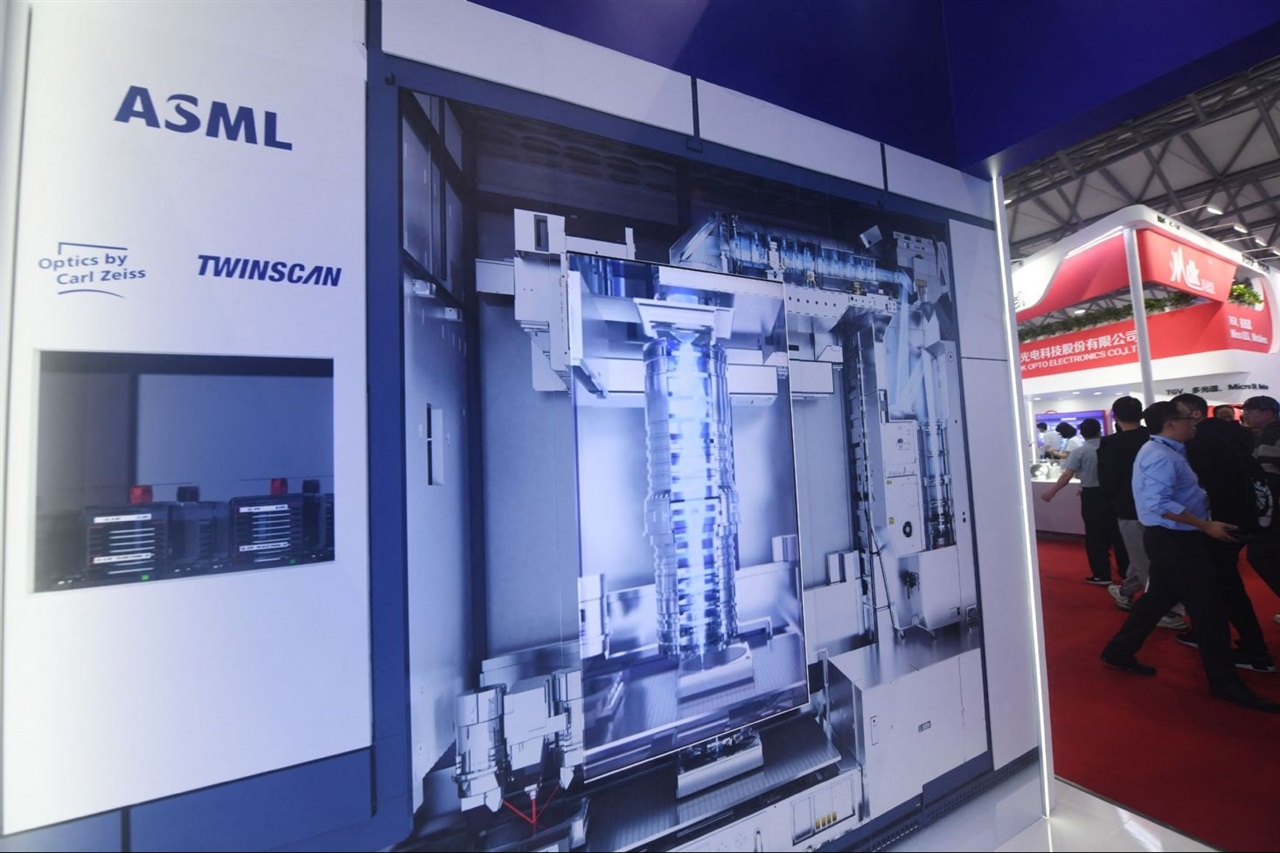
ASML doesn't show up at the glitzy AI keynotes, but without its machines the party stops. The Dutch company — a de facto monopoly in EUV lithography, essential for sub-7nm chips — has spelled out a message that redraws the balance of AI hardware: rising pricing power and a production sprint of at least two years to meet demand that shows no signs of slowing. The bottleneck is being tightened by AI itself, with its insatiable hunger for ever-denser accelerators.
This is not just NVIDIA’s or TSMC’s problem. The lithography constraint ripples through every link in the chain, all the way to those evaluating whether to deploy an on-premise inference cluster. ASML’s EUV machines cost hundreds of millions of dollars each and have lead times measured in years. When the supplier signals it will use price leverage and run capacity at full tilt for at least twenty-four months, it means foundry expansion plans — and thus the availability of next‑generation GPUs and AI accelerators — will stay tight.
For organizations pushing self-hosted setups, this is unwelcome news in the short term. The TCO of an on-premise deployment, already stressed by card costs and energy consumption, now faces longer procurement cycles and little chance of price relief. The cloud, with its ability to absorb multi-year commitments and negotiate volume, can look like the only viable path. But there is a flip side that superficial analyses miss: the upstream choke point makes dependence on single suppliers — ASML for lithography, TSMC for manufacturing, NVIDIA for GPU design — glaringly obvious. A supply-chain architecture that concentrated puts data sovereignty and operational continuity at risk for anyone who cannot afford to wait.
That’s why ASML’s signal must not be read as just a price-hike story. It carries structural implications for the LLM ecosystem. The scarcity of advanced silicon raises the bar for efficiency: smaller models, aggressive quantization, and optimized serving frameworks that wring every gigabyte out of available VRAM are no longer academic exercises — they become a prerequisite for anyone aiming to run inference in-house without leaning on a handful of vendors. The dynamic accelerates research into alternative architectures — from chiplets to dedicated accelerators — and may even redraw the power balance among industry giants: whoever can guarantee predictable volumes and costs will have an enormous competitive edge.
Meanwhile, ASML’s grip on EUV lithography has no credible alternative. Geopolitical tensions and export restrictions make the picture even stiffer. For those planning on-premise AI infrastructure, the message is clear: the game is played not only on LLM benchmarks but on the ability to secure iron. And that iron, for the next two years, will carry a price set by whoever controls the light that etches the silicon.






💬 Comments (0)
🔒 Log in or register to comment on articles.
No comments yet. Be the first to comment!