The Global Semiconductor Landscape and China's Ambitions
The global semiconductor sector is at the heart of increasingly complex geopolitical and strategic dynamics. Forecasts for 2025 indicate that Chinese chipmakers could achieve record profits, a sign of the country's growing capability and ambition in this strategic segment. However, these projections are accompanied by expectations of slipping margins, suggesting a phase of intense competition and significant investments to sustain growth.
This scenario is set against a backdrop of trade and technological tensions. Shipments from the United States, presumably of key technologies or components for chip production, have seen a 34% decrease. This decline reflects policies aimed at limiting China's access to certain advanced technologies, pushing Beijing to further strengthen its efforts to develop a completely local and self-sufficient chip production pipeline.
The Crucial Role of ASML and Technological Challenges
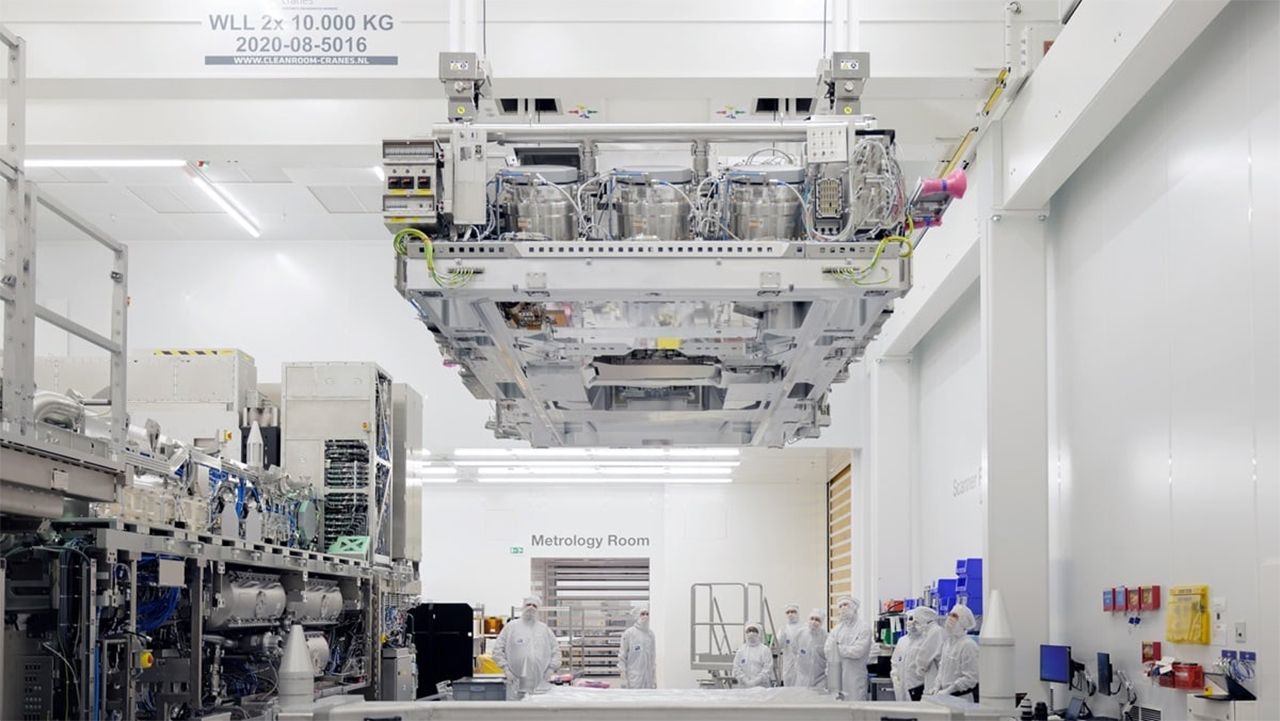
At the core of these dynamics is ASML, the Dutch company and world leader in the production of lithography systems, essential for manufacturing the most advanced semiconductors. ASML's technology, particularly its EUV (Extreme Ultraviolet) systems, is fundamental for creating chips with increasingly smaller and more performant nodes, indispensable for applications ranging from smartphones to data centers, including Large Language Models (LLM) workloads.
Beijing's strategy to "shore up local chipmaking efforts" implies massive investment in research and development, infrastructure, and talent. The goal is to reduce dependence on foreign suppliers and ensure technological sovereignty, a critical aspect for national security and economic competitiveness. However, replicating the technological ecosystem and production capacity of companies like ASML requires time, immense resources, and access to highly specialized know-how, often protected by stringent export controls.
Implications for AI Infrastructure and TCO
For companies evaluating the deployment of AI and LLM workloads, semiconductor supply chain dynamics have direct implications. The availability and cost of hardware, particularly high-performance GPUs with sufficient VRAM, are decisive factors for investment decisions in self-hosted or hybrid infrastructures. Increased uncertainty in the supply chain or restrictions on access to cutting-edge technologies can influence the Total Cost of Ownership (TCO) of an AI infrastructure, potentially increasing initial (CapEx) and operational (OpEx) costs due to the need to diversify suppliers or opt for less efficient but more accessible solutions.
The push towards data sovereignty and the need for air-gapped environments for compliance or security reasons makes the ability to access reliable and performant hardware even more critical. Companies must consider not only immediate technical specifications but also supply chain resilience and geopolitical risks associated with dependence on a single supplier or a specific geographical region. For those evaluating on-premise deployments, analytical frameworks on /llm-onpremise can help assess these complex trade-offs.
Future Prospects and the Race for Technological Autonomy
The future of the semiconductor sector will likely be characterized by continuous tension between globalization and national autonomy. While China aims to build an independent supply chain, global companies like ASML find themselves navigating a landscape of restrictions and opportunities. The ability to innovate and produce advanced chips remains a key indicator of a nation's technological power.
For decision-makers in AI infrastructure, this scenario underscores the importance of long-term strategic planning. The choice of hardware and deployment architecture cannot disregard a thorough assessment of risks related to the supply chain, technological sovereignty, and overall TCO. Resilience and flexibility will become increasingly valuable attributes to ensure the continuity and efficiency of AI operations.







💬 Comments (0)
🔒 Log in or register to comment on articles.
No comments yet. Be the first to comment!