
ASML's Confidence in the Semiconductor Landscape
Christophe Fouquet, who assumed the role of ASML's CEO in 2024 after more than a decade with the company, recently shared his perspective on the Dutch giant's market position. In an interview held in Beverly Hills, Fouquet appeared relaxed, even when the conversation turned to the topic of competition. His composure reflects ASML's deep confidence in its technological leadership, a message that resonates throughout the semiconductor industry.
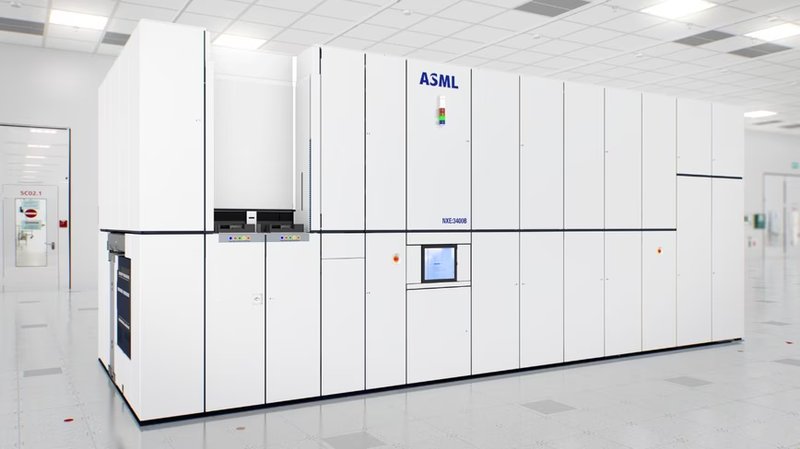
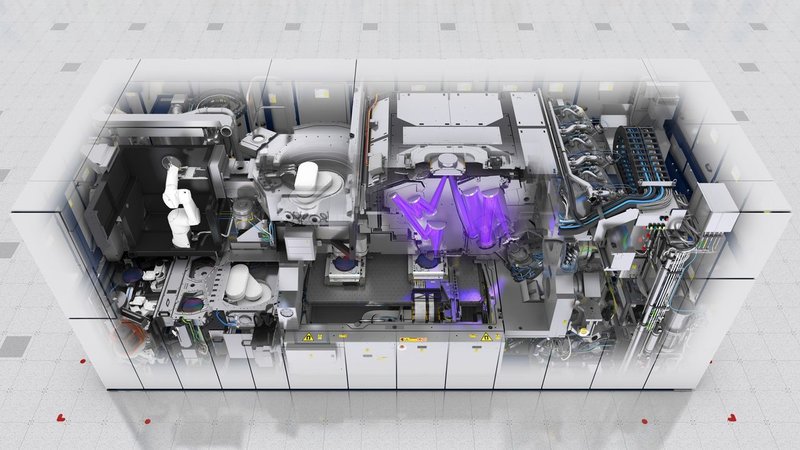
ASML is not just any player; it is a fundamental pillar of the industry, whose lithography machines are indispensable for the production of the world's most advanced chips. This strategic position makes its statements particularly relevant for anyone operating in technological innovation, from designing new devices to implementing complex infrastructures for artificial intelligence.
ASML's Indispensable Role in the AI Era
ASML's technology, particularly extreme ultraviolet (EUV) lithography, is crucial for manufacturing next-generation processors. These chips, which include high-performance GPUs, are the beating heart of artificial intelligence systems, from Large Language Models (LLM) to the most demanding machine learning workloads. Without ASML's innovations, the ability to produce silicio with ever-increasing transistor density would be severely hampered.
For companies evaluating the deployment of on-premise LLMs, the availability and specifications of this hardware are critical factors. GPU VRAM, throughput, and latency directly depend on chip manufacturers' ability to access the most advanced fabrication technologies. ASML's confidence in its position is not just a corporate statement but an indicator of the stability and predictability of the global semiconductor supply chain, an essential element for long-term strategic planning.
Implications for On-Premise Deployments and TCO
Global reliance on ASML for advanced chip production has direct repercussions on AI infrastructure deployment strategies. For CTOs, DevOps leads, and infrastructure architects considering self-hosted or air-gapped solutions, the availability of cutting-edge silicio is a primary constraint. ASML's ability to maintain its technological leadership directly influences the Total Cost of Ownership (TCO) of AI systems, as it impacts hardware acquisition costs, energy efficiency, and performance.
The choice between an on-premise deployment and a cloud-based solution for LLM workloads often comes down to a thorough analysis of trade-offs between control, data sovereignty, and operational costs. The stability of the semiconductor supply chain, partly guaranteed by ASML's position, is a factor that can mitigate risks associated with investments in proprietary hardware. For those evaluating on-premise deployments, AI-RADAR offers analytical frameworks on /llm-onpremise to assess these trade-offs, providing tools for informed decisions without direct recommendations.
Future Prospects and Global Challenges
Despite the confidence expressed by CEO Fouquet, the semiconductor sector is constantly under pressure due to geopolitical dynamics, security requirements, and the growing demand for computational capabilities. ASML's ability to continue innovating and meeting global demands will be crucial for sustaining the advancement of artificial intelligence and other emerging technologies. Its leadership is not just a competitive advantage but a responsibility that influences the entire technological ecosystem.
In an era where data sovereignty and infrastructure resilience are absolute priorities for businesses, the robustness of foundational technology providers like ASML becomes an enabling factor. Their ability to provide the necessary tools to produce the most advanced silicio is a prerequisite for developing robust, secure, and high-performing AI solutions, whether they are deployed in cloud or self-hosted environments.





💬 Comments (0)
🔒 Log in or register to comment on articles.
No comments yet. Be the first to comment!