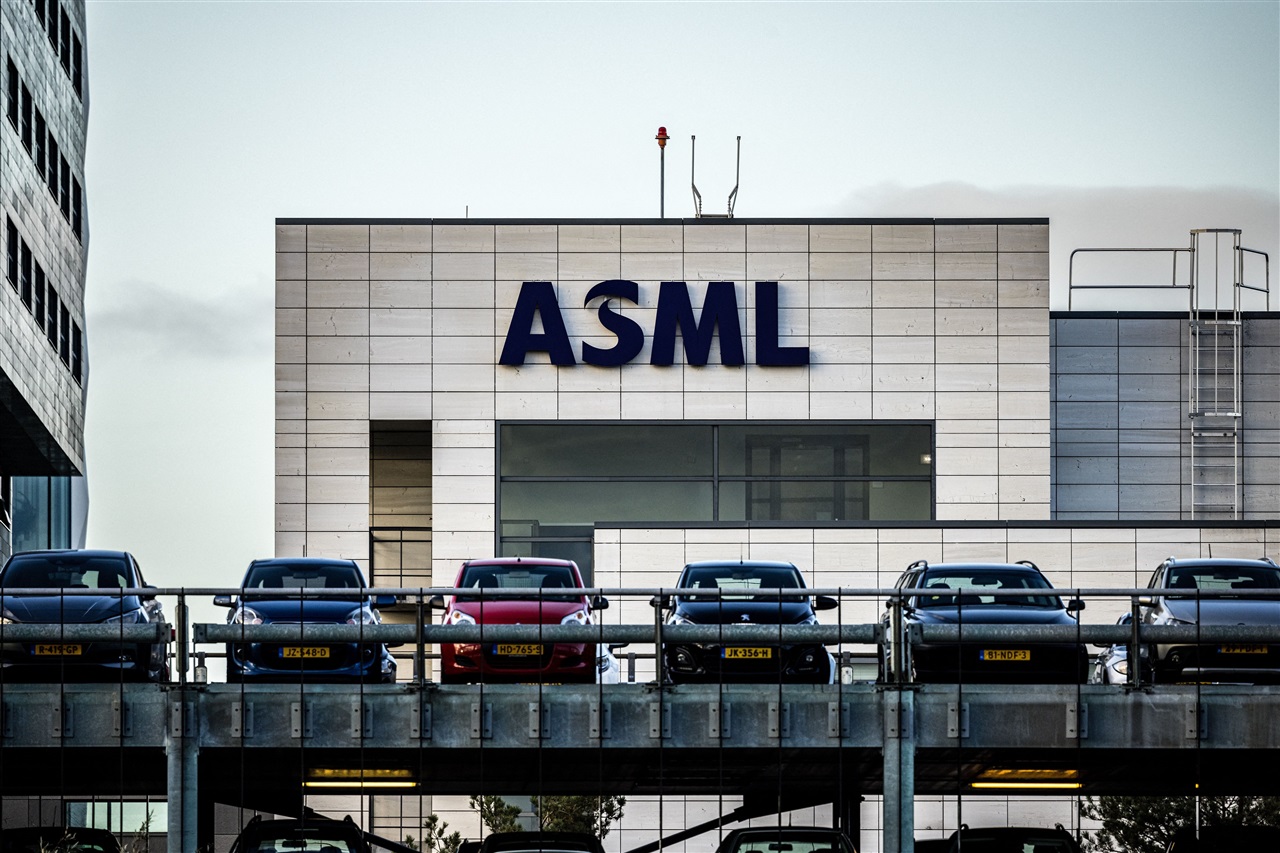
ASML: AI Demand Drives Results and Outlook in the Chip Market
ASML, the Dutch company leading in the production of lithography systems, announced a solid first quarter for 2026. The company highlighted how the growing demand for artificial intelligence technologies is positively influencing its future outlook. This scenario underscores the centrality of the silicio supply chain for the global expansion of AI infrastructures, a critical factor for both cloud-based and on-premise deployments.
ASML's results reflect a broader trend in the technology sector, where AI has become the primary driver of innovation and investment. The ability to produce advanced chips, essential for training and Inference of Large Language Models (LLM) and other artificial intelligence applications, largely depends on ASML's machines. This positions the company strategically, serving as a barometer for the health and direction of the global semiconductor market.
ASML's Crucial Role in the AI Era
ASML holds a near-monopoly position in the production of extreme ultraviolet (EUV) lithography machines, a technology indispensable for manufacturing the most advanced and dense chips. These chips are the beating heart of modern AI infrastructures, powering the GPUs and accelerators needed to handle intensive computational workloads. Without ASML's innovations, the production of cutting-edge processors, such as those used for training complex LLMs, would be significantly limited.
Strong AI demand directly translates into increased demand for these advanced chips. Consequently, ASML's production capacity and its delivery times become critical factors influencing the entire AI value chain, from chip design to market availability. Companies developing AI solutions, or intending to adopt them at scale, must consider the availability of this fundamental "silicio" as a primary constraint in their strategic planning.
Implications for On-Premise LLM Deployments
For organizations evaluating on-premise LLM deployments, the semiconductor market situation has direct and significant implications. The limited availability of high-end GPUs, such as A100s or H100s, and their high costs, are often primary obstacles. An AI-driven market, as described by ASML, can exacerbate these challenges, leading to longer waiting times and increased hardware acquisition costs.
Planning the Total Cost of Ownership (TCO) for a self-hosted AI infrastructure requires careful evaluation of initial CapEx, which is heavily influenced by the price and availability of silicio. Data sovereignty, regulatory compliance, and the need for air-gapped environments push many companies towards on-premise solutions, but the feasibility of such choices is intrinsically linked to the ability to procure the necessary hardware. For those evaluating on-premise deployments, AI-RADAR offers analytical frameworks on /llm-onpremise to assess the trade-offs between costs, performance, and control.
Future Outlook and Challenges
ASML's positive outlook, fueled by AI demand, is an encouraging sign for the technology industry as a whole, but it also highlights structural challenges. The production of EUV lithography machines is a complex and capital-intensive process, with development and delivery times extending for years. This means that the capacity to meet the growing demand for AI chips cannot be rapidly increased.
Companies relying on advanced AI infrastructures will need to continue navigating a market characterized by strong demand and potential supply constraints. Hardware procurement strategy, the choice between different GPU architectures, and the optimization of existing resource utilization will become even more crucial. The resilience of the silicio supply chain will be a determining factor for the speed and scope of artificial intelligence innovation in the coming years.






💬 Comments (0)
🔒 Log in or register to comment on articles.
No comments yet. Be the first to comment!