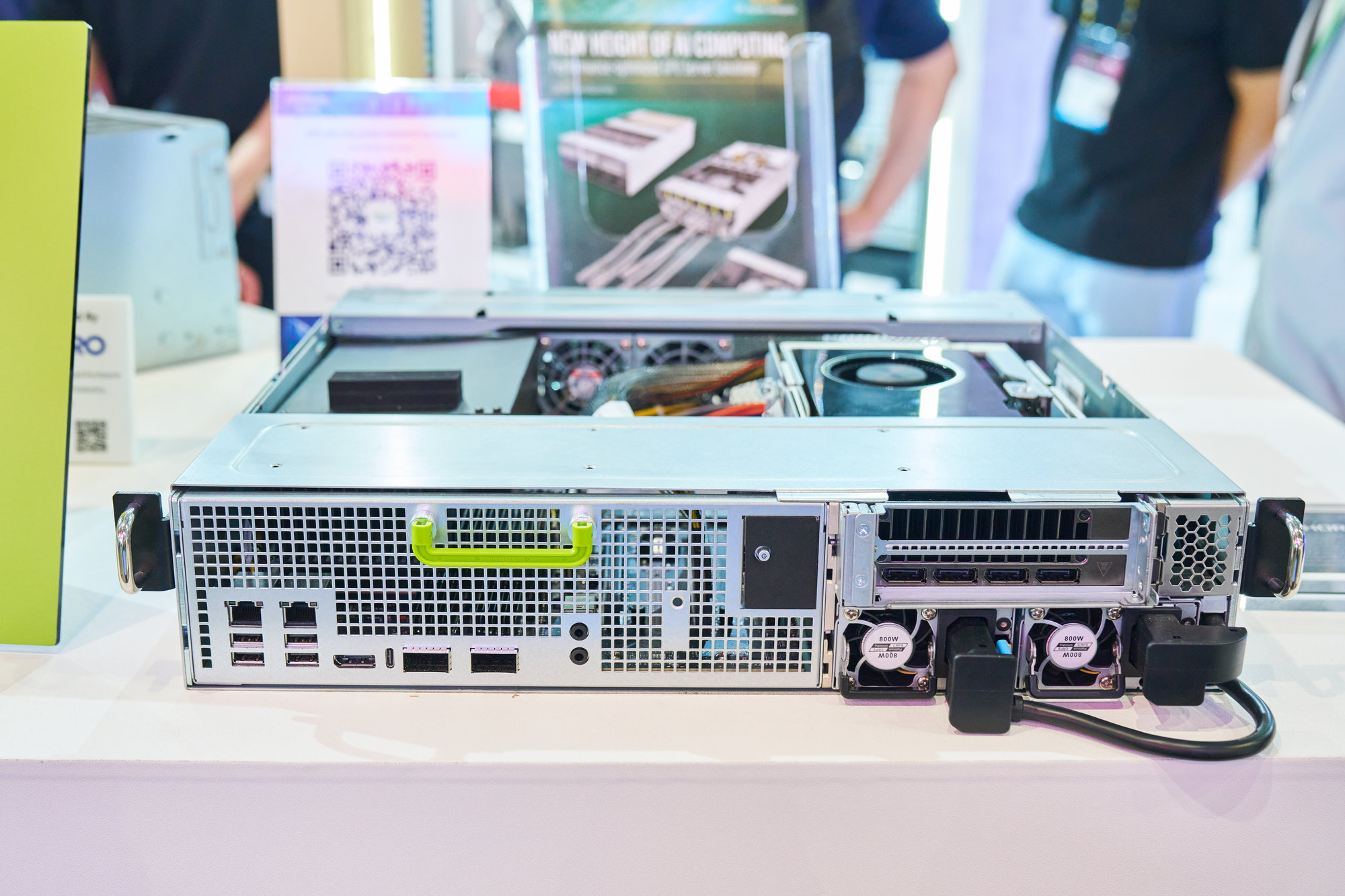
ASRock Rack has unveiled an unexpected edge server, the 2UXGI-THOR, built around NVIDIA’s industrial Thor SoC. The Blackwell‑era chip wasn’t designed for traditional datacenters but for demanding embedded scenarios: autonomous driving, robotics, edge computing. Now it arrives in a 2U rack form factor, with the company stating a clear focus: serving industrial and medical markets, where latency, reliability, and data control are non‑negotiable.
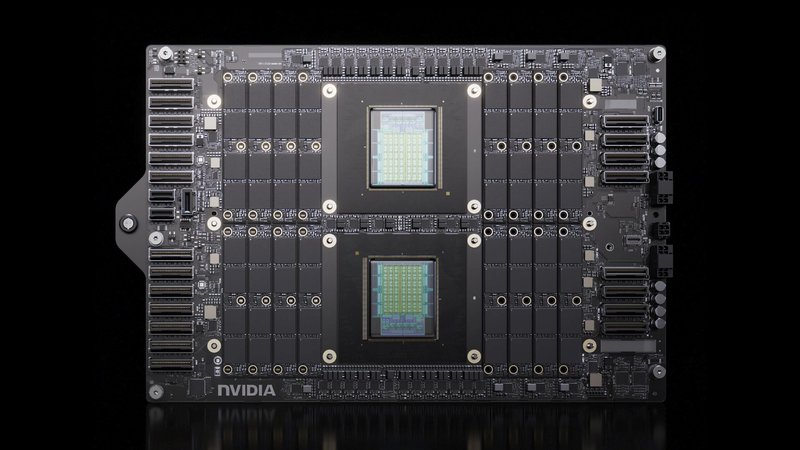
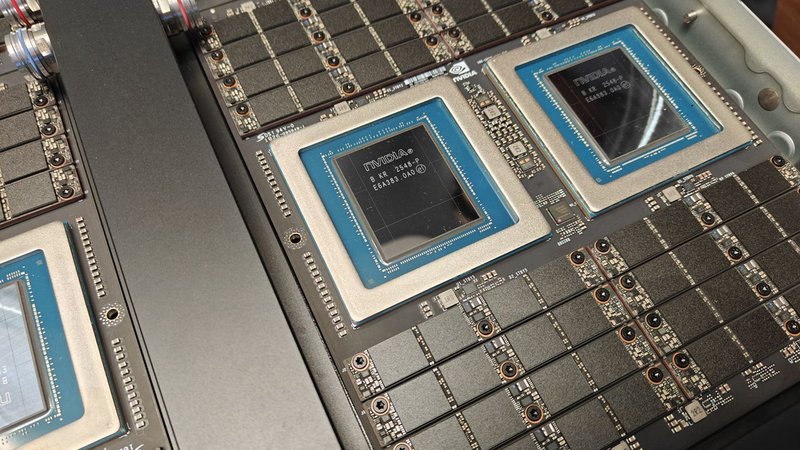
Thor is a system‑on‑chip that NVIDIA developed to unify a CPU (based on the Grace architecture), a latest‑generation GPU, and specialized accelerators in a single package. Public platform specifications point to compute power in the range of 2000 TOPS for INT8, coupled with functional safety certifications that enable use in critical applications. The transition to an edge server like the 2UXGI-THOR suggests that ASRock Rack has worked on thermal integration, power delivery, and interfaces to turn it into an inference node manageable by IT teams beyond the automotive perimeter.
For those watching on‑premise AI deployment, the move is more than a hardware curiosity. Advanced manufacturing and medical imaging, for instance, handle data that cannot leave the plant or hospital: privacy regulations, intellectual property, and uptime requirements push toward self‑hosted architectures. A server with Thor promises to run computer vision models, predictive analytics, and even quantized LLMs directly on the machine floor or in a local server room, with no cloud dependency. It’s a paradigm shift that cuts latency to milliseconds and keeps data sheltered from external transfers—critical when processing health records or industrial secrets.
It’s no accident that ASRock Rack zeroed in on industrial and medical sectors. Both are accelerating AI adoption but are held back by the difficulty of reconciling performance with compliance constraints. Thor, with its safety‑oriented profile, becomes a natural candidate to fill that gap: it can handle heavy inference workloads while remaining confined within a controlled environment, something the cloud cannot guarantee with the same precision.
Looking beyond the single machine, the announcement is a market signal: the edge server supply chain based on high‑performance SoCs is moving from experimental to stable production. Until recently, on‑premise AI meant choosing between adapted consumer GPUs, bulky workstations, or power‑constrained embedded systems. Now purpose‑built solutions are arriving, designed to be managed as IT services with the rigor required by regulated settings. This lowers the barrier for companies weighing the Total Cost of Ownership (TCO) of a local AI infrastructure against consumption‑based cloud models, especially when the data volume to process is steady and predictable.
It remains to be seen how LLM workloads will adapt to this platform. No official information specifies the VRAM or memory bandwidth of the module inside the 2UXGI-THOR, but the quantization ecosystem and on‑premise serving frameworks might find Thor a fertile ground for compact models optimized for vertical tasks. For those assessing how to bring language model inference into local production, ASRock Rack’s server adds another piece to a rapidly evolving landscape, where specialized hardware ceases to be a constraint and becomes a lever of control.



💬 Comments (0)
🔒 Log in or register to comment on articles.
No comments yet. Be the first to comment!