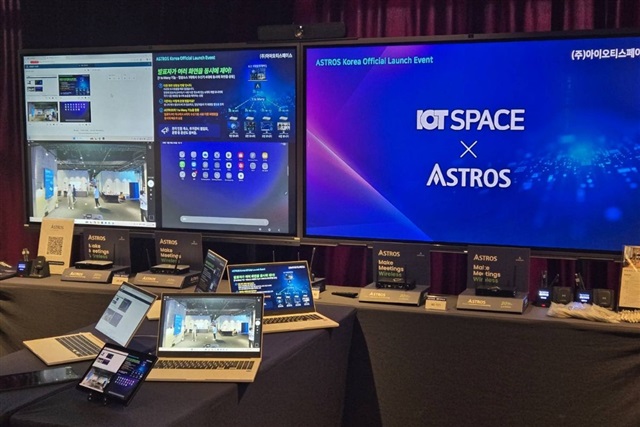
Taiwan's Astrogate Expands into South Korea, Securing LG and SK Hynix
Taiwanese company Astrogate has announced a significant expansion into the South Korean wireless conferencing solutions market, signing agreements with two industrial giants: LG and SK Hynix. This strategic move positions Astrogate as a key player in a rapidly evolving sector where the demand for robust, secure, and high-performance enterprise communication systems is steadily increasing.
Securing clients of this caliber underscores the confidence placed in Astrogate's technological capabilities and its offering of solutions that meet the specific needs of large enterprises. For global companies like LG and SK Hynix, the choice of a provider for their communication infrastructure is never arbitrary; it reflects a thorough evaluation of critical factors that extend beyond mere functionality.
The Enterprise Choice: Data Sovereignty and Control
The decision by companies such as LG and SK Hynix to adopt wireless conferencing solutions from a specific vendor can be interpreted in light of strategic priorities such as data sovereignty and infrastructure control. In an era where corporate communications are increasingly digitized and often convey sensitive information, managing data location and security becomes paramount.
Self-hosted or hybrid solutions, which allow companies to keep data within their own borders or on controlled servers, offer a higher level of security and compliance compared to purely public cloud options. This approach is particularly relevant for highly regulated sectors or companies operating with critical intellectual property, where information protection and compliance with regulations like GDPR (though not directly applicable in South Korea, it serves as an example of the type of requirement) are non-negotiable aspects. Astrogate's ability to meet such requirements may have been a decisive factor.
Implications for IT Infrastructure and TCO
The adoption of new wireless communication solutions in enterprise contexts has a direct impact on existing IT infrastructure. This can include the need for dedicated hardware for signal processing, network optimization to ensure low latency and high throughput, and integration with corporate security and access management systems. For large organizations, planning these deployments requires a careful evaluation of the Total Cost of Ownership (TCO).
The TCO for on-premise or hybrid communication solutions includes not only the initial CapEx costs for hardware and software but also the operational expenses (OpEx) related to maintenance, energy, and IT personnel. While cloud solutions may appear more cost-effective in the short term, a thorough TCO analysis over a longer time horizon often reveals the economic and strategic advantages of self-hosted infrastructures, especially when considering data volumes and customization needs. These dynamics are similar to those companies face when evaluating the deployment of Large Language Models (LLM) on-premise versus using cloud services.
Future Outlook and the Role of On-Premise
Astrogate's success in South Korea with high-profile clients like LG and SK Hynix reinforces the trend among large enterprises to seek solutions that offer greater control, security, and customization for their critical infrastructures. This orientation towards more controlled and potentially self-hosted environments is not limited to communications but extends to a wide range of enterprise workloads, including those related to artificial intelligence and Large Language Models.
For CTOs, DevOps leads, and infrastructure architects, evaluating on-premise alternatives versus the cloud for AI/LLM workloads is a complex strategic decision. Factors such as data sovereignty, regulatory compliance, specific hardware performance, and TCO optimization are at the heart of these choices. AI-RADAR offers analytical frameworks on /llm-onpremise to evaluate the trade-offs and constraints associated with such deployments, providing essential tools for informed decisions in a constantly evolving technological landscape.





💬 Comments (0)
🔒 Log in or register to comment on articles.
No comments yet. Be the first to comment!