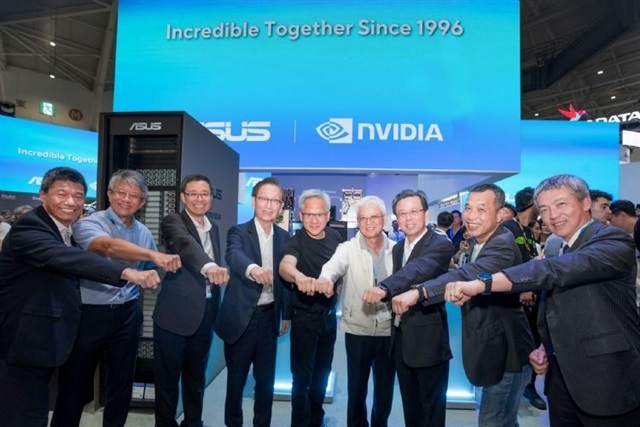
Asus and the AI Server Market: A Growing Balance Sheet
Asus has announced that it has achieved record revenues, a result that highlights its increasing exposure to the dynamic market for artificial intelligence servers. This financial milestone, while underscoring the company's ability to capitalize on the current AI boom, also brings to light a significant challenge: rising component costs. This scenario has direct implications for companies planning investments in AI infrastructure, particularly for those evaluating on-premise deployment solutions.
The AI server sector is rapidly expanding, driven by the need to process increasingly complex workloads, such as those generated by Large Language Models (LLM). The ability to provide high-performance and reliable hardware has become a critical success factor for manufacturers, and Asus positions itself as a key player in this segment.
The Drive of AI Server Demand and On-Premise Implications
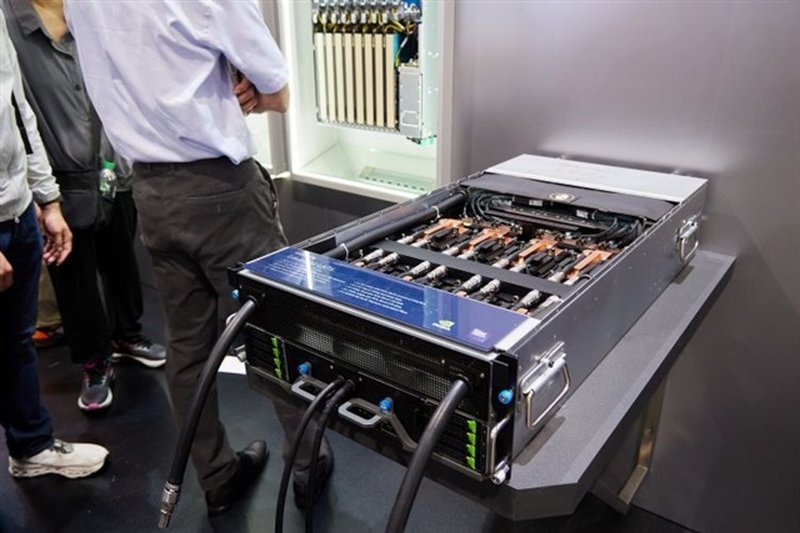
The demand for AI servers is growing strongly, driven by the need to process complex workloads, particularly those related to Large Language Models (LLM). Companies opting for self-hosted solutions must consider investing in specialized hardware, such as high-performance GPUs with adequate VRAM, to ensure optimal throughput and latency. This approach offers greater control over data sovereignty and compliance but requires careful planning and a significant initial CapEx.
On-premise deployment of AI infrastructures allows organizations to keep data within their own boundaries, meeting stringent regulatory and security requirements, such as those imposed by air-gapped environments. However, managing these systems requires in-house expertise and constant attention to resource optimization, from computing power to storage, to maximize efficiency and reduce TCO in the long term.
The Impact of Rising Component Costs
The increase in component costs, from memory chips to processors and graphics cards, has a direct impact on the Total Cost of Ownership (TCO) of AI infrastructures. For organizations evaluating an on-premise deployment, this means a higher initial CapEx and the need to optimize resource utilization to amortize the investment. The choice between different hardware architectures and Quantization strategies can mitigate these costs but requires deep technical expertise and a careful evaluation of the trade-offs between performance and cost.
Costs are not limited to the initial purchase. The energy required to power and cool AI servers, especially those equipped with the latest generation GPUs, represents a significant expense. This makes energy efficiency an increasingly important criterion in hardware selection and data center design, further influencing the overall TCO of a self-hosted solution.
Outlook and Strategic Decisions for AI Infrastructure
The current context compels technical decision-makers to balance performance, cost, and control. The growing demand for AI servers, coupled with rising component costs, makes the evaluation of on-premise deployment options even more critical. Companies must carefully analyze their specific requirements, considering factors such as data sensitivity, latency needs, and available budget, to determine the most suitable approach.
For those evaluating on-premise deployments, there are complex trade-offs between the initial investment in powerful hardware and the flexibility offered by cloud solutions. AI-RADAR focuses precisely on analyzing these aspects, offering analytical frameworks on /llm-onpremise to evaluate the implications of a self-hosted deployment versus cloud alternatives, with an emphasis on data sovereignty, control, and TCO. The ability to navigate this complex scenario will be fundamental for the success of enterprise AI strategies.







💬 Comments (0)
🔒 Log in or register to comment on articles.
No comments yet. Be the first to comment!