
PMIC Price Hikes: A Signal for the AI Supply Chain
Global Mixed-mode, a Taiwanese company specializing in the production of Power Management Integrated Circuits (PMICs), has announced its intention to raise product prices. This decision is a direct consequence of the persistent chip shortage that continues to plague the global electronics industry. This development, while seemingly specific to one market segment, sends a clear signal regarding the inflationary pressures and procurement challenges that persist in the technology supply chain.
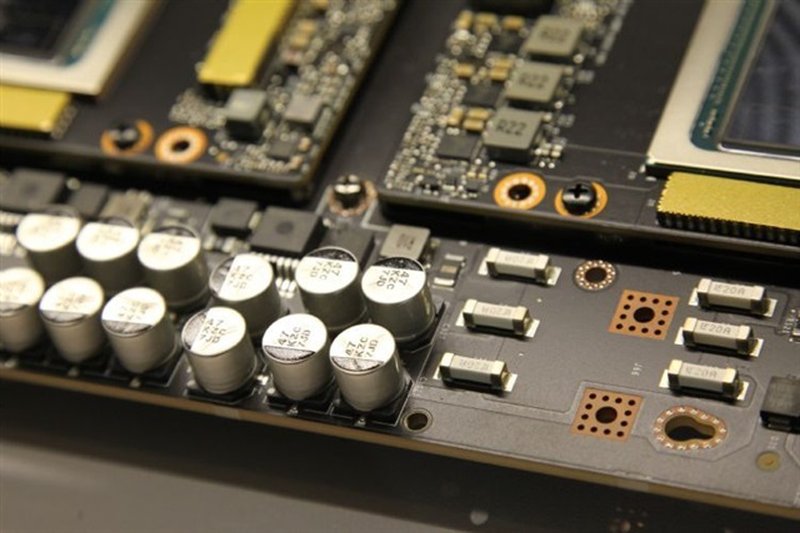
PMICs are fundamental components in almost every modern electronic device, from simple smartphones to complex servers and high-performance graphics cards. Their function is to efficiently regulate and distribute power, ensuring stability and optimizing consumption. Their scarcity or increased cost has a cascading effect on a wide range of end products, including the infrastructure required for artificial intelligence workloads.
The Critical Role of PMICs in AI Infrastructure
In the context of Large Language Models (LLM) and AI in general, computing hardware, particularly GPUs, requires extremely precise and efficient power management. PMICs are essential to ensure that GPUs receive the necessary power stably, minimizing losses and managing generated heat. Without reliable and available PMICs, the production of accelerator cards, servers, and high-density storage systems for AI experiences slowdowns and additional costs.
These integrated circuits are not simple commodities; they are often custom-designed for specific applications, making their replacement or procurement from alternative sources a complex and lengthy process. Their strategic importance is amplified by the growing demand for computing power for LLM training and Inference, which pushes the limits of data center power and cooling capabilities.
Implications for On-Premise Deployments and TCO
For organizations evaluating or already implementing on-premise deployments for their AI workloads, rising PMIC prices and chip shortages represent a significant challenge. The initial investment (CapEx) in hardware, such as servers equipped with high VRAM GPUs, is already considerable. Increases in the costs of basic components directly translate into an increase in the overall Total Cost of Ownership (TCO) of the infrastructure.
Strategic planning becomes crucial. Companies must consider not only the immediate cost of hardware but also supply chain stability, delivery times, and the potential need to diversify suppliers. This is particularly true for those prioritizing data sovereignty and air-gapped environments, where reliance on cloud solutions is not an option. The ability to procure hardware in a timely manner and at predictable costs is a determining factor for the success of a self-hosted AI initiative.
Outlook and Mitigation Strategies
The persistence of chip shortages and rising PMIC prices suggest that challenges in the technology supply chain will not be resolved in the short term. Companies operating with LLMs and AI must therefore adopt proactive strategies. This may include entering into long-term contracts with suppliers, exploring alternative hardware designs that utilize more readily available components, or optimizing the use of existing hardware through techniques such as advanced Quantization or the efficiency of Inference Frameworks.
For those evaluating on-premise deployments, it is essential to integrate these market dynamics into feasibility analyses and TCO models. AI-RADAR offers analytical Frameworks on /llm-onpremise to evaluate the trade-offs between costs, performance, and control, providing useful tools for navigating an increasingly complex procurement landscape. Supply chain resilience has become a non-negligible component of corporate technology strategy.





💬 Comments (0)
🔒 Log in or register to comment on articles.
No comments yet. Be the first to comment!