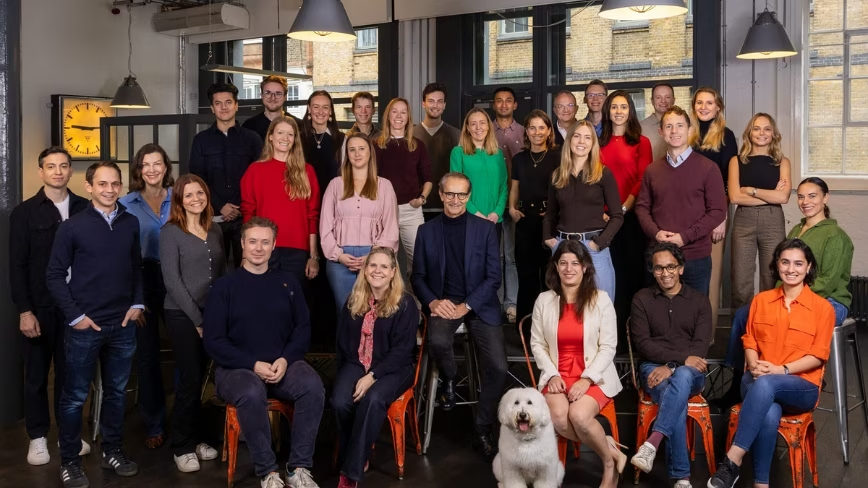
Balderton Capital and the Push for European Tech
Balderton Capital recently launched "Built in Europe," a strategic campaign aimed at redefining the narrative surrounding the European tech sector. The initiative stems from the recognition that, despite the presence of numerous successful companies and significant acquisitions, a widespread perception of inferiority or constant catch-up with Silicon Valley persists.
This campaign is supported by prominent figures in the technology landscape, including the founders of innovative companies such as Revolut, Mistral, and Wayve. Their involvement underscores the importance of a united front to highlight the strengths and innovative potential that the European continent is capable of expressing.
The European Market Context and the "Confidence Problem"
The European tech sector has demonstrated remarkable vitality in recent years, with a growing ecosystem that continues to produce innovation and cultivate high-level talent. However, the dominant narrative often portrays it as a follower, focused on closing the gap with the United States, generating a kind of "confidence problem" that can influence both investments and the ambitions of local startups and scale-ups.
In reality, Europe boasts centers of excellence in research and development, a strong academic foundation, and a regulatory approach that, in areas like data sovereignty and privacy (e.g., with GDPR), offers a competitive advantage. This is particularly relevant for companies seeking robust and compliant solutions, such as on-premise Large Language Models (LLM) deployments, where direct control over infrastructure and data is a priority.
The Role of Founders and Implications for AI
The support from founders of successful companies like Revolut (in fintech), Mistral (in the LLM field), and Wayve (in AI for autonomous driving) lends significant weight to Balderton's initiative. Mistral's participation, in particular, highlights the importance of European innovation in generative artificial intelligence, a strategic sector where the ability to develop and deploy models locally, with attention to data sovereignty, is crucial.
This kind of backing can inspire new generations of entrepreneurs and investors, fostering an environment where self-hosted solutions and infrastructure control are seen as key elements for resilience, security, and competitiveness. For companies evaluating AI/LLM workloads, the ability to rely on a strong local ecosystem and internal expertise can reduce the Total Cost of Ownership (TCO) and improve compliance.
Future Prospects and Challenges for the European Tech Ecosystem
The "Built in Europe" campaign comes at a crucial time for the continent, as it seeks to establish itself as a global technology hub. Addressing the "confidence problem" means not only celebrating existing successes but also actively investing in infrastructure, talent, and policies that support the growth of startups and scale-ups, especially in deep tech and AI sectors.
For companies operating with AI/LLM workloads, the choice between on-premise deployment and cloud solutions continues to be a determining factor, influenced by TCO considerations, security, latency, and compliance. In this context, initiatives like Balderton's can contribute to creating a more robust and aware ecosystem, capable of supporting strategic decisions for AI infrastructure and valuing innovations "Built in Europe."








💬 Comments (0)
🔒 Log in or register to comment on articles.
No comments yet. Be the first to comment!