Broadcom V3D: The End of Support for Graphics IPs 3.3 and 4.1
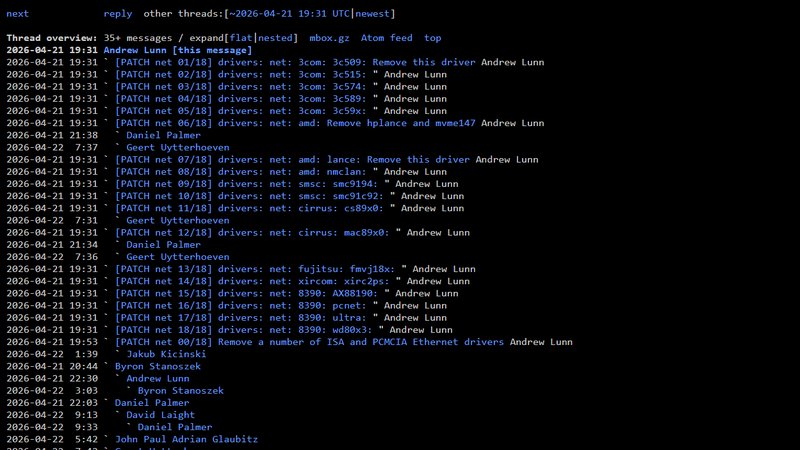
Broadcom has recently communicated its intention to deprecate and subsequently remove support for its V3D 3.3 and V3D 4.1 graphics IPs. This decision will directly impact the V3D kernel graphics/display driver, from which these specific versions will be eliminated. The move is not entirely unexpected, considering that support for the same IPs was already discontinued in the Mesa driver approximately two years ago.
The primary reason behind this deprecation is the lack of testing hardware available to developers. Without the ability to conduct thorough and continuous testing, maintaining software compatibility and stability becomes unsustainable. Additionally, there is a likely absence of a significant number of users employing these particular Broadcom graphics solutions within specific System-on-Chips (SoCs), making the maintenance of support a disproportionate burden compared to the benefit.
Technical Details and Context of the Withdrawal
The V3D 3.3 and V3D 4.1 graphics IPs represent integrated hardware components in certain Broadcom SoCs, designed to handle graphics acceleration. Their optimal operation relies heavily on the presence of up-to-date and well-maintained software drivers, both at the kernel level (for direct hardware interaction) and at higher graphics stack levels like Mesa (which provides an Open Source implementation of graphics APIs). The removal of Mesa support two years ago was already a harbinger of the direction Broadcom would take.
The lack of physical hardware for testing is a critical issue in driver development and maintenance. Developers require constant access to devices to identify bugs, optimize performance, and ensure compatibility with new operating system versions and applications. Without this access, the risk of introducing regressions or being unable to resolve emerging issues becomes too high, inevitably leading to the decision to abandon support.
Implications for On-Premise Deployments and TCO
Although this news concerns specific graphics IPs and not directly hardware for Large Language Models (LLM) acceleration, it offers an important lesson for those evaluating on-premise deployments. The longevity of hardware and software support is a crucial factor in calculating the Total Cost of Ownership (TCO) of a self-hosted infrastructure. The deprecation of key components can force companies to replace hardware prematurely, face higher maintenance costs for unsupported systems, or, worse, expose their environments to security risks.
For organizations prioritizing data sovereignty, control, and compliance, adopting on-premise solutions is often the preferred choice. However, this choice entails the responsibility of managing the entire hardware and software lifecycle. Scenarios like Broadcom's V3D IPs underscore the importance of selecting components with a robust support ecosystem and a clear roadmap to avoid operational disruptions or unrecoverable investments. Careful evaluation of these trade-offs is essential for those planning local AI infrastructures.
Future Prospects and Strategic Considerations
Broadcom's decision highlights a recurring challenge in the technology landscape: balancing the maintenance of support for legacy hardware with innovation. For vendors, focusing resources on newer, widely adopted platforms is an economic and strategic choice. For end-users, particularly those with on-premise infrastructures, this means the need for careful planning and a hardware upgrade strategy that considers component lifecycles.
This episode reinforces the idea that hardware selection for critical workloads, including those related to LLMs, should not solely be based on initial performance but also on the robustness of long-term support. For those evaluating on-premise deployments, AI-RADAR offers analytical frameworks on /llm-onpremise to assess the trade-offs between initial costs, operational costs, support longevity, and data sovereignty requirements, providing tools for informed decisions in a rapidly evolving technological landscape.





💬 Comments (0)
🔒 Log in or register to comment on articles.
No comments yet. Be the first to comment!