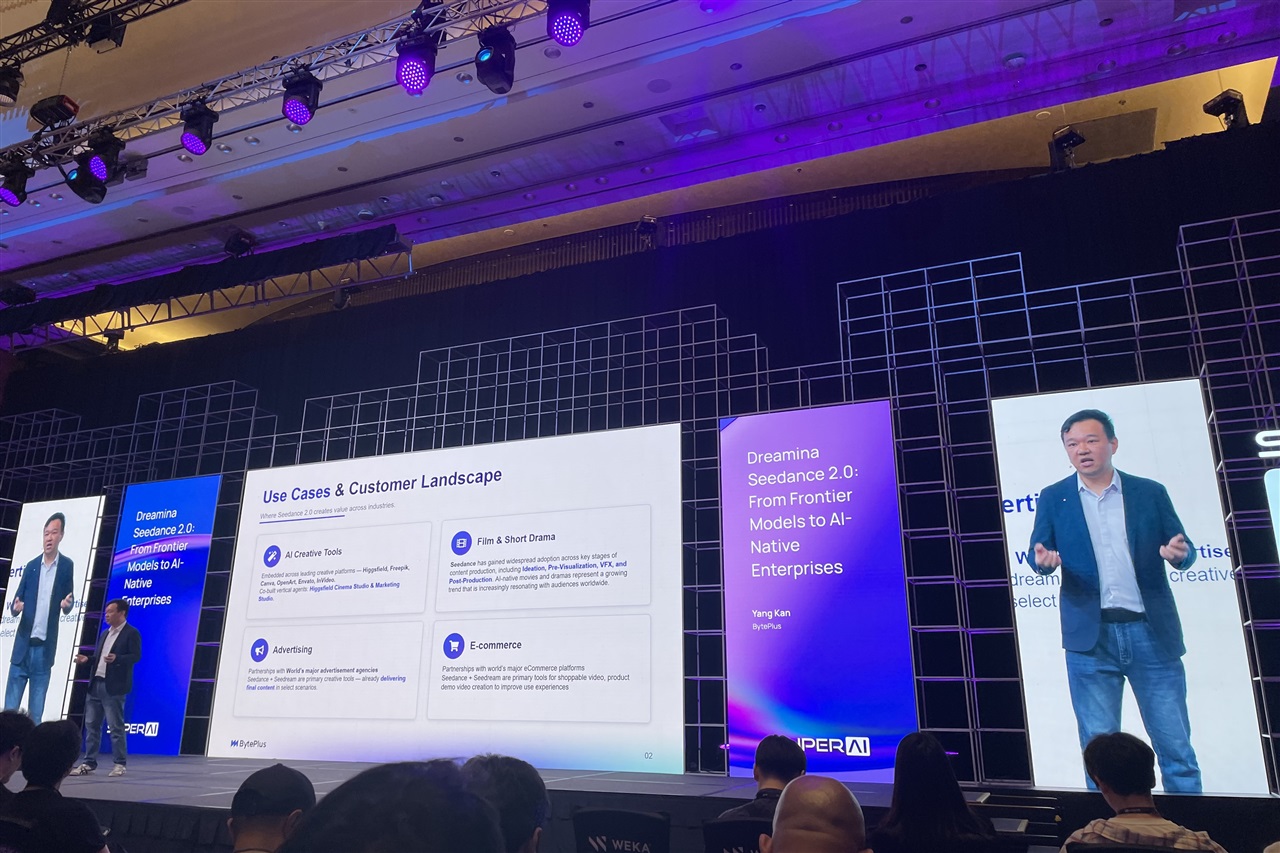
ByteDance Targets Code Generation Giants
ByteDance, the tech giant known for TikTok, is strategically positioning itself in the competitive sector of Large Language Models (LLMs) dedicated to code generation. The announcement, made during the SuperAI Singapore event, indicates a clear intention from ByteDance to challenge established players such as Anthropic with its Claude Code and OpenAI with Codex. This move signals a further acceleration in the development and adoption of specialized LLMs, with significant implications for companies seeking advanced solutions for software development and automation.
The entry of a player of ByteDance's caliber into the code LLM segment not only intensifies competition but also promises to stimulate innovation. For CTOs and infrastructure architects, this means a broader landscape of options, but also the need to carefully evaluate the capabilities, deployment requirements, and trade-offs associated with each model, especially in contexts that prioritize control and data sovereignty.
On-Premise Deployment Challenges for Code LLMs
Large Language Models for code generation, like those ByteDance is targeting, are powerful tools that can transform the software development lifecycle. However, their deployment, particularly in self-hosted or air-gapped environments, presents considerable technical challenges. These models require significant computational resources in terms of VRAM, GPU computing power, and network throughput to ensure adequate performance during Inference.
For organizations opting for on-premise solutions, hardware selection becomes crucial. GPUs with high VRAM, such as NVIDIA H100 or A100 series, are often indispensable for hosting large models and managing high batch sizes. Infrastructure planning must consider not only the initial purchase but also operational costs related to energy, cooling, and maintenance—factors that directly impact the overall Total Cost of Ownership (TCO) of the system.
Implications for Adoption Strategies and Enterprise TCO
Increased competition in the code LLM sector offers companies more choices but also requires a well-defined adoption strategy. The decision between a cloud-based deployment and an on-premise self-hosted solution is complex and depends on factors such as data sensitivity, compliance requirements, and budget. While cloud solutions offer scalability and quicker access, on-premise implementations guarantee full control over data and infrastructure, which is essential for regulated industries or those requiring air-gapped environments.
TCO evaluation is critical. An on-premise deployment involves higher initial CapEx for hardware procurement and infrastructure setup but can lead to lower OpEx in the long term and greater flexibility. For those evaluating on-premise deployments, analytical frameworks are available at /llm-onpremise to help assess the trade-offs between costs, performance, and data sovereignty, providing a solid basis for informed decisions.
Future Prospects and the Role of Data Sovereignty
ByteDance's entry into the code LLM market signals the maturation of this segment and its strategic importance. We can expect an acceleration in the development of more efficient, specialized models, potentially optimized for various hardware architectures, including edge deployment scenarios or those with limited resources. This dynamic is particularly relevant for companies that place data sovereignty and compliance at the core of their AI strategies.
The ability to keep data and models within one's own infrastructural boundaries, without relying on external cloud services, is an increasingly pressing requirement. Competition among LLM providers could lead to the availability of more open models or those with more flexible licenses, facilitating the adoption of self-hosted solutions and strengthening companies' ability to maintain control over their digital assets and development pipeline.





💬 Comments (0)
🔒 Log in or register to comment on articles.
No comments yet. Be the first to comment!