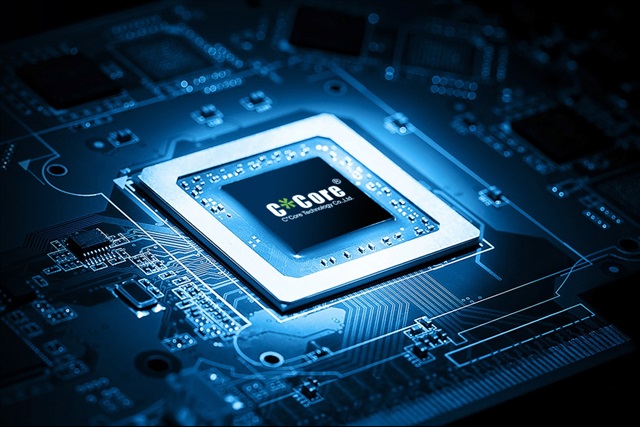
C*Core Completes Internal Testing of RISC-V Automotive AI MCU with Post-Quantum Security
C*Core, a company specializing in semiconductor solutions, has announced the successful completion of internal testing for its RISC-V-based Microcontroller Unit (MCU), specifically designed for artificial intelligence applications in the automotive sector. This achievement marks a significant step in the development of dedicated hardware for in-vehicle AI processing, a rapidly growing segment that demands robust, efficient, and secure solutions.
The integration of post-quantum security features represents a distinctive element of this MCU. In an era where the threat of quantum computers is becoming increasingly tangible, ensuring the long-term protection of vehicular data and communications is an absolute priority. Modern automobiles, with their extended lifecycles, require cryptographic defenses capable of withstanding future attacks, and post-quantum security addresses precisely this need.
Technical and Architectural Details: RISC-V and PQC Security
At the core of this new MCU is the RISC-V architecture, an Open Source instruction set architecture (ISA) that is gaining traction across various sectors, including embedded and AI. The open nature of RISC-V offers designers unprecedented flexibility to customize the silicio, optimizing it for specific workloads such as those in automotive AI. This enables the creation of highly energy-efficient and computationally effective solutions, essential for devices operating with limited resources within a vehicle.
The aspect of post-quantum cryptography (PQC) security is fundamental. With the advancement of quantum computing, current cryptographic algorithms, such as RSA and ECC, could become vulnerable. C*Core's MCU integrates PQC mechanisms designed to resist these future attacks, protecting communication between various vehicle systems, software integrity, and user data privacy. This capability is crucial for trust and security in connected and autonomous cars.
Implications for the Automotive Sector and Edge Deployment
The automotive sector is an ideal application area for distributed AI and edge computing. In-vehicle AI MCUs enable real-time data processing, reducing critical latency for ADAS (Advanced Driver-Assistance Systems) and autonomous driving functionalities. This approach minimizes reliance on cloud connectivity, improving reliability and responsiveness in scenarios where network bandwidth or stability can be an issue.
For companies evaluating the deployment of AI workloads, self-hosted or edge solutions like this MCU offer significant advantages in terms of data sovereignty and regulatory compliance. Sensitive data generated by the vehicle can be processed and stored locally, reducing risks associated with transfer and storage in public clouds. Furthermore, Total Cost of Ownership (TCO) analysis for embedded systems often reveals that the initial investment in specialized hardware can lead to long-term operational savings, especially considering connectivity and cloud service costs. AI-RADAR offers analytical frameworks on /llm-onpremise to evaluate these trade-offs.
Future Prospects and Challenges in Automotive Silicio
The completion of internal testing by C*Core represents an important step towards the commercialization of this technology. However, the path to widespread adoption in the automotive sector is complex, requiring rigorous certification and validation processes. The growing demand for advanced AI functionalities in vehicles constantly pushes silicio manufacturers to innovate, balancing performance, energy efficiency, cost, and, above all, security.
The evolution of Open Source architectures like RISC-V, coupled with the integration of cutting-edge security technologies such as PQC, is indicative of a trend towards more customizable and resilient hardware solutions. This approach not only addresses the specific needs of the automotive sector but also sets a precedent for other critical domains requiring local AI processing and long-term protection against emerging threats.





💬 Comments (0)
🔒 Log in or register to comment on articles.
No comments yet. Be the first to comment!