From silicon to stack: the real announcement is not just about chips
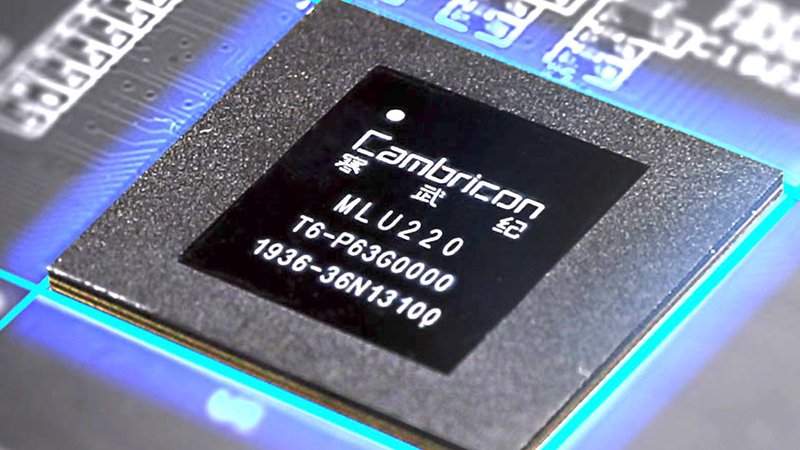
Cambricon joining the PyTorch Foundation as a Platinum member is not a story to read through the usual semiconductor market lens. There are no new boards, no new power records, no new manufacturing roadmaps. The signal is subtler and in many ways more relevant: a maker of AI accelerators founded in 2016, one of the early developers of this type of hardware, has decided to invest structurally in the governance of the most widely used open source framework for model training and inference. This is not public relations; it is an acknowledgment that the fate of a hardware architecture increasingly depends on the quality of its software integration.
Cambricon has built a mature and scalable hardware-software portfolio, but it has not chosen the path of an isolated supplier. For years it has contributed to the PyTorch project as an upstream contributor, touching strategic areas such as torch.compile, eager operators, device runtime, distributed computing, AMP, dataloader, and profiler. That list is not random: these are the building blocks that determine whether an accelerator genuinely works in a real pipeline without requiring local patches or downstream forks. The focus on these layers shows the work is not aimed at a simple port, but at making the hardware a first-class citizen of the ecosystem.
The thesis stated by Elton Gong, Cambricon’s VP of Software Engineering, is clear: PyTorch is not just a framework, but the core of the company’s software stack. The goal is not simply to make Cambricon products run on PyTorch, but to work with the community to broaden support for different backends, strengthen extensibility, and offer a native out-of-the-box experience on multiple hardware platforms. This shift in language, from supplier to strategic governance partner, is the heart of the news.
For AI-Radar, the message is blunt: raw chip performance is no longer the only selection criterion. What matters now is maintainability of support, reduction of forks, and the ability to keep pace with framework evolution. Presence on the Governing Board and Technical Advisory Council is an attempt to bring that awareness to the place where technical priorities are decided.
Governance as infrastructure: why the TAC and Governing Board matter
Joining the PyTorch Foundation’s Governing Board and Technical Advisory Council is not a ceremonial detail. It means having a voice in defining the project’s technical priorities, in how changes are accepted, and in the direction of support for different backends. For a non-US hardware maker, this is an important lever: the foundation’s neutral governance becomes the ground on which compatibility is negotiated, no longer just chip specifications.
The PrivateUse1 mechanism cited in the source as one of the tools PyTorch is building is a concrete example of this shift. It is not just a low-level API, but a more general device abstraction designed to reduce migration costs and dependence on a single vendor. When a backend can be integrated cleanly into the framework, the cost of moving from one platform to another falls, along with the risk of remaining locked into a proprietary ecosystem such as CUDA.
However, governance is not an automatic guarantee of quality. Having a seat on the TAC does not mean being able to steer decisions in one’s favor, nor does it guarantee that contributed code will be accepted and maintained over time. If anything, the responsibility increases: Cambricon’s representatives will need to show that the priorities they bring to the table are not narrow vendor interests, but improvements that make the framework more robust and flexible for everyone.
For companies designing self-hosted infrastructure, this is significant. Software governance has become an architectural variable: it can determine whether an alternative accelerator is available without rewriting pipelines, deployment models, or maintenance procedures. In this sense, having more manufacturers in the decision-making process is not a complication, but a form of insurance against lock-in.
Self-hosted LLMs: TCO is not just about chip pricing
Anyone running LLMs on-premise knows that the real cost does not match the purchase price of an accelerator. It includes driver maintenance, library compatibility, framework updates, integration with tools such as vLLM for inference, and management of quantization and VRAM. A native backend curated upstream removes a significant share of these hidden costs: it does not force teams to maintain local patches, chase divergent versions, or manage an internal fork that becomes technical debt.
CUDA dependence has created a market in which hardware choice is heavily conditioned by the availability of optimized libraries. This constraint has had a side effect: it reduces effective competition and shifts bargaining power to a single ecosystem. A more general abstraction, supported by multiple vendors within PyTorch, can loosen that constraint. It does not mean CUDA will disappear, nor that alternative accelerators automatically become equivalent; it means hardware choices can be made on more transparent criteria such as performance per dollar, power consumption, VRAM, and real availability.
If Cambricon’s contributions mature, teams evaluating on-premise deployment will have a concrete alternative for running LLMs and inference workloads without necessarily adopting GPUs from a single manufacturer. The reduction of downstream forks translates into less maintenance, greater portability, and a more predictable TCO. That is one reason this news matters not only to framework developers, but also to infrastructure managers and technology buyers.
It must be said, however, that maturity is not achieved with an announcement. Day 0 support for leading open source models, mentioned in the context of collaboration with the vLLM community, is a good indicator, but the road to a truly native experience on non-CUDA hardware is still long. What matters for companies is actual releases, resolved bugs, and support quality, not only board presence.
Data sovereignty and non-US suppliers: the geopolitical layer
In Europe, the push to keep AI inside one’s own data centers is not only a matter of latency or cost. It is a sovereignty choice: keeping data and models away from external clouds and from jurisdictions not aligned with GDPR. A PyTorch ecosystem that natively supports more accelerator types makes this choice more practical, even when hardware comes from non-US suppliers. It is not about replacing one dependence with another, but about widening the set of options usable within one’s own infrastructure.
Asian chip manufacturers, including Cambricon, are not simply seeking market share. They are seeking an exit route from CUDA hegemony through open source software. The PyTorch Foundation offers a context of perceived neutrality, where the value of a contribution depends not on the producer’s nationality but on technical quality. This is a meaningful shift in equilibrium: open source software becomes the tool for building technical legitimacy independent of marketing.
But data sovereignty is not measured only in kilometers or jurisdictions. It is also measured in stack control. If a foreign supplier contributes upstream, the code is visible, reviewable, and not tied to proprietary contracts. This changes the risk assessment for companies: there is no longer a need to blindly trust a binary driver, because the integration logic is exposed to community review. In this sense, Cambricon’s entry is not isolated: it is part of a broader trend in which hardware seeks legitimacy through free software.
For organizations in regulated contexts, the point is not to decide today whether to adopt a specific accelerator, but to monitor how native support evolves. Data sovereignty is built on technical transparency and shared governance, not on rushed choices.
The risks: continuity, fragmentation, and the maturity test
The real test for Cambricon is not the announcement, but the continuity of investment. PyTorch evolves quickly, vLLM does too, and keeping pace requires constant resources and active community presence. An upstream contribution that is well received today can become a burden tomorrow if it is not maintained consistently. The history of hardware vendors promising support and then slowing down is well known, and the risk of an isolated announcement is always present.
There is also the risk of fragmentation. Support for different backends can produce uneven situations: some operators work, others are partially implemented, some edge cases remain unresolved. Upstream first is not a guaranteed state, but a continuous commitment. If a vendor contributes only for its own needs, the result can be a patchy ecosystem, with integration costs falling on end users.
Neutral governance, on the other hand, is a necessary compromise, but it is not without drawbacks. More actors on the Governing Board and TAC can slow decisions or dilute priorities. However, it is an acceptable price to prevent a single actor from controlling the framework. The challenge is finding a balance between openness and execution capacity.
For AI-Radar, the indicator is not the number of contributions, but their quality: how much code is actually accepted? How quickly are bugs closed? How does the backend behave on leading models under real conditions? These are the metrics that matter more than appointments.
What to watch in the coming quarters
The first signal to monitor is the evolution of pluggable backend support inside PyTorch. The maturation of the PrivateUse1 mechanism and its documentation will tell whether device abstraction becomes a de facto standard or remains a promise. For those managing self-hosted infrastructure, this is a direct indicator of future pipeline portability.
Second, watch the work with the vLLM community. The ability to guarantee Day 0 support for leading open source models, without significant delays, is one of the most concrete tests. It is not just about running models, but doing so with competitive performance and without complex manual configurations. Native experience is the real goal.
Another element to keep an eye on is the broadening of governance. If other non-traditional hardware manufacturers enter the PyTorch Foundation with similar roles, the signal will become even stronger: control of the software stack will be considered a prerequisite for competing in the accelerator market. This could lead to an acceleration of upstream investment and greater framework neutrality.
Finally, for on-prem decision makers the news does not change today’s roadmaps. But it introduces a scenario element worth considering in medium-term evaluations: the possibility of choosing hardware based on technical merit and TCO, rather than forced compatibility with a single ecosystem. It is not a promise of an immediate solution, but a signal that the competitive field is widening, shifting the contest from silicon to software.






💬 Comments (0)
🔒 Log in or register to comment on articles.
No comments yet. Be the first to comment!