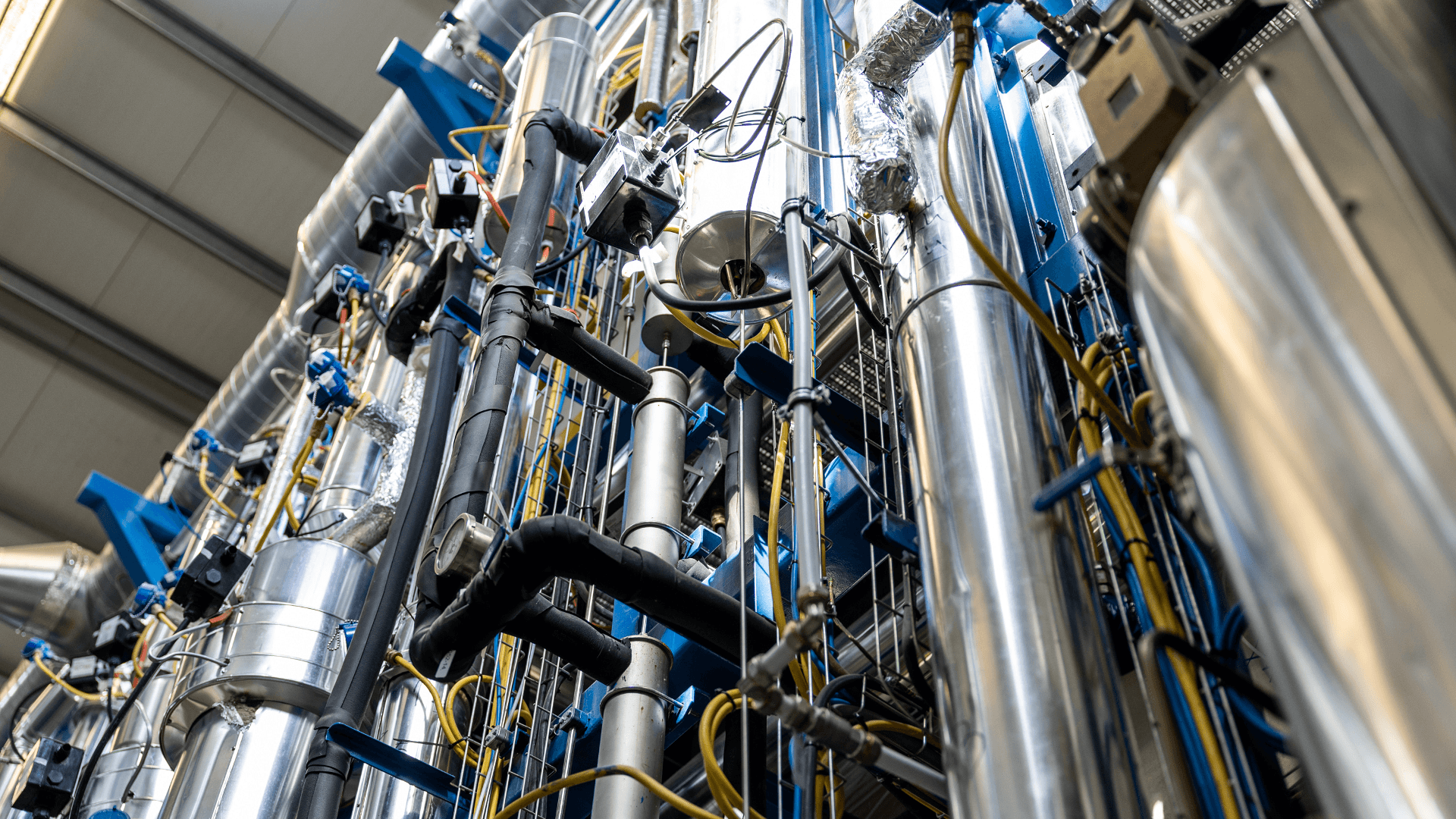
This is not just a grant, but a continent’s bet on a decarbonisation model that doesn’t scrap existing infrastructure. Spanish company Catalyxx has secured a €20 million grant from the European Union through the RenewChem program, selected by the Circular Bio-based Europe Joint Undertaking (CBE JU), to build Europe’s first commercial bio-based chemicals plant.
The operation marks the leap from technology demonstration to industrial-scale production. Catalyxx leads a consortium involving giants such as Arkema and Evonik, along with a network of academic and technology partners. The goal is to produce renewable alcohols – butanol, hexanol and other higher alcohols – from ethanol, using a proprietary process that promises performance comparable to petrochemical derivatives, but with a lower carbon footprint.
The distinctiveness of the process lies in its “drop-in compatibility”: Catalyxx’s bio-based products are designed to slot directly into existing formulations for paints, adhesives, lubricants, surfactants, home and personal care products, fragrances and sustainable fuels. No retrofitting of downstream plants, no stranded costs for the manufacturing industry that uses them. This is where the scalability game plays out: green chemistry makes industrial sense only if it can adopt the same drop-in logic as the fossil incumbent, without requiring converters to change established production processes.
CEO Joaquín Alarcón describes the funding as validation of the technology and industrial strategy, while adding a geopolitical layer: the project strengthens Europe’s supply security and strategic autonomy in critical chemical value chains. This is not rhetoric. Following pandemic-induced supply chain crises and geopolitical tensions, Europe has accelerated the creation of local supply chains for essential materials, and basic chemistry – long overlooked in decarbonisation plans – is becoming a pillar of industrial autonomy.
There’s a structural message for those watching European industrial policies: the CBE JU mechanism rewards projects that not only reduce emissions but do so without destroying existing economic value. Bio-based chemicals, unlike other sectors of the energy transition, can lean on already depreciated logistics and production networks, speeding time-to-market and containing total cost of ownership (TCO) for end users. For continental chemical industry, squeezed between rising energy costs and global competition, this is the most realistic path to staying competitive while decarbonising.
The RenewChem consortium is not an isolated initiative: it signals the desire to shift the centre of gravity of green chemistry from pilot scale to commercial scale, using the aggregation power of major players to create stable demand and an integrated supply chain. If the plant lives up to expectations at production level, the domino effect could reshape the supply of industrial alcohols in Europe, currently heavily dependent on fossil feedstocks and imports. The stake is not just environmental: it’s the health of a sector worth hundreds of billions of euros and employing millions of people.








💬 Comments (0)
🔒 Log in or register to comment on articles.
No comments yet. Be the first to comment!