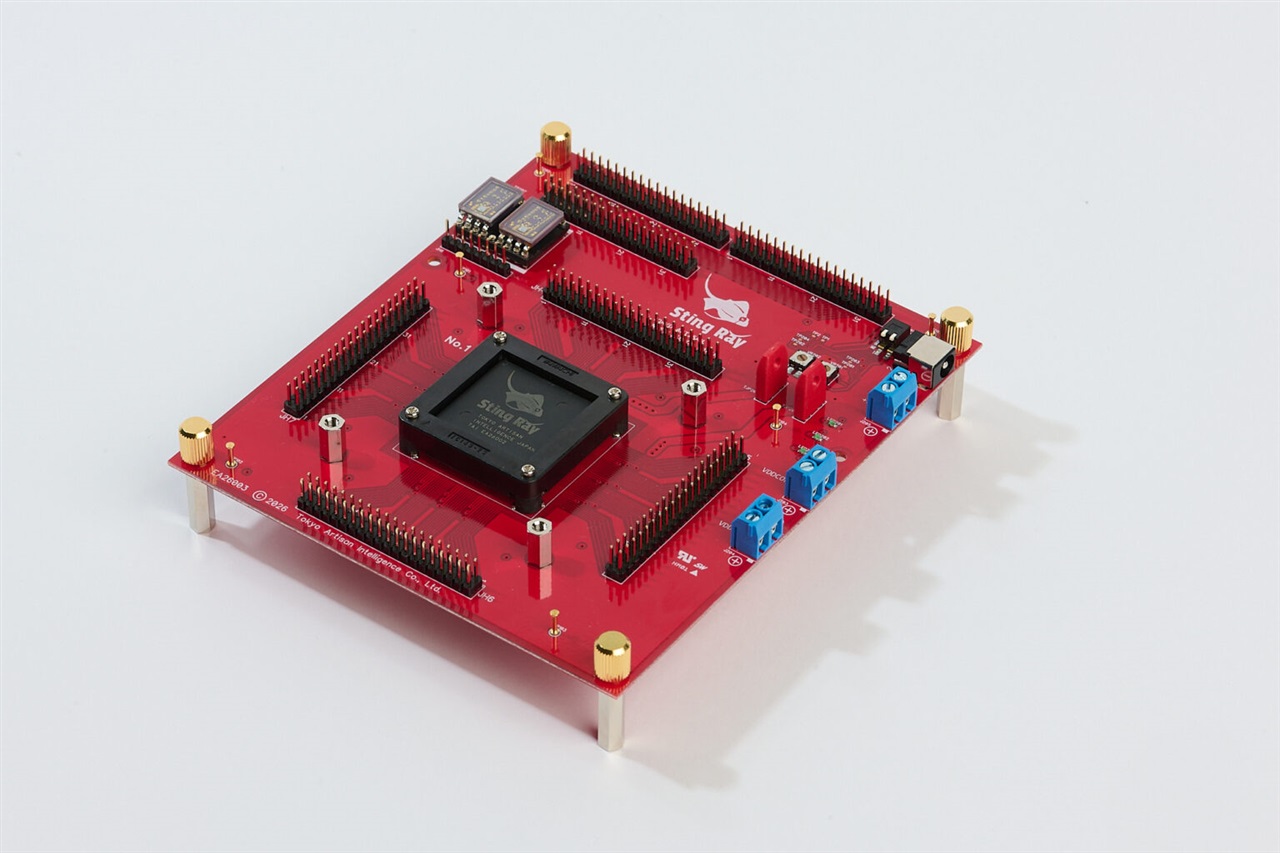
The news is sparse: a Japanese startup has completed validation of its AI chip, with support from Oppstar and Taiwanese foundry UMC, and is now gearing up for mass production. No datasheets, no benchmarks, no architectural details. Yet the episode is more telling than it appears.
In ASIC development, completing validation means functional and reliability tests on real prototypes have passed—a step that precedes final tape-out and volume production. Doing it with UMC, the world’s second-largest foundry by capacity, and Oppstar, a design service firm with expertise in mature and specialty nodes, signals the startup has a concrete roadmap, not just a garage project. The chip may target a specific segment: edge computing, computer vision, low-power inference, or perhaps a robotics niche. Without data it remains conjecture, but the broader picture offers clues.
We are in a phase of shifting silicon balances for AI. On one hand Nvidia dominates training and large-scale inference; on the other, a constellation of custom chips is emerging for more focused workloads. The choice of a foundry like UMC—which works on less advanced nodes than TSMC’s 3 nm and 2 nm—hints at an accessible cost and complexity profile, perhaps far from the most aggressive transistor scaling. If the chip aims for low cost and strong efficiency for predictable inference pipelines, it could open opportunities for on-premise deployments where latency and data sovereignty matter more than raw peak compute.
The involvement of a Japanese startup is no coincidence. Japan is investing billions to reclaim a role in semiconductor manufacturing, with Rapidus and other initiatives targeting frontier nodes. This chip is unlikely a direct competitor to an H100, but it might be a first building block for a domestic AI accelerator supply chain, at a time when geopolitical tensions make dependence on a narrow set of suppliers risky. Even if production goes through UMC’s fabs in Taiwan, the intellectual property and design remain in Japan, setting a precedent of partial autonomy.
For those evaluating on-premise AI infrastructure, signals like this matter. The availability of alternative silicon, produced in volume by established foundries, reduces lock-in risk and can lower the barrier for organizations that want to keep data within their own perimeters. Without knowing what the chip actually does, drawing conclusions is premature; but the mere fact it exists and has reached this stage is a sign of vitality in an ecosystem that could, over time, offer more affordable and vertical options compared to the industry giants.





💬 Comments (0)
🔒 Log in or register to comment on articles.
No comments yet. Be the first to comment!