
China and the AI Era: A New Perspective on Employment
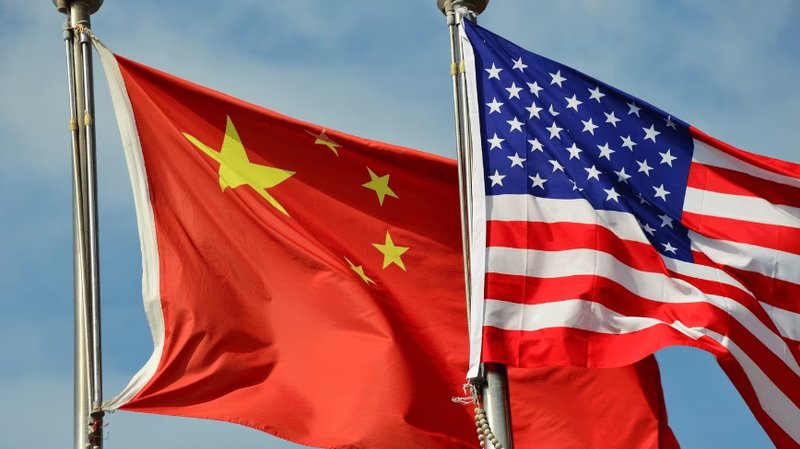
For over two years, China has openly declared its intention to establish itself as a global leader in the artificial intelligence race. This frequently reiterated ambition has translated into significant investments and rapid technological development. However, a recent document from the State Council, the executive body of the Chinese government, reveals a more nuanced and pragmatic perspective regarding the implications of this leadership.
The new five-year employment plan, covering the period from 2026 to 2030, includes an implicit admission: winning the AI race could entail significant costs in terms of jobs. This marks a shift in emphasis, moving the focus from mere technological supremacy to managing its internal social and economic repercussions. Monitoring AI's impact on employment is now a national priority.
AI's Impact on the Labor Market: A Global Challenge
While the source does not delve into specific technical details, the recognition by a government like China's of AI's impact on employment reflects a global concern. The rapid advancement of AI capabilities, particularly in Large Language Models (LLM) and robotic automation, is redefining numerous sectors. Companies evaluating the deployment of AI systems, whether in self-hosted or cloud environments, face the need to consider not only the benefits in terms of efficiency and innovation but also the implications for the workforce.
Integrating AI into business processes, from manufacturing to customer service, requires strategic planning that goes beyond mere technological implementation. For CTOs, DevOps leads, and infrastructure architects, this means evaluating not only hardware specifications like GPU VRAM or system throughput but also personnel reskilling requirements and change management strategies. An on-premise deployment, for example, offers greater control over data sovereignty and stack customization but also demands more direct management of human resources and automation-related corporate policies.
Context and Implications for Strategic Decisions
China's decision to make tracking AI's impact on jobs a national priority underscores the growing awareness that AI adoption is not just a technological issue but also a socio-economic one. For companies operating globally or considering expansion into markets with similar regulations, this type of policy can influence AI investment and deployment strategies.
The evaluation of the Total Cost of Ownership (TCO) for AI solutions, especially on-premise ones, must now also consider indirect costs related to personnel management and organizational adaptation. Data sovereignty and compliance remain critical factors, but the need for an ethical and responsible approach to automation is added. For those evaluating on-premise deployments, AI-RADAR offers analytical frameworks on /llm-onpremise to assess complex trade-offs, including those related to human capital impact.
Future Prospects and Change Management
China's five-year plan highlights an emerging trend: governments and large organizations are actively beginning to confront the employment challenges posed by AI. This does not mean slowing down innovation but rather managing its consequences proactively. For technology decision-makers, this translates into the need to integrate ethical and social considerations into AI development and deployment roadmaps.
The ability of an organization to adapt to these changes, by investing in training and reskilling, will be as crucial as choosing the most efficient hardware or framework. Change management, both at national and corporate levels, will become a distinguishing element for success in the age of artificial intelligence, balancing innovation with social responsibility.






💬 Comments (0)
🔒 Log in or register to comment on articles.
No comments yet. Be the first to comment!