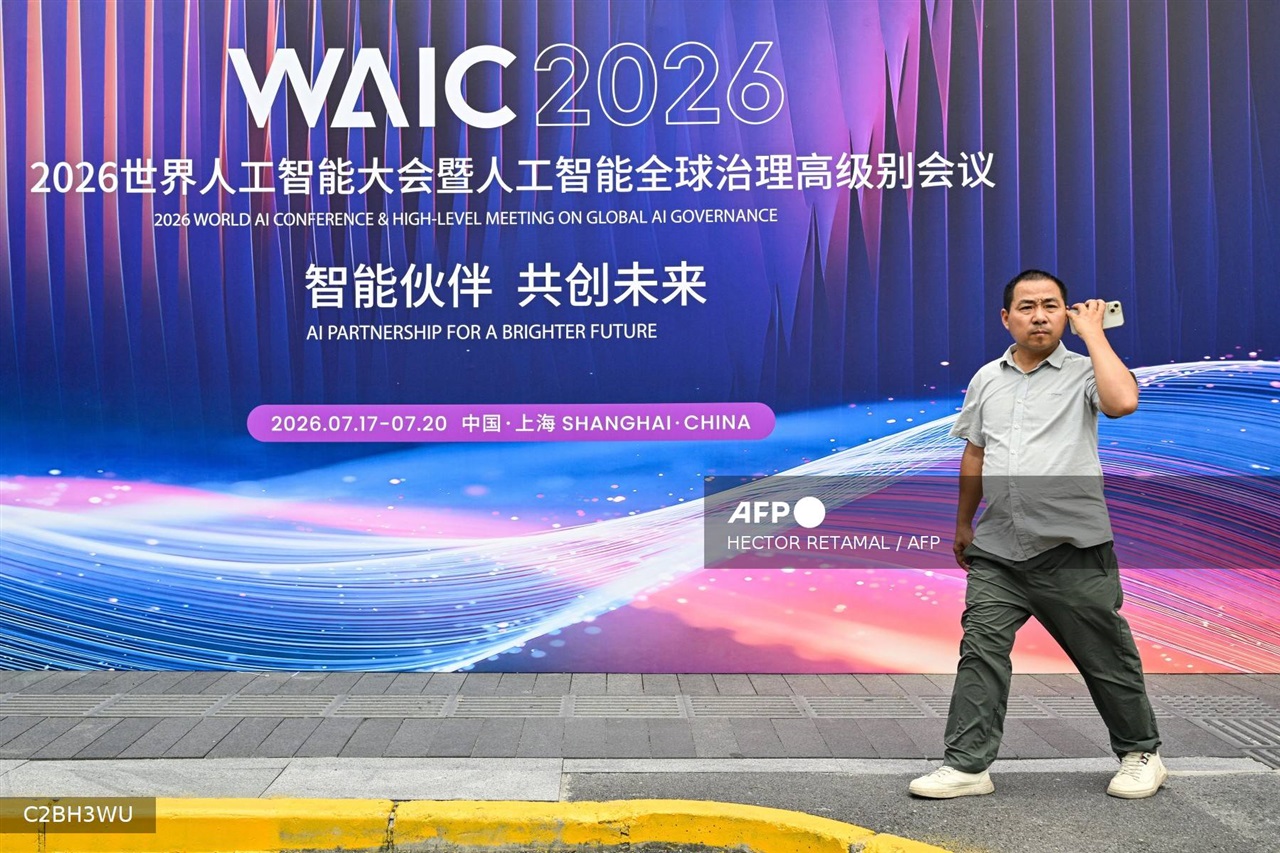
China has taken a decisive step to project its influence on artificial intelligence regulation worldwide. With the launch of a new cooperation body promoted directly by President Xi Jinping, Beijing is no longer simply advocating general principles: it is institutionalizing its vision for global AI governance.
The initiative comes at a time when geopolitical frictions directly affect technology stacks. On one side, the United States tightens export controls on advanced GPUs — such as NVIDIA A100 and H100 — effectively limiting the computational capacity available in China. On the other, the European Union moves forward with its AI Act, based on a risk-centric approach. In this context, China’s move is not just a diplomatic exercise: it is a structural attempt to set the rules for a global infrastructure that is fragmenting.
The creation of such a body signals that the battle for AI supremacy is also fought on the regulatory front. For companies developing and operating Large Language Models (LLMs), the fragmentation of standards raises a concrete question: where and how to run inference without violating data residency requirements? The answer often leads back to on-premise, where self-hosted stacks allow maintaining both physical and legal control over data. It is no coincidence that the adoption of local inference solutions and specialized AI hardware is growing in regulated sectors — from healthcare to finance — that operate internationally.
Beijing’s push for its own governance framework could further accelerate this trend. If China’s trade partners begin to align with its standards, AI service providers in those markets would be forced to rethink their architecture: fine-tuned models, jurisdiction-segregated data, and execution environments that ensure audit and compliance with multiple regimes. In this sense, governance is no longer just a policy matter, but an architectural constraint affecting framework choice, model quantization, and physical hardware distribution.
In parallel, China’s growing investment in domestic AI chips must be considered. The need to bypass export restrictions has fueled the development of local alternatives, but coherence with a soft-power regulatory ecosystem could become an equally important competitive factor. For enterprise decision-makers, the message is clear: true technology sovereignty requires full stack control — from GPU to compliance.
Rather than waiting for a single global standard to emerge, forward-looking organizations are already designing hybrid environments where on-premise ensures data residency and the flexibility needed to adapt to ever-changing rules. The launch of the Chinese body merely adds another piece to this puzzle: the more governance frameworks multiply, the more local deployment ceases to be a niche option and becomes a survival architecture.





💬 Comments (0)
🔒 Log in or register to comment on articles.
No comments yet. Be the first to comment!