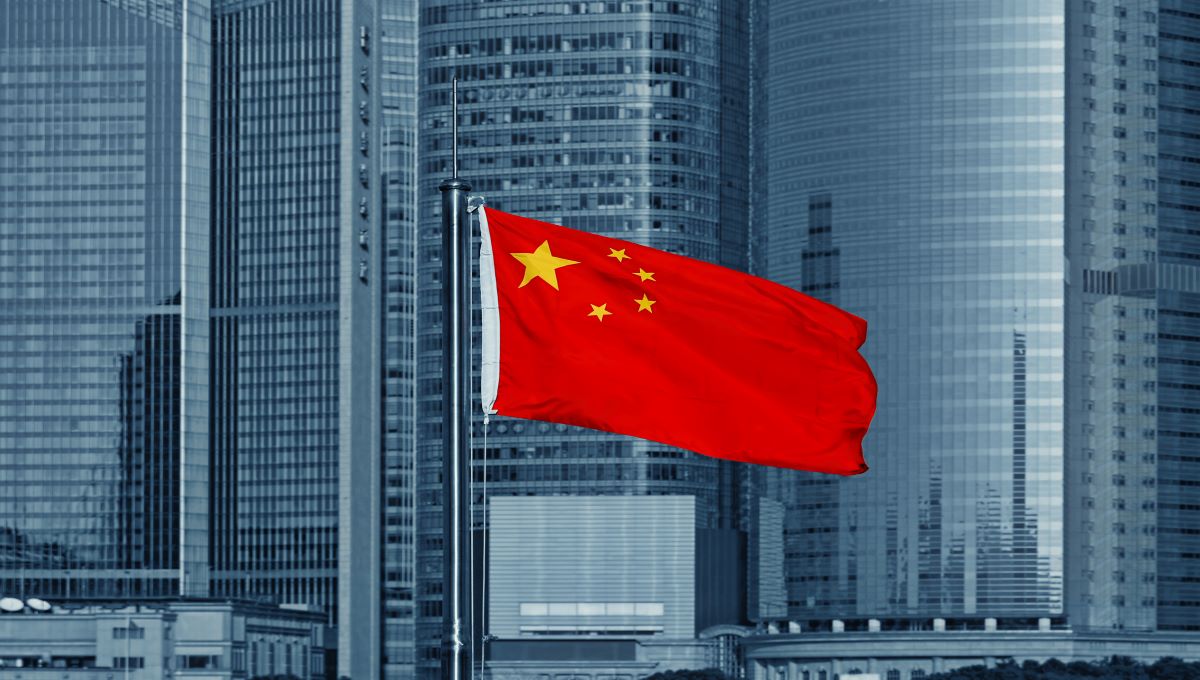
The news is thin, but the message is dense. An unnamed Chinese AI company has unveiled a city forecasting model trained on data from the Zhangjiang AI Innovation Town, a high-tech district in Shanghai. Over 20,000 categories of multimodal data—traffic flows, energy consumption, sensor imagery, environmental metrics—fed the training. We don’t know what hardware crunched the gradients, nor whether the service will run on a public cloud or on municipal servers. But the decision to confine data within a precise geographic and administrative perimeter is already a statement of intent.
For anyone tracking inference architectures in urban contexts, the crux is familiar: city data is inherently sensitive, granular, and often regulated. Moving it to foreign or shared clouds introduces legal friction, egress costs, and dependencies on unverifiable stacks. The Zhangjiang model, whatever its internal architecture, suggests an alternative: training and inference anchored to local infrastructure, within the boundaries of the innovation town or city-owned data centers. This isn’t entirely new—several administrations are experimenting with urban digital twins—but seeing it realized by a national AI player, at this data scale, raises the bar of technical credibility.
A testbed for digital sovereignty
The Zhangjiang AI Innovation Town is no ordinary neighborhood: it’s an ecosystem designed to trial AI solutions in real-world conditions, where companies, universities, and government agencies share data in a controlled environment. This predictive model, then, emerges as a showcase of what it means to do urban AI without outsourcing data custody to third parties. The first-order implication is clear: China is building its own path to algorithmic urbanism, where data never leaves national soil and computation happens on domestically available hardware—whether it’s GPUs from local vendors or imported silicon reconfigured in-house.
Second-order effects ripple through the entire ecosystem of LLMs applied to smart cities. If the model proves itself at district level, it will likely be replicated in other special-status zones or entire megacities, fueling a steady demand for on-premise compute capacity. This could accelerate investments in local inference servers, low-latency storage, and continuous model update pipelines without reliance on external services. Anyone producing high-VRAM boards and edge-optimized serving frameworks would find a fertile market.
There is also a less visible competitive dimension. While the Western debate on urban AI swings between regulations like the AI Act and partnerships with hyperscalers, Beijing appears to favor in-house development where data sovereignty is a non-negotiable precondition. This structural divergence could redraw the perimeter for global vendors: those without a certified supply chain for the Chinese market risk being shut out of one of the largest urban data repositories on the planet.
For those evaluating on-premise deployment of similar models—whether a municipal innovation office or a system integrator—analytical frameworks exist to weigh TCO, VRAM constraints, and quantization strategies. On AI-RADAR, these analyses are tailored for local inference scenarios, where the choice of hardware and software stack can determine whether a service remains sustainable or becomes a hidden cost.






💬 Comments (0)
🔒 Log in or register to comment on articles.
No comments yet. Be the first to comment!