
Edge AI and Agent Computers: The New Frontier of Intelligent Computing
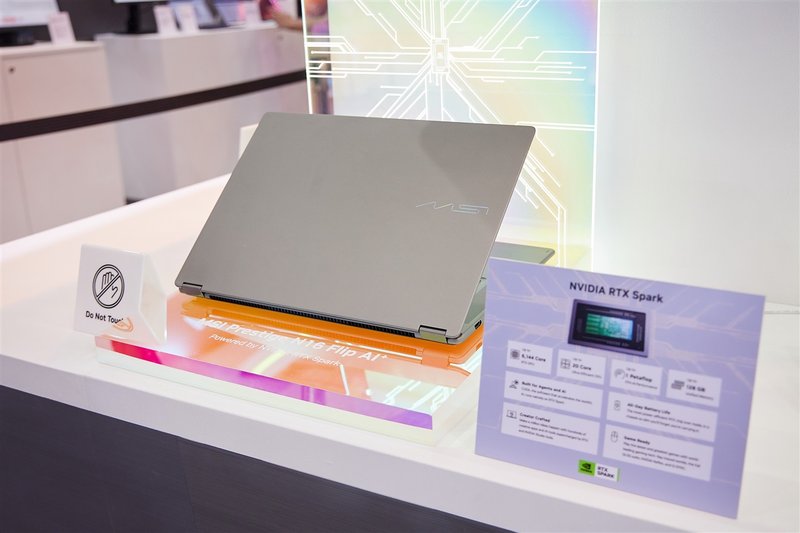
The evolving technological landscape suggests a significant shift in the role of personal computers, projecting them towards a new identity: that of "agent computers." This transformation implies an extension of artificial intelligence computing capabilities, moving them from the centralized cloud directly to the "edge" of the network, meaning on or near end-user devices. This trend not only redefines user interaction with technology but also opens new perspectives for data processing and AI workload management.
This strategic shift aims to integrate AI more deeply and pervasively into daily experience, making it more responsive and personalized. The idea is that agent computers can execute complex models, including Large Language Models (LLM) or other machine learning algorithms, without the need for a constant connection to remote servers. This promises to reduce reliance on network connectivity and enable new applications that require real-time responses and high operational autonomy.
Technical and Architectural Implications for Deployment
Transferring AI compute to the edge entails significant technical and architectural implications. To support Inference workloads directly on devices, efficient hardware is essential, often featuring dedicated neural processing units (NPUs) or GPUs with adequate VRAM. The challenge lies in optimizing AI models, for example through Quantization techniques, to operate with limited resources while maintaining acceptable Throughput and latency performance.
This approach contrasts with the traditional cloud-based model, where processing occurs on remote servers with almost unlimited resources. While the cloud offers scalability and flexibility, edge AI excels in scenarios requiring low latency, such as robotics or autonomous driving systems, and in contexts where network bandwidth is a constraint. For enterprises, evaluating between on-premise deployment, hybrid solutions, or purely edge becomes crucial, considering TCO and specific operational needs.
Benefits for Data Sovereignty and Compliance
One of the primary drivers behind the adoption of edge AI is the growing emphasis on data sovereignty and regulatory compliance. By processing information locally, organizations can maintain control over sensitive data, avoiding transfer to external servers and reducing privacy-related risks. This is particularly relevant for sectors such as finance, healthcare, and public administration, where regulations like GDPR impose strict requirements on personal data management.
The ability to operate in Air-gapped environments or with limited connectivity offers an additional layer of security and resilience. Self-hosted or Bare metal solutions, which allow complete control over the infrastructure, align perfectly with this need for autonomy and security. Reducing reliance on third-party cloud services can also help optimize long-term operational costs, balancing initial hardware investment with savings on bandwidth and cloud processing fees.
Future Prospects and Adoption Challenges
The transition towards agent computers and edge AI is not without its challenges. Managing and updating a distributed fleet of machines, ensuring uniform performance across heterogeneous hardware, and optimizing energy consumption represent significant hurdles. However, advancements in AI-specific chip design and the development of more efficient software Frameworks are progressively making this vision a concrete reality.
In summary, the emergence of agent computers and the shift of AI compute towards the network edge mark a fundamental evolution in how artificial intelligence will be integrated and utilized. This trend promises to unlock new applications, enhance data privacy and security, and offer greater operational autonomy. For organizations evaluating the adoption of on-premise LLMs or hybrid solutions, AI-RADAR offers analytical frameworks on /llm-onpremise to understand the trade-offs between cost, performance, and control, providing valuable guidance for informed strategic decisions.







💬 Comments (0)
🔒 Log in or register to comment on articles.
No comments yet. Be the first to comment!