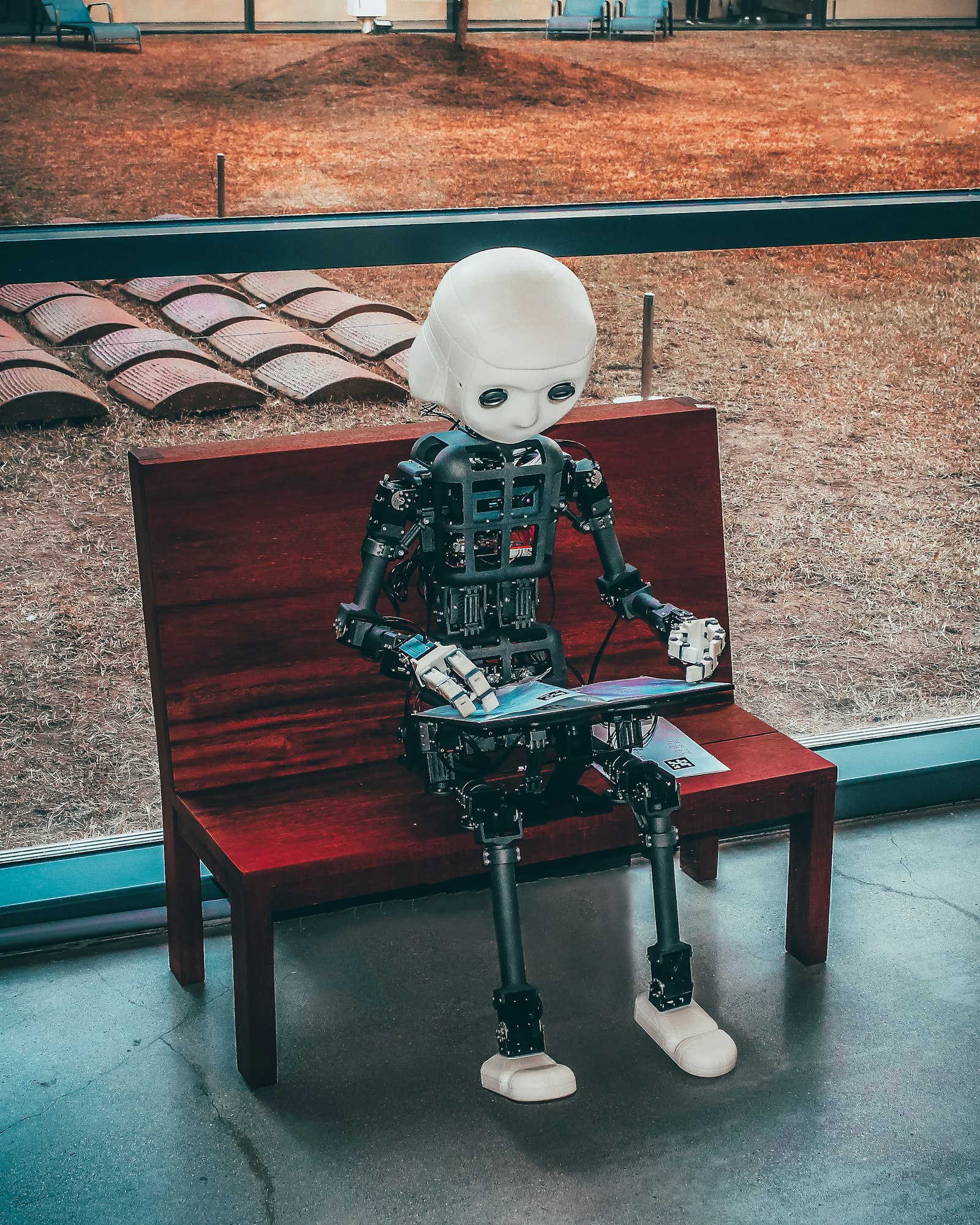
For years, advanced robotics faced a paradox: foundation models grew ever more capable at planning tasks, but a stubborn gap remained between software reasoning and physical hardware. That gap—the robot's "spinal cord"—was bridged only by specialized engineers through hours of manual calibration, blocking any hope of large-scale deployment. Now, a framework called SPINE (Scalable Physical Integration with ageNtic Expertise) flips the script: a multi-agent system replaces the human expert, diagnosing and fixing physical integration issues autonomously, building robot-specific context profiles, and iteratively testing until teleoperation succeeds.
SPINE was tested on two distinct bimanual platforms. On the DOBOT X-Trainer, a novice guided by the framework reached 100% operational success, versus 75% for human operators using Claude Code with the same reference materials but without SPINE's structured workflow. Average time to teleoperation dropped from 16 minutes and 45 seconds to 13 minutes and 47 seconds. On the more exotic AgileX PiPER—a ROS/CAN-based arm—SPINE resolved all 10 implanted bugs, while the expert baseline missed one, in nearly the same time.
Speed is only part of the story. The pivotal insight is that a non-expert with SPINE systematically beat a seasoned professional wielding generic conversational AI tools. The leap did not come from a more powerful language model, but from the formal orchestration of two workflows: a profile builder that gathers robot data and constructs an operational model, and a debugger that cycles through diagnosis, repair, and validation until success. Until now, that knowledge lived only in the heads of a few senior technicians.
A strong thesis emerges from these results, touching the entire embodied AI supply chain. The real bottleneck to getting robots out of the lab was never a lack of intelligent models, but the inability to adapt them quickly to hardware. Frameworks like SPINE—transferable across platforms, as shown by the DOBOT-to-AgileX leap—suggest that the answer lies not in bigger models, but in agentic systems that can absorb domain knowledge and apply it without continuous human oversight. It's a paradigm shift that moves value from the individual expert to the software process.
For organizations evaluating robotic fleets in on-premise or edge environments, the message is clear. A specialized technician's cost doesn't scale; a software agent does. If debugging and calibration become automated operations, the total cost of ownership (TCO) of a robotic arm changes drastically, because it cuts the most unpredictable operational expense: human intervention. Moreover, the entire procedure can stay confined to the local network, without sending sensitive data to cloud services—a critical factor on factory floors or in regulated settings.
SPINE also hints at where physical AI infrastructure is heading. Not toward remote supercomputers, but toward intelligence distributed on devices, able to self-configure. The road to truly plug-and-play robots runs through middleware that packages operational know-how and makes it replicable. And the fact that such a framework has shown concrete results on commercial hardware, without requiring exotic GPUs, says a lot about the real competitive lever: not hardware, but software architecture.
Ultimately, SPINE is not just a tool for bimanual robotics. It proves that the next wave of automation concerns the processes of deployment, not just the models. For those investing in embodied AI, the implicit advice is to stop chasing the latest checkpoint and start building agents that can talk to machines.




💬 Comments (0)
🔒 Log in or register to comment on articles.
No comments yet. Be the first to comment!