The announcement and its context
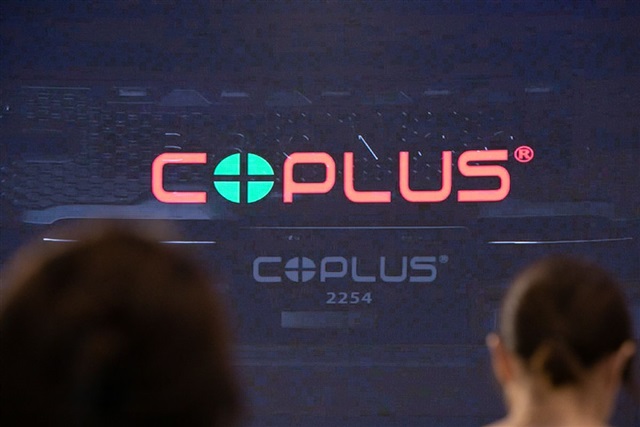
According to DIGITIMES, Taiwanese automotive lighting supplier Coplus is developing AI-powered headlights with technological backing from Nvidia. This initiative marks more than an evolution in lighting systems: it's a concrete example of how AI is steadily moving toward local processing, bringing inference directly on board vehicles.
Why on-headlight inference is a must
Smart headlights must make decisions in real time – adjusting the beam based on traffic, weather conditions, or the presence of pedestrians. In such scenarios, offloading data to a remote server for processing is unfeasible due to latency and connectivity dependence. Edge computing thus becomes the natural path: local inference delivers immediate, deterministic responses, a critical requirement for safety-related functions. Moreover, keeping camera and sensor data inside the vehicle meets increasingly strict privacy and protection demands, mirroring the trends driving on-premise deployments in the enterprise world.
Nvidia's edge hardware platform
While technical details of the project have not been disclosed, Nvidia's involvement suggests the use of Jetson family modules or similar solutions, designed for low-power AI on edge devices. These platforms integrate GPUs with enough VRAM to run complex computer vision neural networks directly at the edge. For those working on self-hosted or on-premise deployments, the logic is similar: specialized hardware, an optimized software stack, and no cloud dependency. The trade-offs involve thermal management, power consumption, and embedded electronics cost – challenges well known to automotive suppliers.
Implications for on-premise deployment and the automotive market
Coplus and Nvidia's move signals an acceleration of edge AI in an industry where local inference reliability is vital. For AI-RADAR readers evaluating on-premise architectures for LLMs, this offers valuable insights: the benefits of low latency, data control, and cloud independence that drive automotive choices are the same ones pushing many organizations to bring language models into their own data centers. In both domains, the challenge lies in striking the right balance between compute power, total cost of ownership (TCO), and physical constraints. In automotive, these are compounded by homologation requirements and extreme temperature resilience.
Looking ahead: AI becoming pervasive in vehicles
Smart headlights are just one piece of a broader picture: vehicles are evolving into distributed computing platforms, where GPUs and AI accelerators handle everything from driver assistance to infotainment. Nvidia, with its hardware and software ecosystem, aims to become the reference provider for this pervasive intelligence. The Coplus project, while niche at first glance, shows that local inference is no longer an option but a prerequisite for anyone operating in environments where milliseconds count and data must never leave the device.




💬 Comments (0)
🔒 Log in or register to comment on articles.
No comments yet. Be the first to comment!