The Silicon Heist of the Decade: Navigating the 2026 GPU and AI Inference Crisis
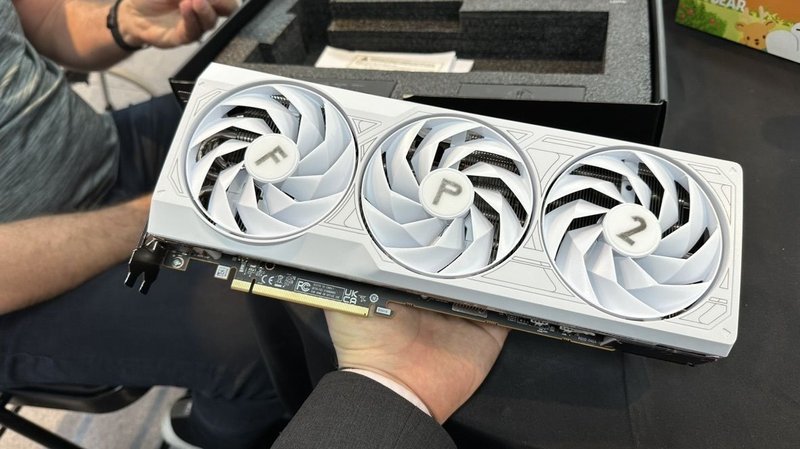
Welcome to 2026, the year the consumer graphics card officially transitioned from a PC component into a high-stakes financial asset class. If you are reading this while waiting for a budget GPU to drop back to its Manufacturer's Suggested Retail Price (MSRP), you might want to get comfortable. We are currently living through what industry analysts have aptly dubbed "RAMageddon," a structural market shift where the insatiable appetite of enterprise AI data centers has swallowed the consumer hardware market whole.
As the Editor in Chief of AI-Radar, my job is to cut through the marketing noise and deliver the unvarnished truth. The reality of the 2026 GPU market is harsh: local LLM inference and AI development have become a hostage to the economics of hyperscale data centers. Nvidia’s data center revenue is now an astonishing six times larger than the combined data center and CPU revenues of Intel and AMD. When a single company is pulling in $51.2 billion a quarter primarily from AI infrastructure, the consumer market is no longer a priority—it is a rounding error.
For practitioners of local AI, developers, and enthusiasts looking to run generative models natively, this structural realignment demands a complete rethink of how we acquire, deploy, and utilize compute. Let us dissect the current market carnage, explore the hardware survival strategies for local LLMs, and project where this madness ends.

Part I: The Physics of Shortage and the Myth of MSRP
To understand why a flagship GPU costs as much as a used car in 2026, we must look at the supply chain. This is not a temporary logistical hiccup like the pandemic shortages or the cryptocurrency mining craze of the early 2020s. This is a structural reallocation of global silicon wafer capacity.
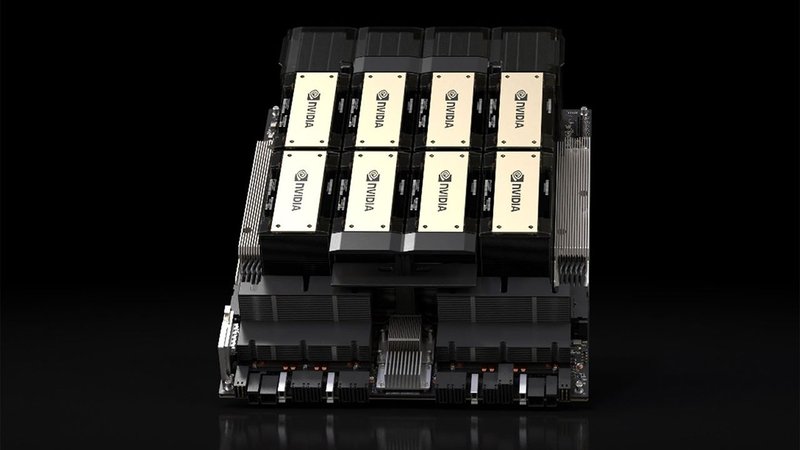
The bottleneck is memory. Specifically, the "HBM Equation." High Bandwidth Memory (HBM)—the incredibly fast, vertically stacked DRAM required by enterprise accelerators like Nvidia’s Blackwell B200 and AMD's Instinct MI350X—is incredibly wafer-intensive. For every bit of HBM produced, the industry sacrifices approximately three bits of conventional DRAM or GDDR capacity. Because hyperscalers like Microsoft, Meta, and Amazon are buying up Blackwell racks that require 288GB of HBM4 per GPU, memory manufacturers like SK Hynix, Micron, and Samsung have reallocated their production lines. In fact, an estimated 70% of all high-end memory chips produced in 2026 are slated exclusively for AI infrastructure.
The resulting crowding-out effect on the consumer market is devastating. Facing a severe shortage of GDDR7 memory, Nvidia has reportedly slashed GeForce RTX 50-series production by 30% to 40% in the first half of 2026. The flagship RTX 5090 launched in early 2025 with an MSRP of $1,999, but that number is now a work of pure fiction. On the secondary market, desperate buyers are paying upward of $3,500 to $6,000 for the card—a 190% markup.
AMD's enthusiast cards have fared slightly better in availability but are catching the same inflationary disease, with the RX 9070 XT seeing steady price creep. If you are waiting for a sub-$1,000 budget PC gaming or AI rig, Gartner analysts have bad news: that market segment is rapidly ceasing to exist.

Part II: The Local LLM Hardware Matrix (2026)
For local AI practitioners, compute (TFLOPS) is merely a "nice to have." Video RAM (VRAM) capacity and memory bandwidth are the absolute arbiters of performance. Running a large language model locally is a memory-bound task; during the decoding phase (token generation), the system must read the entire model's weights from memory for every single token generated.
If your model does not fit entirely into your VRAM, your system will offload to system RAM, and your tokens-per-second (t/s) will plummet from a conversational reading speed to an agonizing crawl.
Here is the current state of local LLM hardware options, ranked by their true utility for inference:
| Hardware Tier | Memory | Bandwidth | Est. Street Price (2026) | The AI-Radar Verdict |
|---|---|---|---|---|
| Nvidia RTX 5090 | 32GB GDDR7 | 1,792 GB/s | $4,000 - $6,000+ | Unmatched speed (over 5,800 t/s on 7B models), but financially ruinous. |
| Used Nvidia RTX 3090 | 24GB GDDR6X | 936 GB/s | ~$700 - $900 | The Undisputed Value King. A 5-year-old card that remains the holy grail for budget 24GB inference. |
| AMD Radeon RX 9070 XT | 16GB GDDR6 | 640 GB/s | ~$693 - $750 | Excellent mid-tier option. ROCm 7.0 makes AMD highly viable, but 16GB limits model size. |
| Apple Mac Studio / MBP (M5 Max) | 128GB Unified | 614 GB/s | $4,000+ | The paradigm shifter. Allows 70B+ models to run entirely in RAM at 60-90W. |
| AMD Ryzen AI Max+ (Strix Halo) | 128GB LPDDR5X | ~256 GB/s | ~$2,700+ | The PC world's answer to Apple. Incredible APU for large models, though bandwidth limits token generation speed. |
| Intel Arc B580 | 12GB GDDR6 | 456 GB/s | ~$260 | The ultra-budget savior. Great for 7B/8B models in a pinch, but quickly hits a wall. |
The "Used 3090" Anomaly
The most ironic twist of 2026 is that a graphics card released in 2020 is the backbone of the independent AI community. The RTX 3090 pairs 24GB of VRAM with a massive 384-bit bus delivering 936 GB/s of bandwidth. Because Nvidia stubbornly refused to increase VRAM capacity significantly for its consumer lines—offering only 16GB on the RTX 5080—the 3090 remains the most cost-effective way to run a 4-bit quantized 70B model. Two used 3090s combined via NVLink offer 48GB of VRAM for under $1,800, easily outclassing modern hardware costing triple the price.

Part III: The Unified Memory Rebellion
If discrete GPUs are pricing themselves out of the local developer market, where do we go? The answer lies in replacing the von Neumann bottleneck with Unified Memory Architectures (UMA).
Apple inadvertently built the ultimate AI researcher workstation. By fusing the CPU, GPU, and Neural Engine to a single massive pool of high-bandwidth memory, Apple bypassed the PCIe transfer bottleneck entirely. The newly released M5 Max and M5 Pro chips take this to a new extreme. The M5 Max supports up to 128GB of unified memory at 614 GB/s bandwidth.
More importantly, Apple introduced dedicated Neural Accelerators inside every GPU core on the M5 series. This fundamentally solves the "prefill" bottleneck. Processing a prompt (Time To First Token) is now up to 4.1x faster on the M5 compared to the M4. A dense 14B model can process a massive prompt in under 10 seconds. While an RTX 5090 still wins in raw token generation speed due to its 1.7 TB/s bandwidth, a single Mac laptop drawing 60 to 90 watts can seamlessly run a 70B model that would require a loud, 800-watt dual-GPU PC.
AMD has recognized this existential threat to the x86 ecosystem and responded with the Ryzen AI Max+ 395 (Strix Halo). These high-performance APUs pair Zen 5 CPU cores with a robust integrated GPU and up to 128GB of LPDDR5X memory. While its 256 GB/s bandwidth is lower than Apple's, the Strix Halo enables local developers to run "agent swarms" and massive 100B+ models in a mini-PC form factor starting around $2,700.
The future of local AI is not a massive desktop tower glowing with RGB lights. It is a quiet, power-efficient box with 128GB+ of unified memory.
Part IV: Software as a Weapon - The 1.58-Bit Revolution
Hardware constraints force software innovation. Because we cannot afford to buy more VRAM, the AI community has learned to shrink the models.
Quantization has evolved from a niche optimization into an absolute necessity. By converting 16-bit floating-point weights (FP16) into 4-bit integers (INT4) using formats like GGUF, AWQ, or GPTQ, developers can reduce a model's memory footprint by 75% with less than a 1% loss in accuracy. This is the only reason a 70-billion parameter model—which natively requires 140GB of VRAM—can be squeezed onto a single 32GB RTX 5090 or a Mac.
However, quantization is merely a stopgap. The true paradigm shift of 2026 is the mainstream arrival of BitNet and 1.58-bit ternary models.
Microsoft Research's BitNet b1.58 fundamentally challenges the premise that neural networks require complex floating-point math. Instead of 16-bit numbers, BitNet restricts model weights to just three values: -1, 0, and +1. This eliminates the need for complex matrix multiplications, replacing them with simple addition and subtraction.
The results are staggering. At the 3-billion parameter scale, a 1.58-bit model matches the perplexity and accuracy of an FP16 Llama model, but it consumes 3.55x less memory, runs 2.7x faster, and requires up to 82% less energy.
More importantly, BitNet severs our dependency on the GPU. Because ternary math is so simple, CPUs actually outperform GPUs for BitNet inference. Using the open-source bitnet.cpp framework, developers are now running 100-billion parameter models on standard consumer ARM and x86 CPUs at 5 to 7 tokens per second—essentially human reading speed.
As one developer famously noted on GitHub, the release of 1-bit LLMs is essentially "declaring war on the GPU mafia". If this architecture scales to frontier models (like GPT-4 equivalents) without accuracy degradation, the entire economic moat of Nvidia's hardware empire could be circumvented for inference workloads.
Part V: The Enterprise Compute Crunch and Cloud Reality
If local hardware is too expensive, can't we just rent from the cloud? The short answer: The cloud math is officially broken.
For two decades, the tech industry operated on the assumption that cloud computing gets cheaper over time due to economies of scale. In 2026, that trend reversed. Because hyperscalers are desperate to hoard Nvidia Blackwell (B200/B300) hardware to train the next generation of multi-trillion parameter reasoning models, cloud compute costs have spiked. In January 2026, AWS quietly raised the hourly rate of its p5e instances (H200 GPUs) from $34.61 to $39.80.
Amortized over three years, owning an 8-GPU H200 system costs roughly $15 to $20 per hour. Renting that same capacity from AWS now costs almost $40 an hour. "Reserved" cloud capacity no longer means stable pricing.
Enterprises are realizing that running continuous, steady-state AI inference in the public cloud is a financial liability. This has led to a massive resurgence in on-premises data centers and a shift toward Decentralized GPU Marketplaces. Platforms like Fluence and Vast.ai are democratizing access by aggregating independent data center capacity, offering RTX 4090s and A100s at 50% to 80% discounts compared to AWS or Google Cloud. For startups, navigating this decentralized compute landscape is the only way to avoid venture-capital-draining cloud bills.
Future Trends: When Does the Madness End?
If you are waiting for the GPU market to return to the glorious, affordable days of the GTX 1080 Ti, you must abandon that hope. The market has permanently decoupled from consumer economics.
1. The Memory Bottleneck Will Persist Through 2028: Meaningful relief in memory pricing and availability is an absolute fantasy until at least late 2027 or early 2028. Fabs for HBM and advanced packaging (CoWoS) take years to build. Even as new TSMC and Samsung facilities come online, the exponential scaling of AI reasoning models—which demand massive KV caches for million-token context windows—will absorb this new capacity the moment it is printed.
2. The Rise of "Physical AI" and XPUs: While LLMs dominated 2024 and 2025, the narrative is pivoting toward "Physical AI"—robotics, autonomous agents, and digital twins. This requires real-time, low-latency processing at the edge. We will see massive growth in XPUs (custom accelerators like Google TPUs, Intel Gaudi, AWS Trainium). Startups like FuriosaAI and Positron are already releasing custom inference ASICs that deliver similar throughput to Nvidia hardware but consume a third of the power (e.g., Furiosa's RNGD server drawing just 3kW).
3. The Ultimate Democratization via Software: Hardware will remain a luxury, but intelligence will become a commodity. The rapid advancement of 1-bit and 1.58-bit models will eventually allow edge devices—smartphones, laptops, and IoT sensors—to run incredibly capable models entirely locally.
The Editor's Final Verdict
The 2026 GPU market is a hostile environment. We are experiencing the growing pains of a technological revolution that is attempting to rebuild the world's computational infrastructure overnight.
If you are a local AI practitioner looking to survive the next 24 months, your playbook is simple:
Stop chasing TFLOPS; buy VRAM. Hunt the secondary market for refurbished RTX 3090s.Embrace Unified Memory. If you are buying a new system today, Apple's M5 Mac Studio/MBP or an AMD Strix Halo APU offers the only viable, cost-effective path to running 70B+ parameter models locally.Invest in Software Competency. Learn to use GGUF, Flash Attention, and speculative decoding. Keep a very close eye on the bitnet.cpp ecosystem.
The AI revolution is here, and it is extraordinary. But at the hardware level, it is strictly pay-to-play. Guard your VRAM, optimize your quants, and may your inference speeds remain ever high.





💬 Comments (0)
🔒 Log in or register to comment on articles.
No comments yet. Be the first to comment!