
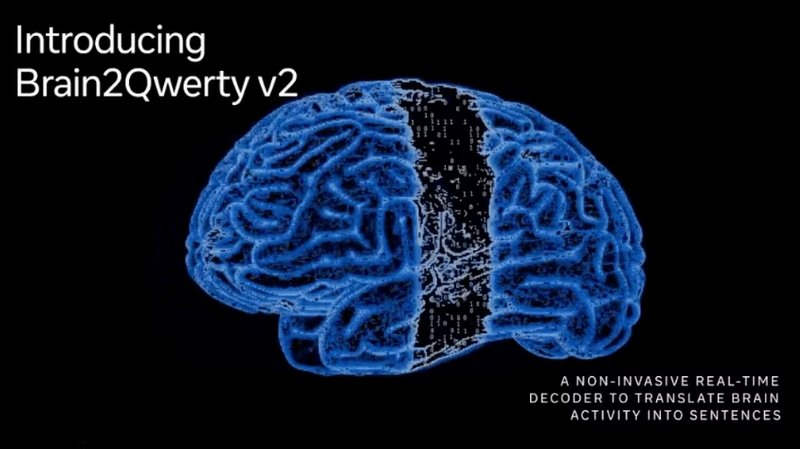
A veteran of the technology that gave millions of iPhones the ability to recognize a face now wants something far more complex: to read brain activity with the same ease as drawing blood. His new venture, Hemispheric, has just closed a $52 million round and carries a label that says it all: NeuroAI.
The Tel Aviv company remained in stealth mode for several years, refining an approach that the founders describe as a brain test for everyone. The analogy with a blood exam is deliberate: the goal is a rapid, accessible, and interpretable tool that can turn neural signals into clinically useful information without bulky machinery or invasive procedures. If the idea echoes the stumbles of other neurotech startups, the presence of a key figure from Apple’s Face ID and the size of the funding suggest that investors see something more solid.
What the news omits, but anyone involved in AI model deployment should weigh carefully, is the leap in data sovereignty stakes. Face ID, with all the privacy controversies it ignited since launch, processes a facial scan that stays confined within the phone. A system that reads the brain, even partially, handles a type of information that makes selfies look innocent: patterns of activity that can reveal not only identity, but emotional states, intentions, and cognitive dispositions. Such data are so sensitive that European regulations already classify them as a special category with reinforced protections.
In this scenario, the idea of sending streams of neural data to the cloud for inference is unthinkable. No patient would consent to transmitting their own brainwaves to remote servers, and no hospital would risk such a breach. The consequence is structural: for companies like Hemispheric, on-device or on-premise processing is not a technical luxury, but the only commercially viable architecture. It’s a constraint that shifts the game from pure algorithms to hardware capable of running machine learning models efficiently and securely right at the data collection point.
Here NeuroAI touches a raw nerve in today’s AI landscape. While large LLMs operate in data centers with hundreds of GPUs, the models that will need to decode brain signals in real time will require ultra-low-power chips, possibly embedded in wearables or even implantable devices. This is not science fiction: the neural accelerators found in high-end smartphones prove that local inference is already feasible, but the bar rises when dealing with neural interfaces, where latency and accuracy are non-negotiable.
The $52 million funding could therefore accelerate not only algorithm development but also the selection — or design — of dedicated hardware platforms. Who will supply this hardware? The usual semiconductor titans or new startups riding the wave of on-prem neurotech? This is a question that concerns the entire AI infrastructure ecosystem, because it sets an interesting precedent: the more intimate and irreproducible data becomes, the more value shifts from the cloud economy to specialized silicon that lives next to the user.
The Hemispheric story is thus more than a funding announcement: it’s a signal that the very concept of data sovereignty is about to be redefined by what we call “personal data.” And when that data is a thought, the distance between the sensor and the server becomes a boundary no one will want to cross again.






💬 Comments (0)
🔒 Log in or register to comment on articles.
No comments yet. Be the first to comment!