
A name that shaped the history of open-source software is now aiming at a different target: connecting hundreds of millions of robots. Jean-Baptiste Kempf, the developer behind VLC media player, has just closed a $5 million round for Kyber, a startup offering an infrastructure layer for real-time control of remote devices. The funding was led by Lightspeed Venture Partners, known for its bets on Mistral AI and Anthropic, with participation from OVNI Capital and Kima Ventures.
Under the hood
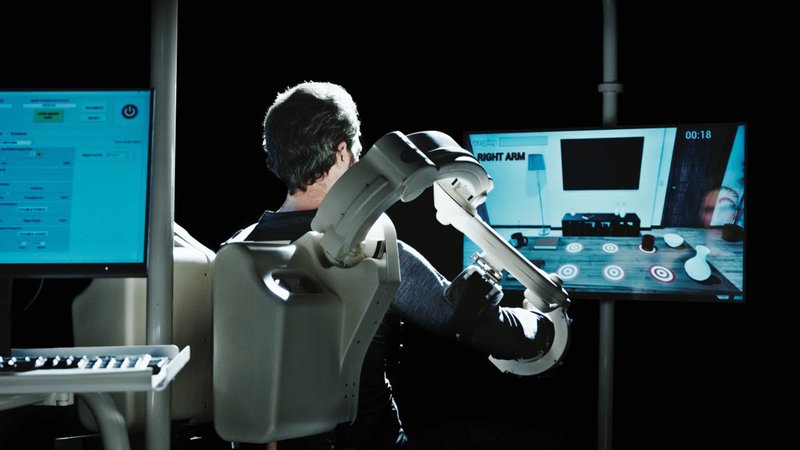
Kyber presents itself as a software infrastructure designed to orchestrate ultra-low-latency communication between operators and distributed machines. The idea is to provide a reliable control channel that overcomes physical proximity, enabling scenarios such as teleoperation of robotic fleets, decentralized industrial automation, or sensor management in hostile environments. In terms of deployment, the technological core could reside on edge nodes or on-premise servers, reducing dependence on cloud data centers and bringing computation closer to the point of action. No details have been released on hardware compatibility or GPU accelerators, but the emphasis on 'real-time' suggests an architecture that prioritizes predictable latency – a critical aspect when integrating inference models for automated control.
Why real-time control changes the game for on-premise setups
The ability to send commands to a remote device without perceptible delays is not just a matter of user experience. In industrial, healthcare, or logistics contexts, real-time control translates into operational safety and precision. For organizations that choose to keep AI workloads on proprietary infrastructure, a layer like Kyber could act as the glue between LLM models – perhaps running on internal servers for data sovereignty reasons – and the endpoint hardware. Reducing round-trip time becomes a key enabler: an on-premise system that processes a video feed and sends commands back to a robot needs a communication pipeline that does not nullify the latency gains achieved through local inference. Here, the typical trade-offs emerge: the adoption of wired networks, the use of deterministic protocols, the need for redundancy. Kyber appears to position itself precisely at this intersection, promising to simplify the management of such requirements.
The context: where the market is looking
The deal is not isolated. Lightspeed's involvement, which also invested in Anthropic and Mistral AI's record seed round, shows how venture capital is expanding its focus from purely generative AI to the infrastructure that enables its use in the physical world. Advanced robotics, digital twins, and predictive maintenance demand increasingly integrated stacks where control software is just one piece. In parallel, growing regulatory pressure on data residency (GDPR, but also sector-specific regulations) pushes companies to consider hybrid or entirely private architectures. Kyber fits into this trend by offering a component that could work both on public cloud and on isolated edge nodes, giving IT teams the flexibility to decide where the command logic resides.
What to watch next
The $5 million round represents an early stage, but the founder's profile and the trust of investors with a significant track record in AI make Kyber a project to monitor. For professionals evaluating on-premise deployments of LLMs applied to robotics or automation, the availability of middleware for real-time control can tip the balance toward self-hosted solutions, reducing risks linked to cloud connectivity. At the same time, the question remains open about how such infrastructures will integrate with existing inference frameworks and available hardware accelerators. The challenge will be to prove that ultra-low-latency remote control can be as reliable as a direct link, even when the last mile is made of cables or radio frequencies. In any case, the media echo of the operation confirms that controlling the physical world through software is no longer a field for solo pioneers, but a domain where capital and expertise are beginning to converge.








💬 Comments (0)
🔒 Log in or register to comment on articles.
No comments yet. Be the first to comment!