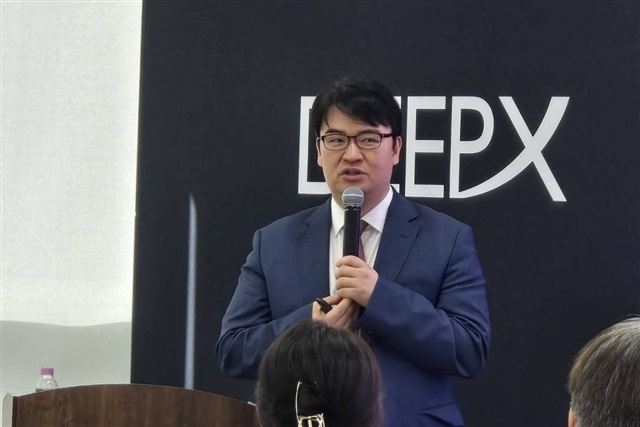
DeepX Accelerates AI Chip Production
South Korean company DeepX has announced a significant step in the artificial intelligence hardware market: the commencement of mass production for its DX-M1 AI chip. This strategic move positions DeepX as an increasingly relevant player in the AI semiconductor landscape, a rapidly expanding sector critical for the development and deployment of innovative solutions.
The DX-M1 chip is designed to support artificial intelligence workloads, a segment demanding ever-increasing and specialized processing capabilities. The availability of dedicated hardware is fundamental for companies intending to implement Large Language Models (LLMs) and other AI applications, both in cloud environments and, increasingly, in self-hosted or edge infrastructures.
Risk Mitigation Strategy and Supply Chain Sovereignty
A crucial aspect of DeepX's announcement concerns its supply chain management strategy. The company is actively building a significant inventory of DX-M1 chips, with the explicit goal of addressing and mitigating potential supply constraints. This decision reflects lessons learned from recent global crises, which highlighted the vulnerability of supply chains and their direct impact on the availability of essential components.
For organizations prioritizing data sovereignty and complete control over their infrastructures, hardware supply chain stability is a decisive factor. A vendor's ability to ensure consistent and predictable deliveries of critical components like AI chips is essential for planning on-premise deployments and ensuring operational continuity, reducing reliance on unpredictable external factors.
Implications for On-Premise Deployments
The availability of AI chips like the DX-M1 directly impacts decisions regarding on-premise deployments. Companies evaluating the implementation of LLMs and other AI applications in self-hosted environments must carefully consider the availability of necessary hardware, delivery times, and associated costs. Stable mass production and a proactive inventory strategy can reduce uncertainty and improve Total Cost of Ownership (TCO) planning.
Opting for an on-premise deployment offers advantages in terms of data control, security, and infrastructure customization, but it requires careful management of initial investments (CapEx) and maintenance. Certainty in the supply of specialized silicio is a key element that can influence the economic and operational feasibility of such projects, allowing companies to build and scale their AI capabilities without interruptions due to component shortages. For those evaluating on-premise deployments, AI-RADAR offers analytical frameworks on /llm-onpremise to assess trade-offs between costs, performance, and control.
The Future of AI Hardware and Resilience
DeepX's initiative underscores a broader trend in the technology sector: the growing importance of resilience and strategic planning in the supply chain. As artificial intelligence becomes increasingly integrated into business operations, the ability to access high-performance and reliable hardware will become a competitive differentiator.
Companies like DeepX, which invest in mass production and proactive inventory management, contribute to stabilizing the market and providing the foundation for continuous innovation. This approach is particularly relevant for technical decision-makers who must balance performance, cost, security, and data sovereignty requirements when building their AI infrastructures.








💬 Comments (0)
🔒 Log in or register to comment on articles.
No comments yet. Be the first to comment!