1) TL;DR (3–5 bullets)
- Dell Technologies reports that its AI Factory initiative has exceeded 5,000 enterprise clients.
- The announcement attributes this growth to strong demand for Nvidia-powered AI platforms.
- Enterprises are investing in dedicated AI infrastructure rather than relying solely on generic or cloud-only setups.
- Control and data sovereignty are highlighted as key reasons for preferring on-premise and hybrid deployments.
- For AI teams, this is a concrete signal that local and hybrid stacks are becoming a mainstream architecture choice.
2) The spotlight story (deeper analysis)
Dell Technologies has disclosed that its AI Factory initiative now serves more than 5,000 enterprise clients. Even without a detailed breakdown, that figure alone signals that dedicated AI infrastructure is moving from early-adopter territory into a broad enterprise market.
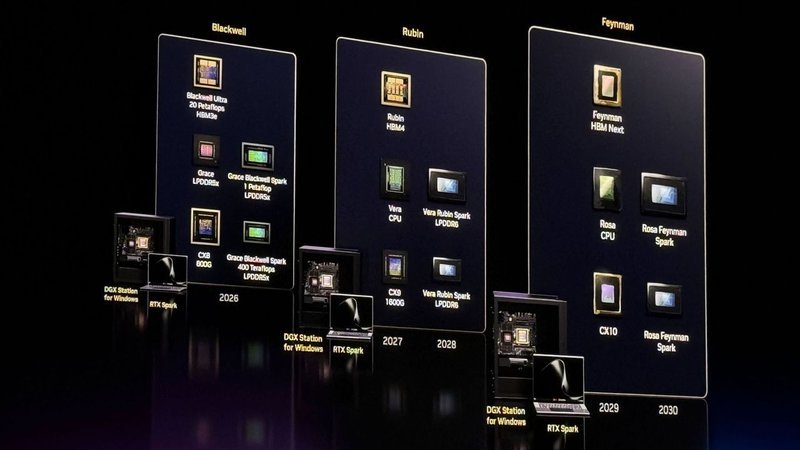
The announcement emphasizes that demand is particularly strong for Nvidia-powered platforms. That aligns with what many teams already experience: the most mature ecosystem for training, fine-tuning, and high-performance inference still revolves around Nvidia GPUs. By anchoring its AI Factory offering on Nvidia, Dell is selling not just hardware, but an ecosystem that enterprise IT can recognize and support.
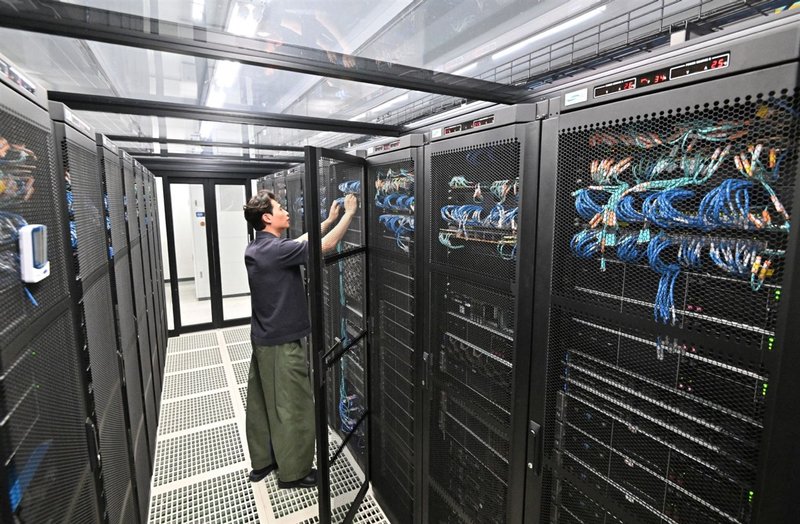
Equally important is the description of how customers want to deploy this infrastructure. The source notes that enterprises are increasingly seeking robust computing capabilities for AI workloads and that they often prioritize control and data sovereignty through on-premise or hybrid deployments. In practice, that translates into organizations building or expanding their own AI clusters inside corporate data centers while maintaining the option to integrate with public cloud services where appropriate.
This is a counterbalance to the narrative that all serious AI work will end up in a handful of hyperscale clouds. For regulated industries, or any company with sensitive proprietary data, running LLMs and other AI models entirely in the public cloud can be a governance and compliance challenge. Dell’s AI Factory milestone suggests that many of these organizations are instead opting for a model where core data and workloads remain under direct control, while cloud is treated as an extension rather than the default home.
The concept of an “AI factory” is telling. It implies repeatable, industrialized workflows for training, adapting, and running models, rather than ad hoc clusters scattered across the organization. Crossing 5,000 enterprise clients indicates that a sizable number of companies prefer to buy into a pre-integrated infrastructure stack rather than assembling one component at a time.
Taken together, the client count, the Nvidia emphasis, and the focus on data sovereignty paint a picture of an enterprise AI market that is:
- Capital-intensive, as organizations commit budget to dedicated GPU-heavy infrastructure.
- Governance-aware, with architecture choices driven by regulatory and privacy constraints.
- Ecosystem-driven, converging on Nvidia-based stacks where tooling and support are richest.
For the AI tooling and model ecosystem, this is a strong nudge to ensure first-class support for Nvidia-centric, on-premise, and hybrid environments.
3) Are we sure? (skeptical lens)
The information available is high-level, so it is worth being explicit about what we do not know.
- The source confirms that the AI Factory initiative has surpassed 5,000 enterprise clients, but it does not specify how far beyond 5,000 this number goes.
- We know Nvidia-powered platforms are driving demand, but the data does not quantify Nvidia’s share or indicate whether other accelerators are used at all.
- On-premise and hybrid deployments are described as priorities, yet there is no numerical breakdown of how many customers choose each model.
- The announcement does not list specific workloads or industries. It is not clear how many of these deployments are focused on LLMs versus other types of AI, or how many are in full production versus pilot stages.
These gaps mean we should interpret the news as clear evidence of strong infrastructure demand and directional trends, rather than a complete map of how enterprise AI workloads are distributed or how mature they are across the client base.
4) Why it matters (practical implications)
For AI-Radar readers building or operating AI systems, several implications stand out:
- Local and hybrid deployments are validated: If you are pushing for on-premise GPU clusters or tightly governed hybrid models, this announcement provides external proof that many enterprises are doing the same.
- Nvidia-first design is a pragmatic default: Since demand is described as driven by Nvidia-powered platforms, aligning your frameworks, inference servers, and MLOps tools with Nvidia environments will ease integration into stacks like Dell’s AI Factory.
- Data sovereignty as a design constraint: The emphasis on control and data sovereignty reinforces the need to involve legal, compliance, and security teams early in AI architecture decisions, especially for LLMs over sensitive data.
- Infrastructure ahead of use cases: Some organizations may be purchasing AI infrastructure as a strategic hedge before their application portfolio is fully defined. Platform teams should be ready with reusable patterns such as internal copilots, retrieval-augmented generation over corporate content, and domain-specific assistants.
5) What to watch next (2–4 signals)
- More detailed disclosures from Dell and peers on how AI factory-style deployments are used: training versus inference, LLMs versus other models, and which industries are leading.
- Whether future announcements introduce non-Nvidia accelerators into comparable enterprise AI infrastructure offerings.
- Regulatory developments that further encourage or mandate keeping AI workloads and data within specific jurisdictions or controlled environments.
- Case studies that tie AI infrastructure investments to observable business outcomes, moving the narrative from “client counts” to measurable impact.
6) Sources (bullet list of selected URLs)
- https://ai-radar.it/article/dell-ai-factory-oltre-5-000-clienti-enterprise-spinti-dalla-domanda-nvidia



💬 Commenti (0)
🔒 Accedi o registrati per commentare gli articoli.
Nessun commento ancora. Sii il primo a commentare!