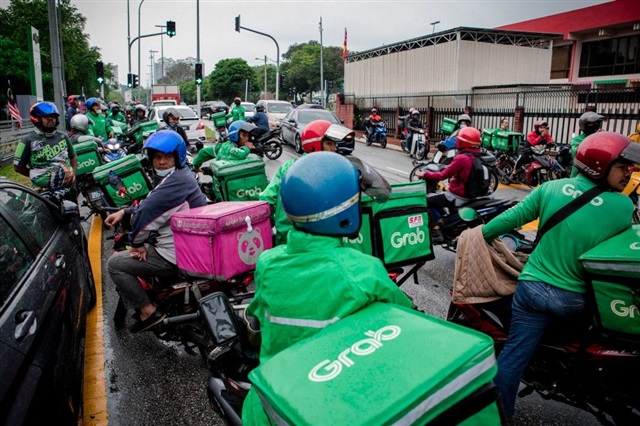
Just as antitrust approval looms, Grab has announced the resignation of a board member known for his close ties to Uber. The news comes as the Singapore-based company is deep into the process of acquiring foodpanda Taiwan, an operation that could reshape the local restaurant delivery market.
The timing is not random. The director’s departure – he previously held top roles at Uber and sat on Grab’s board precisely because of that affiliation – raises questions about the real state of the relationship between the two mobility and delivery giants. After Uber exited Southeast Asia in 2018, the American company still holds a significant stake in Grab, but the progressive reduction of its strategic influence was already visible. Now, with the integration of foodpanda Taiwan, the presence of an “Uber-linked” director could have been a complicating factor, especially in a context of delicate negotiations with competition authorities.
foodpanda Taiwan, controlled by Delivery Hero, is Uber Eats’ main competitor on the island. If approved, Grab’s acquisition would create an enormous concentration of data: user profiles, consumption habits, delivery routes, and logistic flows. All this information would end up under the control of an entity based in Singapore, fueling concerns among regulators and activists about digital sovereignty.
For those following on-premise AI dynamics, the case is emblematic. Every cross-border tech acquisition raises the question: where will the data go? In Grab’s case, the answer is far from obvious. Taiwan’s data protection laws (Personal Data Protection Act) impose stringent limits on overseas transfers, and the Fair Trade Commission might impose conditions such as local storage of personal data or the adoption of localized cloud infrastructure. For a company that bases its competitive edge on predictive algorithms – from demand forecasting to dynamic pricing – data localization is not just a compliance cost: it directly affects model quality, inference latency, and the TCO of machine learning pipelines.
In this scenario, the director’s exit takes on a deeper meaning: it is not merely a corporate governance issue but the symptom of friction between two visions of data control. On one side, Uber’s centralized, cloud-first approach; on the other, Grab’s need to negotiate with sovereign states that claim their digital autonomy. For companies evaluating on-premise or hybrid deployments, it’s yet another reminder that M&A battles are not won on financial terms alone, but also on those of technological sovereignty.
It remains to be seen whether the acquisition will proceed smoothly. What is certain is that the board reshuffle at Grab sheds light on an exposed nerve: in a world where AI feeds on data, data geography becomes a strategic asset as important as algorithms. And the moves of board members can reveal much more than official press releases.










💬 Comments (0)
🔒 Log in or register to comment on articles.
No comments yet. Be the first to comment!