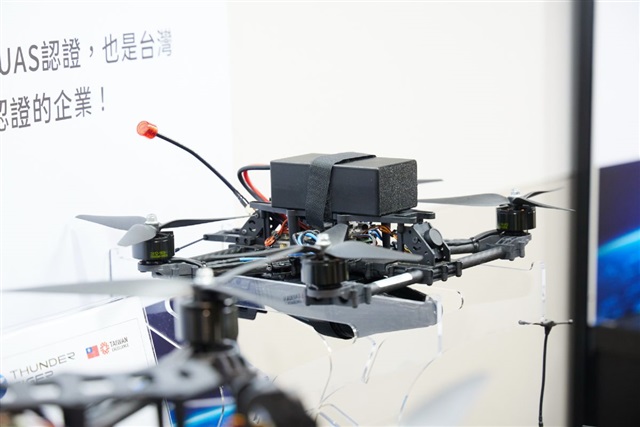
Taiwanese Drones and the Push Towards the US Market
Taiwanese drone manufacturers are making significant strides to expand their global presence, with a particular focus on the United States market. A key element of this strategy is obtaining Green UAS certification, a recognition that not only attests to compliance with specific standards but also acts as a catalyst for accelerating entry into a highly competitive and regulated market. This move highlights a growing trend in the technology sector, where trust in the supply chain and regulatory compliance become crucial differentiating factors for the adoption of advanced solutions.
For companies operating in critical sectors, the origin and certification of the technologies employed are non-negotiable aspects. The advancement of Taiwanese drones towards Green UAS certification fits into a broader context of seeking reliable and secure suppliers capable of guaranteeing not only technical performance but also operational integrity and data protection. This scenario compels technology decision-makers, such as CTOs and infrastructure architects, to carefully evaluate every component of their technology pipeline.
The Significance of Green UAS Certification
Green UAS certification represents a seal of quality and security for Uncrewed Aerial Systems (UAS). While specific details may vary, such certifications generally attest that a drone meets rigorous requirements in terms of cybersecurity, supply chain integrity, and data protection. For organizations implementing drone fleets for industrial, surveillance, or infrastructure purposes, this certification offers fundamental reassurance about the platform's robustness and reliability.
In an era where national security and data sovereignty are absolute priorities, a supplier's ability to demonstrate compliance with recognized standards is an invaluable competitive advantage. Green UAS certification is not just about the drone's technical specifications but also about manufacturing processes, software management, and protection against potential vulnerabilities. This is particularly relevant for applications that generate or process sensitive data, where the choice between on-premise deployment and cloud solutions becomes a strategic decision to maintain control and compliance.
Market Implications and Data Sovereignty
Taiwanese drones obtaining Green UAS certification has significant implications for the global UAS market. On one hand, it opens new commercial opportunities and fosters greater supply chain diversification, reducing reliance on a limited number of suppliers. On the other hand, it raises the bar for all industry players, pushing them to invest more in security and compliance to remain competitive.
For companies evaluating the integration of drones into their operations, the issue of data sovereignty is central. Where is the data collected by drones stored? Who has access to it? How is it protected? These questions guide deployment decisions. Self-hosted or air-gapped solutions, which AI-RADAR explores in detail, can offer the level of control and security required for sensitive workloads, mitigating risks associated with data residency and compliance. The evaluation of Total Cost of Ownership (TCO) must include not only hardware and software but also the costs associated with long-term security management and regulatory compliance.
Future Prospects and Strategic Considerations
The advancement of Taiwanese drones in the US market, supported by Green UAS certification, foreshadows a future where drone technology will be increasingly integrated into a wide range of sectors, from agriculture to infrastructure inspection, logistics to security. For enterprises, the challenge lies in balancing innovation with the need to maintain high standards of security, privacy, and operational control. The selection of reliable platforms and suppliers becomes a strategic decision that can influence long-term resilience and competitiveness.
Technology decision-makers must adopt a holistic approach, considering not only the technical capabilities of drones but also the entire supporting ecosystem, including infrastructure requirements for data processing and storage. For those evaluating on-premise deployment or hybrid solutions for AI/LLM workloads, AI-RADAR offers analytical frameworks on /llm-onpremise to assess the trade-offs between control, security, and TCO. The ability to manage data locally, in air-gapped environments, can be a decisive factor in ensuring sovereignty and compliance in a constantly evolving technological landscape.






💬 Comments (0)
🔒 Log in or register to comment on articles.
No comments yet. Be the first to comment!