AI for Industrial Maintenance: The Edmund Case
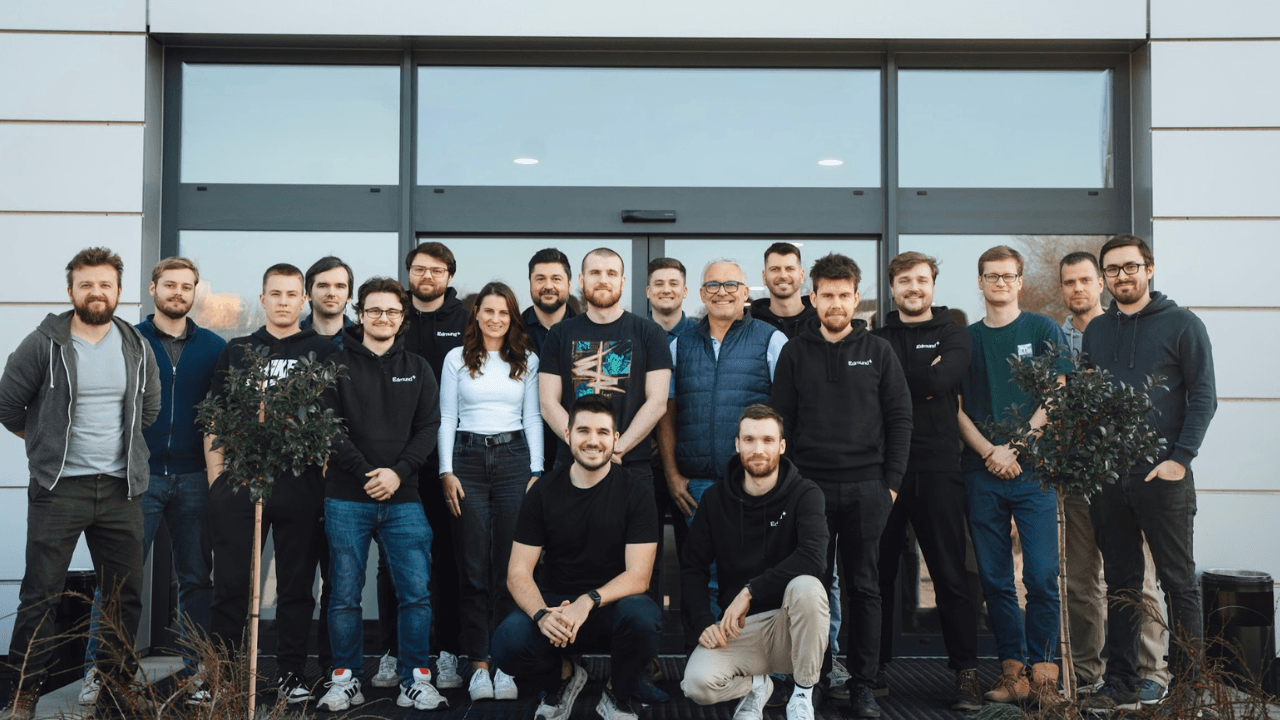
Edmund, a Czech startup specializing in the development of AI-powered debugging platforms for industrial maintenance, recently announced a €2.5 million funding round. The investment was led by FORWARD.one, with participation from University2Ventures and Tensor Ventures, underscoring the growing interest in innovative solutions for the manufacturing sector.
The company aims to tackle one of the most pressing challenges facing modern industry: the increasing complexity of production systems and the simultaneous decline in the availability of skilled engineers. This gap is leading to costly downtime, slow diagnostics, and increased operational risk across global supply chains. Edmund steps into this context, offering a solution that promises to transform how factories manage maintenance and troubleshooting.
An Intelligent Platform for Rapid Diagnostics
Edmund's platform stands out for its use of AI agents capable of integrating and analyzing a wide range of data: from technical documentation to PLC projects, maintenance logs, and real-time machine data. The goal is not to provide a generic chatbot, but to create an intelligent operational layer within the factory. This allows technicians to quickly identify faults, understand their root causes, and receive step-by-step guidance for resolution, all within minutes.
This approach significantly reduces the time required to diagnose issues. In manufacturing, the majority of downtime is spent diagnosing faults rather than fixing them, often up to 80% of the total time. Edmund can cut this analysis phase by up to 90%, dramatically accelerating recovery and minimizing economic impact. A concrete example comes from Amcor Flexibles, where Edmund's system reduced average repair times by 26% overall, saving an estimated 440 man-hours annually per factory.
Implications for CTOs and Infrastructure Architects
For CTOs, DevOps leads, and infrastructure architects evaluating solutions for AI/LLM workloads, Edmund's approach offers interesting insights. The platform, founded in 2023, was designed to be hardware-agnostic and compatible with a wide range of industrial systems. This flexibility is crucial for companies that wish to maintain control over their data and infrastructure, favoring on-premise deployments or hybrid solutions.
The ability to process sensitive data locally, integrating information from legacy and real-time systems, addresses data sovereignty and compliance needs, which are fundamental aspects for many industrial realities. The reduction in TCO, resulting from minimized downtime and optimized human resources, represents a key decision-making factor. As Jakub Szlaur, co-founder and CEO of Edmund, emphasized, “the real challenge is not a lack of data, but a lack of context.” Edmund's AI agents are designed to understand how machines work down to the PLC project level, enabling engineers to act immediately without having to consult lengthy documentation or wait for experts.
Future Prospects and Strategic Expansion
The new funding will enable Edmund to accelerate its growth. The company plans to expand its team, consolidate its presence in European and US markets, and continue developing the platform. The goal is to achieve fully contextual, AI-driven troubleshooting and diagnostics capabilities for industrial operations.
According to Beau Anne-Chilla, Partner at FORWARD.one, Edmund's approach has the potential to become a foundational layer for modern manufacturing. Dr. Johannes Triebs, Founding Partner at U2V, adds that Edmund is transforming the factory floor into an intelligent, self-diagnosing system, providing real-time answers instead of costly downtime. This vision aligns perfectly with current trends seeing companies seek AI solutions that offer control, efficiency, and operational resilience, often through deployments that prioritize local data processing.










💬 Comments (0)
🔒 Log in or register to comment on articles.
No comments yet. Be the first to comment!