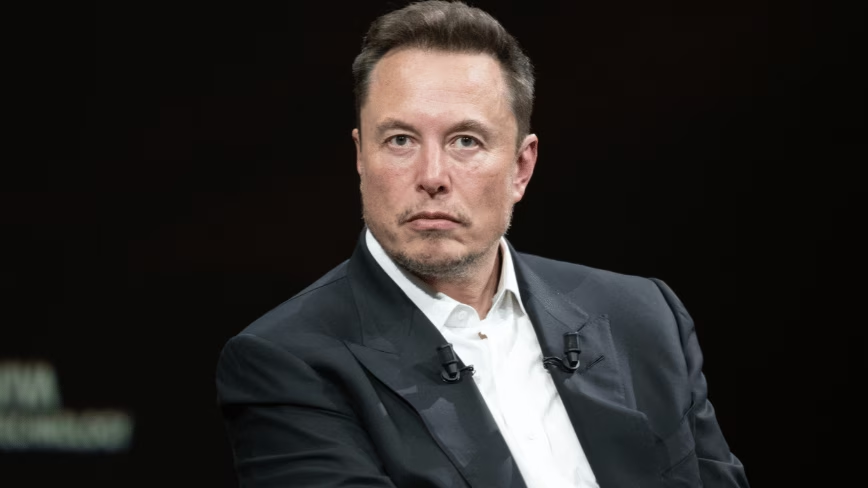
The Agreement Between Elon Musk and the SEC: A Precedent for Transparency
After nearly four years of ongoing litigation, Elon Musk has formalized an agreement with the U.S. Securities and Exchange Commission (SEC). The dispute concerned his late disclosure of acquiring a significant stake in Twitter, which occurred in late 2022. This agreement concludes a legal matter that has highlighted regulatory authorities' focus on the transparency of corporate communications, a fundamental aspect for market trust and investor protection.
The resolution involves Musk paying a civil penalty of $1.5 million, a figure representing the maximum penalty applicable for the alleged violation. The SEC had previously estimated that the untimely disclosure caused a total harm of $150 million to other shareholders. This incident underscores how even prominent figures in the technology landscape are subject to stringent financial regulations, the violations of which can lead to significant economic consequences.
Details of the Case and Financial Implications
The case spanned a considerable period, nearly four years, before reaching a resolution. Musk's late disclosure of his shareholding in Twitter, now known as X, triggered the SEC's investigation, which aims to ensure fair and transparent markets. The $1.5 million penalty, while the maximum for the specific violation, is a fraction of the harm estimated by the SEC, but serves as a reminder of the importance of strictly adhering to disclosure requirements.
For companies operating in the technology sector, particularly those developing and implementing advanced solutions like Large Language Models (LLMs), regulatory compliance is not limited to financial aspects. Data management, privacy, data sovereignty, and compliance with regulations such as GDPR represent complex and costly challenges. Errors or delays in these areas can result in high penalties, operational disruptions, and reputational damage, directly impacting the Total Cost of Ownership (TCO) of infrastructure and services.
Governance and Compliance in the Tech and AI Context
The episode involving Elon Musk and the SEC offers a broader reflection on corporate governance and compliance within the technology sector. For organizations considering the deployment of on-premise LLMs or hybrid environments, the ability to demonstrate rigorous adherence to regulations is crucial. This includes not only financial compliance but also security management, data protection, and transparency in AI-related decision-making processes.
The choice of self-hosted or air-gapped architectures for LLMs is often motivated precisely by the need to maintain high control over data and processes, meeting sovereignty and compliance requirements. However, even in these scenarios, internal and external oversight and reporting must be impeccable. Robust infrastructure is not sufficient without equally solid governance processes that prevent legal and financial risks and ensure stakeholder trust.
Future Prospects and Lessons Learned
The conclusion of the SEC case against Elon Musk reiterates a fundamental principle: transparency and timeliness in communications are indispensable pillars for the proper functioning of markets. For CTOs, DevOps leads, and infrastructure architects operating in the field of artificial intelligence, this event serves as a reminder of the importance of integrating compliance and governance from the earliest stages of design and deployment.
Investing in robust legal and compliance processes is as crucial as investing in cutting-edge hardware or specialized talent. Penalties and legal costs can erode valuable resources that would otherwise be allocated to innovation and the expansion of AI capabilities. Maintaining a proactive approach to compliance, whether financial, privacy-related, or data sovereignty-focused, is essential to ensure the long-term sustainability and success of the most ambitious technological initiatives.









💬 Comments (0)
🔒 Log in or register to comment on articles.
No comments yet. Be the first to comment!