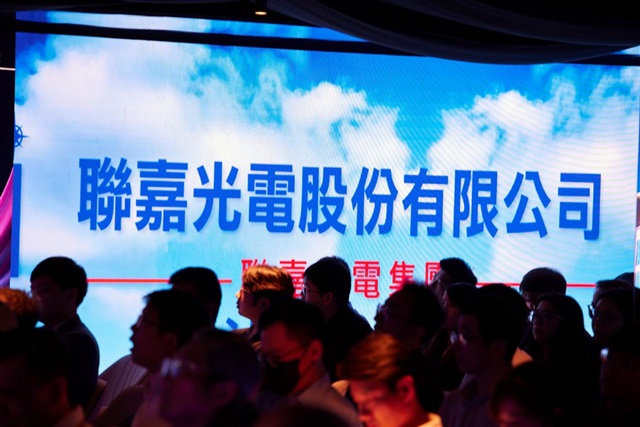
EOI, a Taiwan-based company known for LEDs used in the automotive sector, is setting up a new facility in Mexico. The stated goal: to produce components for humanoid robots and silicon photonics. The news, reported by DIGITIMES, marks a turning point for an industry traditionally tied to lighting and displays, now eyeing two high-innovation technology fronts.
Silicon photonics, in particular, is a quiet but decisive piece in the evolution of distributed computing architectures. In a GPU cluster built for LLM training or inference, inter-node communication can become a more critical bottleneck than compute power itself. Silicon-based optical interconnects promise higher bandwidth and lower latency compared to traditional electrical links, while also reducing energy consumption. For those running large-scale self-hosted deployments, the choice of interconnect technology is not a detail: it affects overall throughput, scalability, and total cost of ownership (TCO).
EOI’s interest in silicon photonics, if backed by concrete investments, could signal growing demand for optical components from server builders and data centers. It’s no coincidence that other players in the Taiwanese supply chain, historically strong in semiconductor packaging, are also exploring hybrid electrical-optical solutions. Mexico as a production base offers proximity to the North American market and a logistics chain already proven in the automotive sector from which EOI originates.
The second front, humanoid robots, touches a different link in the AI value chain. A robot that interacts with its environment must process streams of data from cameras, microphones, and tactile sensors in real time, often without relying on a stable cloud connection. This scenario pushes toward edge or fully on-device compute architectures, where language and vision models run locally on embedded hardware. LEDs, optical sensors, and communication modules are constitutive elements of these platforms. EOI’s experience in combining miniaturization, luminous efficiency, and reliability in automotive could translate into a competitive advantage in supplying robot components.
In the broader picture, EOI’s move confirms how enabling technologies for artificial intelligence are redrawing boundaries between industrial sectors. Demand for optical interconnects and edge computing components does not only concern model developers but the entire hardware supply chain. For those designing self-hosted infrastructure, following silicon photonics developments means understanding which bottlenecks will disappear and what new levels of computational density will become achievable. And the startup of a production line in Mexico by an automotive supplier is a concrete sign that someone is already starting to clear those bottlenecks.









💬 Comments (0)
🔒 Log in or register to comment on articles.
No comments yet. Be the first to comment!