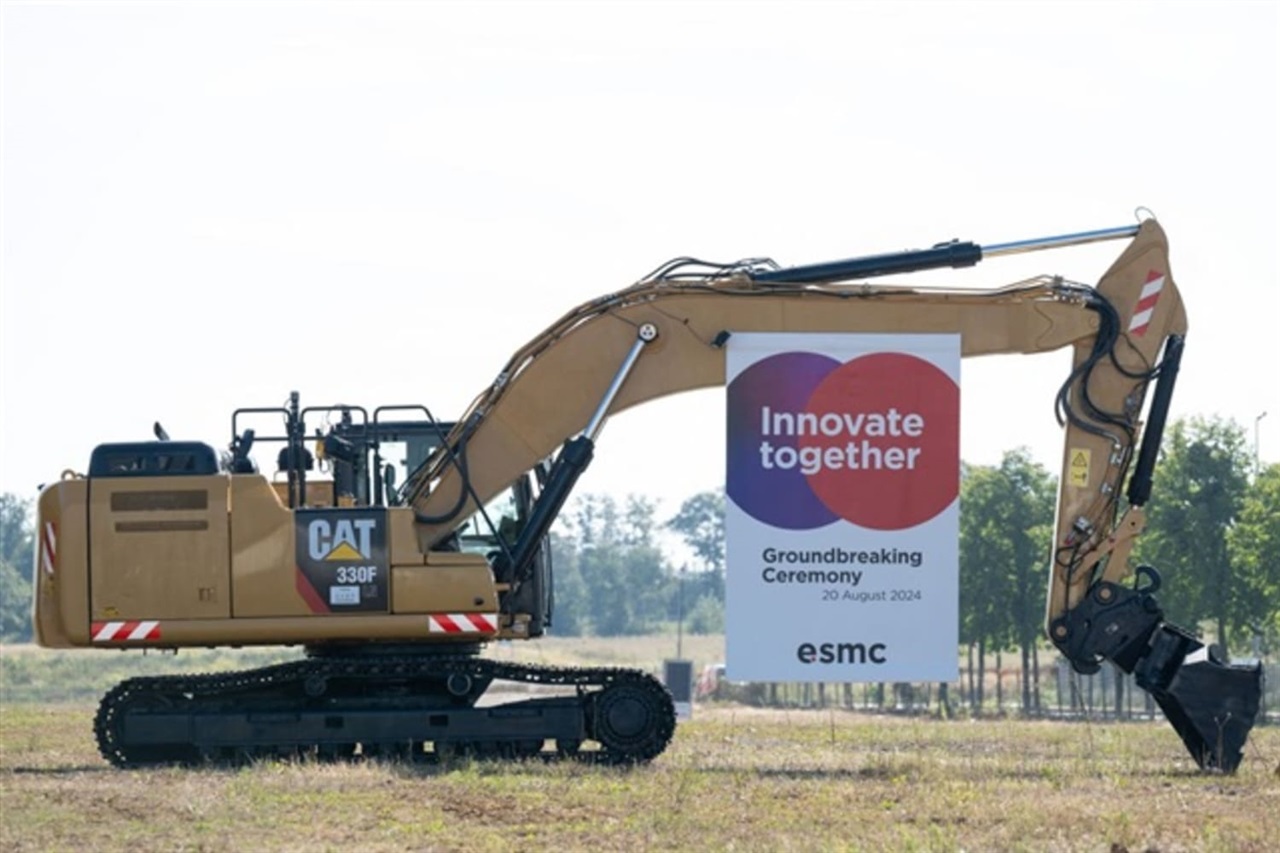
ESMC and the Horizon of Artificial Intelligence
ESMC recently confirmed it is on schedule with its roadmap, a positive signal for the technology sector. In parallel, the company announced an increasingly strategic focus on the field of artificial intelligence. This direction reflects a global trend where AI, particularly Large Language Models (LLMs), is becoming a fundamental pillar for innovation and competitiveness across numerous industries.
ESMC's commitment to AI is set against a backdrop of rapid evolution, where the demand for computing power and robust infrastructure for training and inference of complex models is constantly growing. Organizations, from startups to large enterprises, are actively exploring how to integrate AI into their operations, facing significant challenges related to deployment and resource management.
The Infrastructural Needs of AI
Implementing AI solutions, especially those based on LLMs, imposes stringent infrastructural requirements. Training large models demands GPU clusters with high VRAM and high-speed interconnections, while inference, though less demanding in terms of total resources, requires low latency and high throughput to handle real-time workloads. These constraints push companies to carefully consider their deployment strategies.
The choice between a cloud infrastructure and a self-hosted, or on-premise, one is crucial. While the cloud offers immediate scalability and flexibility, on-premise solutions can ensure greater data control, better regulatory compliance, and, in the long term, a more advantageous TCO for predictable and intensive workloads. Managing local stacks and dedicated hardware for AI thus becomes a distinctive factor for many entities.
Data Sovereignty and TCO Optimization
The adoption of on-premise AI solutions addresses primary needs such as data sovereignty and compliance. For regulated sectors, such as finance or healthcare, keeping data within one's infrastructural boundaries, even in air-gapped environments, is often a non-negotiable requirement. This approach minimizes privacy and security risks, offering granular control over the entire data lifecycle.
From an economic perspective, although the initial investment (CapEx) for an on-premise infrastructure can be significant, a TCO analysis often reveals long-term advantages. By eliminating recurring cloud operational costs and optimizing hardware resource utilization, companies can reduce overall expenditure. For those evaluating on-premise deployments, AI-RADAR offers analytical frameworks on /llm-onpremise to assess the trade-offs between costs, performance, and control.
Future Prospects in the AI Landscape
ESMC's orientation towards AI highlights the market's maturation and the need for players who can support the growing demand for dedicated components and services. As LLMs become more sophisticated and pervasive, the ability to provide reliable and high-performance infrastructure, for both training and inference, will become a key differentiator.
The future of AI is intrinsically linked to the availability of hardware and software that can manage the complexity of current and future models. Companies like ESMC, strategically positioning themselves in this ecosystem, will help shape how organizations implement and leverage the potential of artificial intelligence, balancing innovation, control, and economic sustainability.








💬 Comments (0)
🔒 Log in or register to comment on articles.
No comments yet. Be the first to comment!