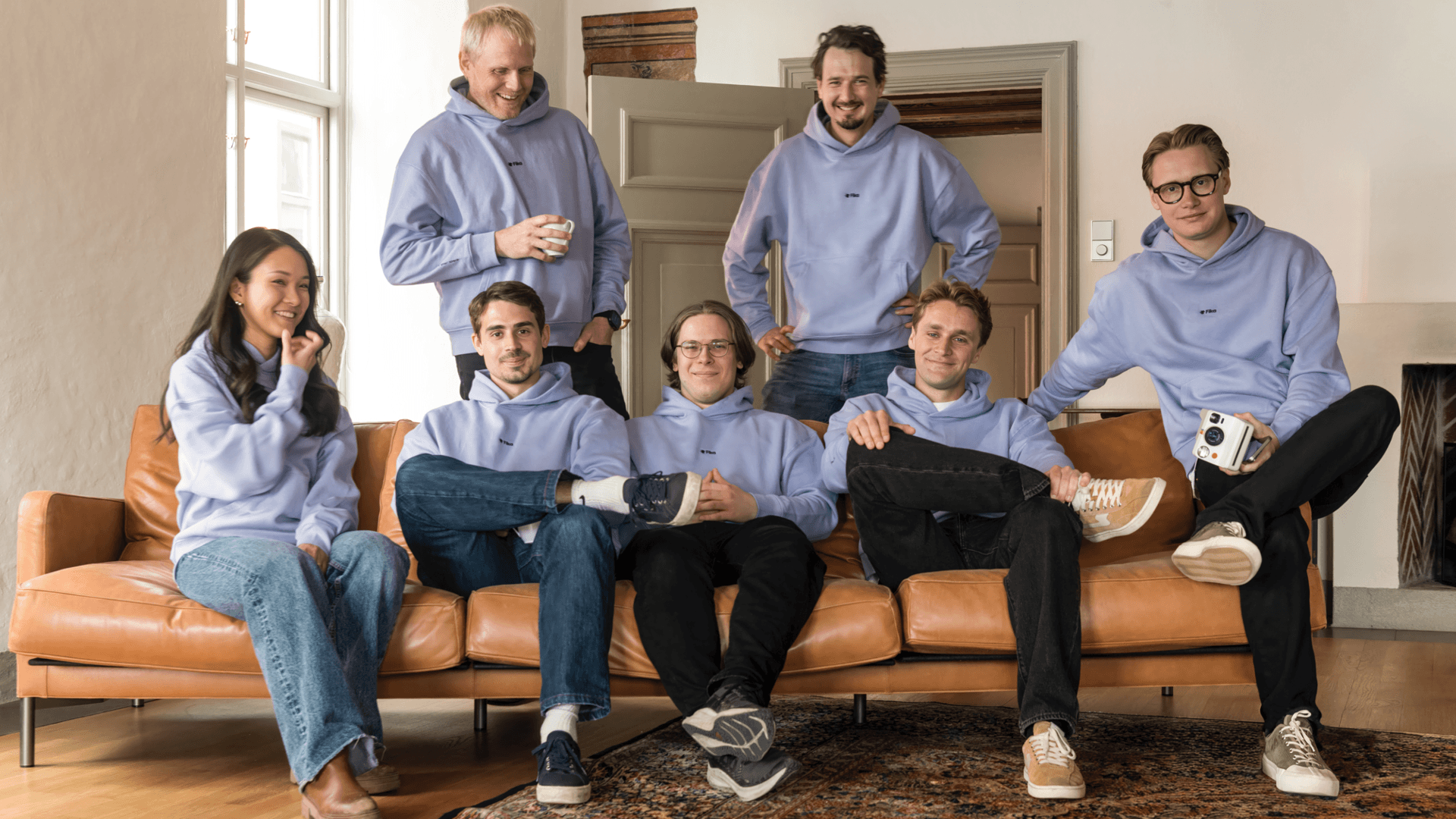
Fika Jobs’ $4 million pre-seed round, led by Luminar Ventures with backing from over twenty investors including the co-founders of King (Candy Crush), marks a concrete step toward automating interviews with AI-generated video. The platform, founded by brothers Jakob and Alexander Dubois, replaces the traditional résumé with a ten-minute conversation between candidate and AI agent, which then assembles video clips highlighting skills, ambitions, and values.
Less luck, more real signals
The technical core is a matching system that anonymizes age, gender, and ethnicity before connecting candidates and opportunities. Employers access “pre-interviewed” profiles and pay only upon a successful hire. During testing, fifty companies used the platform, generating thousands of applications and several actual placements. The thrust is to break the current paradox: on one side, candidates use AI tools to mass-produce applications, while on the other, companies filter with automated screening software without ever seeing the person.
The data knot: who controls the interview?
For anyone evaluating on-premise deployment or sovereign environments, Fika Jobs becomes an intriguing case study. Interviews are the most sensitive phase of recruiting: they contain personal, often confidential information, and the conversation with an AI agent involves processing voice, expressions, and verbal content in a cloud context. While anonymization during matching is a step forward in reducing bias, the raw data – the video and transcript – remains under the control of a third-party provider. Companies operating in regulated sectors or with strong GDPR constraints may ask whether it is sustainable to entrust the entire conversational process to a SaaS without local oversight.
The efficiency-vs-control trade-off
This is not a theoretical issue. The rise of such platforms shifts the pendulum toward full outsourcing of the initial screening, but for organizations already running LLMs on-premise for other workloads, the question arises: does it make sense to replicate similar logic internally? The answer is not straightforward. A self-hosted infrastructure for video interviews would require inference compute, storage management, and robust anonymization pipelines, with a non-negligible impact on TCO. It’s the classic trade-off between speed of adoption (cloud) and granular control (on-premise). On AI-RADAR you can find frameworks to analyze such scenarios in the section on LLMs and local deployment.
Beyond the funding: what it signals to the market
The round is not just capital injection. It indicates that Nordic venture capital is betting on a more conversational, less bureaucratic hiring process where AI doesn’t merely filter but builds a narrative profile. The open question is whether HR departments will be comfortable trusting an agent that conducts the first interview autonomously, and whether the promise of “better” hires will hold as volumes grow. For the Italian landscape, the Swedish experiment is a sign: the AI battle in HR will be fought as much on algorithm quality as on the ability to offer verifiable guarantees around privacy and data processing – a domain that the on-premise approach, in certain contexts, will continue to safeguard.







💬 Comments (0)
🔒 Log in or register to comment on articles.
No comments yet. Be the first to comment!