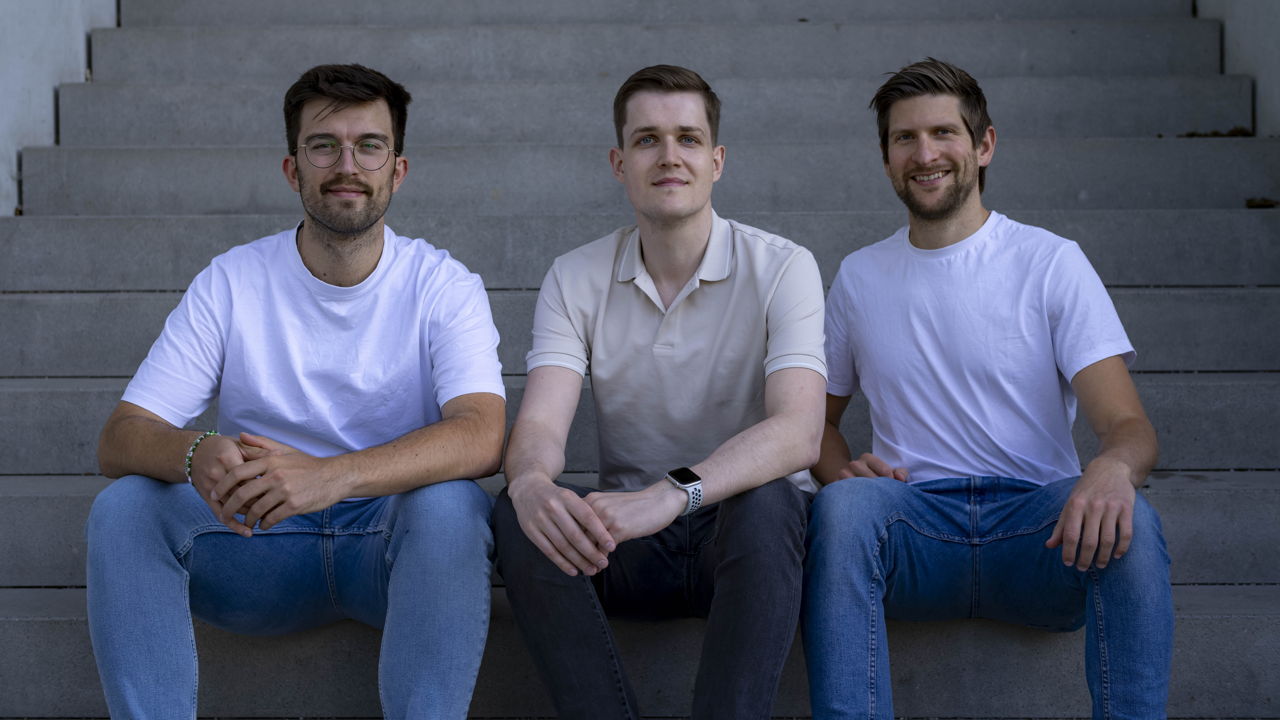
Munich can beat Silicon Valley when European balance sheets, invoices and regulations are at stake. Finto, a startup founded in 2025 and fresh out of Y Combinator in San Francisco, has raised $3.4 million in a seed round led by Y Combinator itself, Gradient (the VC firm spun out of Alphabet) and Lightspeed. Yet, instead of staying in the Bay Area, it has chosen to build its headquarters in Germany. “The talent is here, through TU Munich; our customers — Europe’s industrial mid-market and enterprises — are here; and the enterprise-software core we build on, including SAP, is on our doorstep,” said co-founder and CEO Jonas Morgner.
The bet is not sentimental. Finto builds AI agents that autonomously handle core accounting tasks: invoice verification, account coding, purchase-order matching. The platform integrates natively with SAP, Microsoft Dynamics and DATEV, the dominant system among German tax advisors. These are environments where data location is far from a detail: European manufacturing and industrial companies handle sensitive financial information and are subject to strict rules such as GDPR. In many cases, ERP systems reside on-premise or in private clouds, and any AI layer that sits on top must respect the same residency and control constraints.
The regulatory leverage and the SAP factor
Integration with SAP is not a simple connector: it is an architectural constraint that pushes toward hybrid or fully local deployments. The language models that power Finto’s agents must operate in close contact with accounting data often inaccessible from non-European public clouds. The startup does not disclose its inference infrastructure, but it is reasonable to imagine that proximity to data and GDPR compliance steer choices toward self-hosted or edge solutions, where processing happens within corporate boundaries or certified data centers. This is a significant competitive edge: those who are born inside this paradigm don’t have to retrofit an architecture originally designed for the global cloud.
The move signals a broader trend. Y Combinator, the world’s most famous accelerator, has already backed 49 startups currently headquartered in Germany. Finto proves that you can raise capital from top US investors and remain anchored to your own regulatory and industrial ecosystem. For those building LLMs and agents for critical processes like accounting, data sovereignty is not an option but a market requirement. Solutions that promise to “understand” the German chart of accounts or European VAT rules must be able to work within existing IT perimeters, often on-premise, alongside the ERP systems companies have built over decades.
A signal for the enterprise AI ecosystem
The Finto case shows that the next chapter of enterprise AI might be written far from Californian campuses. The presence of real customers such as Arminia Bielefeld (German football club) and Eat Happy Group (sushi in supermarkets) proves that the market exists and that integrations with European management systems weigh more than geographical proximity to venture capital. For IT leaders evaluating on-premise AI deployments, the lesson is twofold: on one hand, the supply of tools designed for local constraints is growing; on the other, the ability to orchestrate LLMs next to accounting databases without moving data will become a primary selection criterion. It is no longer just a privacy issue: it is the prerequisite for doing business in Europe.









💬 Comments (0)
🔒 Log in or register to comment on articles.
No comments yet. Be the first to comment!